10 key principles for data-driven storytelling
Don't overwhelm your audience, make information relatable and digestible, and more advice for journalists working with data
– 4 min read


Don't overwhelm your audience, make information relatable and digestible, and more advice for journalists working with data
This article was migrated from an old version of our website in 2025. As a result, it might have some low-quality images or non-functioning links - if there's any issues you'd like to see fixed, get in touch with us at info@journalism.co.uk.
This is a specially adapted extract from a chapter in 'Data Journalism: Past, Present and Future', edited by John Mair, Richard Lance Keeble, Megan Lucero and Martin Moore; and published by Abramis Academic Publishing.
Last term as part of my Reporting II class at the University of Oregon, we looked at data journalism, working in groups to see how different news outlets were using data to tell stories across politics, sport, health and science.
Over the summer, I tweaked our findings – and conclusions from our classroom conversations – into a short book chapter, featured in a new book called 'Data Journalism: Past, Present and Future'.
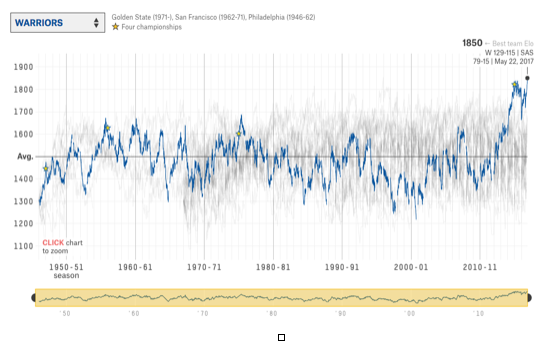
Based on our reading across these three thematic areas, and detailed research into coverage provided by seven different journalistic outlets, we were able to identify a series of important principles which all journalists using data should seek to abide by.
Many of these values are not just applicable to data storytelling; indeed, they should already be an established part of the journalist’s craft, but these principles are worth reiterating nonetheless, not least because – based on our reading and research – these core values are all too often overlooked.
Here are the 10 fundamental principles we identified:
Damian Radcliffe is the Carolyn S. Chambers Professor in Journalism at the University of Oregon, a fellow of the Tow Center for Digital Journalism at Columbia University, and an honorary research fellow at Cardiff University’s School of Journalism, Media and Culture Studies. Follow him on Twitter: @damianradcliffe
University of Oregon students involved in this work were: Aaron Alter, Romario Garcia Bautista, Eric Schucht and Sam Smarglassi (politics); Ryan Eberle, Hannah Morrow, Tyler Smith, Mack Veltman and Natalie Waitt-Gibson (health and science); Nick Baxter, Jonathan Booker, Cameron Derby, Shawn Medow and Zach Wilkinson (sport).