Cairncross: "The only question that matters is getting people to pay for news"
To secure the future of journalism, the news industry needs to develop ways to make public interest reporting profitable or receive governmental support, says the author of The Cairncross Review
This article was migrated from an old version of our website in 2025. As a result, it might have some low-quality images or non-functioning links - if there's any issues you'd like to see fixed, get in touch with us at info@journalism.co.uk.
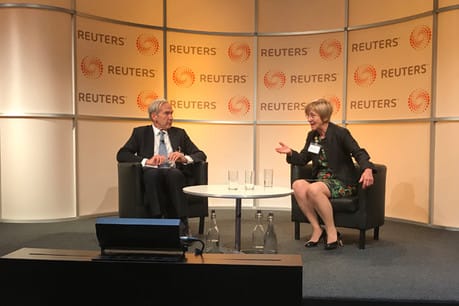
"This is the only question that really matters: how do you get people to pay for news?," she said, in the backdrop of the Google News Initiative announcement of Project Neon, a three-year effort with UK news group Archant to support underserved communities and discover ways to encourage audiences to pay for content.
It is an important move for online journalism, she said, because in the world of page views and scroll depth analytics - the kind of metrics newspapers could only dream about - there is a temptation to run stories for the sake of reach, rather than those of public interest.
"What the editors of newspapers now see is that people are far more interested in a car crash on a main road or triplets starting school than they are in local council budget figures not adding up - that kind of public interest news doesn’t necessarily pay for itself," she explained.
"That’s, to my mind, the key justification in the Government taking an interest in what happens to the news business. We need to keep democracy around and have trained reporters writing about this essential area of our democracy."
"One of the ideas I tossed out in the review was that local news might become a bit like the local theatre, supported by a grant from an institution like the Arts Council, [so there would be] 'the News Council'," Cairncross explained.
"But it’s much safer to get your funding from thousands of customers than from one institution, whether that’s Google or the Arts Council or a charitable donor."
The danger is that having a single source of funding can skew editorial decisions, but Cairncross said that there is one potential counter: Twitter, Facebook and other prominent social media platforms.
"The online world, in a sense, gives people the freedom to say what they like in a way that funded news organisations will never be able to do," she said.
"It's a safety valve, it's not always beneficial as it can say things which are horrendous and not true, but at least it exists and at least you can contradict publicly what you read in the news - which you couldn't have done 20 years ago."