Disagreement among Guardian journalists to influence new book on changing news standards
Panel discussing Goldsmiths Media Research Centre's findings provoked lively discussion
– 3 min read


Panel discussing Goldsmiths Media Research Centre's findings provoked lively discussion
This article was migrated from an old version of our website in 2025. As a result, it might have some low-quality images or non-functioning links - if there's any issues you'd like to see fixed, get in touch with us at info@journalism.co.uk.
There used to be something here that couldn't be migrated - please contact us at info@journalism.co.uk if you'd like to see this updated!
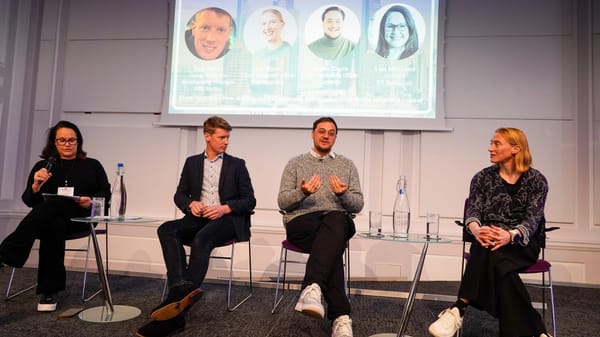
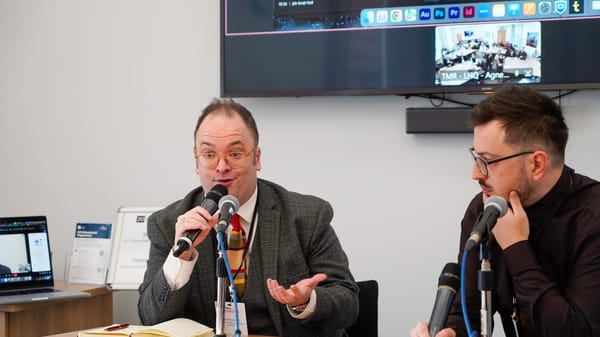
A provocative discussion on modern newsroom operations, which divided colleagues at the Guardian last night, will influence the final draft of a new academic book, entitled 'New Media, Old News: Journalism and Democracy in a Digital Age'. Research conducted by Goldsmiths Media Research Centre for the book, which explores the impact of digital technology on modern news practice, appears to back journalist Nick Davies' recent findings : that modern news involves plagiarism; reporters are under pressure to deliver stories faster with less research; and there is a reliance on agency wire copy. Emily Bell, director of digital content at the Guardian , speaking at an event hosted by the research centre, disagreed with some elements of the study.
"I simply don't believe an increase in output leads to decrease in quality," she said.
Increased output, she said, could be extremely positive. As an example, she cited the paper's writer Michael Tomasky , who when 'exposed to the horror of online journalism', requested a blog and then posted six or seven times a day.
"He was still producing long pieces of journalism and doing video and audio, and interacting with them [the users]," she said.
A reliance on agencies is nothing new, she commented, adding that journalism has always had agency copy 'at the base'.
Online news has made the journalistic process more democratic: "For society as a whole to be able to find and surface data is a really liberating and democratic thing," she said.
But, in discussion afterwards, Bell's Guardian colleague Nick Davies argued that 'quality is deteriorating' in the newsroom.
"I have to say, my colleague Emily, I don't recognise your picture of the newsroom at all. I think you're seriously out of step with reality," he said.
Newsrooms need to stay true to their principles, he added.
"You have to hang onto the idea that there are standards. Democratisation of news is a very bad idea," he said.
Citing the day's coverage of new prostitution laws as an example, he accused newspapers and broadcasters of 'running with the pack in the face of obvious contradictions in stories'.
Another Guardian journalist, Malcolm Dean dismissed the notion of a 'golden age' in journalism: "We have never had better information available in journalism [until now]," he said, outlining the way in which journalists now have better access to audits and reports which can hold authorities to account.
"The problem is that we're not reporting it. We [only] spot the negative in the report. That's the problem of newsdesk news through all these years," he said, adding that 'trying to sell a positive story to the newsdesk is very hard'.
New Media, Old News: Journalism and Democracy in a Digital Age, edited by Natalie Fenton , [Ed's note: draft chapters can be read online, but not quoted] involved completing 'mini ethnographies' in the newsroom of the Guardian, BBC and Manchester Evening News, as well as 150 interviews and a qualitative analysis of news content.
"The internet has made some aspects of journalism worse. We think of new technology as expanding media diversity, but in some circumstances it can increase uniformity," said Professor James Curran from the centre.
One response to the current economic situation, Curran said, was that newsrooms 'monitor even more closely what their rivals are doing'.
"Increasing time pressures encourages them to plagiarise. Instead of revolutionary transformation, we've found evolutionary change. Some things have got worse as well as better," he added. Dr Natalie Fenton said while 'resources and sources were limited', journalists had 'access [to information] without leaving [their] seats'.
Evidence was repeatedly given to researchers of journalists 'captured in desk-bound, administrative, cut and paste journalism,' she said.