Does the news know middle-aged women exist?
I'm a news avoider — not because I don’t care about the news, but because it drains energy I can't spare and rarely reflects what it’s like to be me
– 8 min read


I'm a news avoider — not because I don’t care about the news, but because it drains energy I can't spare and rarely reflects what it’s like to be me
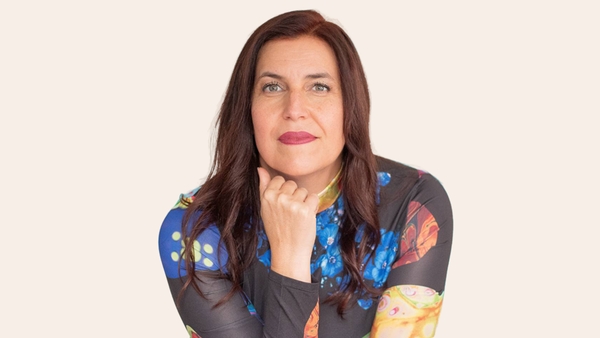
This article first appeared on Luba Kassova's Substack Lubascope and has been republished with permission from the author
I am a journalist. I write every day. I have worked in or with news organisations as a researcher, audience expert or journalist for almost two decades. I believe passionately in the importance of journalism for democracy and our freedom.
I am also a news avoider.
It all started three years ago. After three years of writing a series of widely covered reports and articles on the deepening predicaments of different marginalised groups, one morning, at the end of a yoga session in the park, I curled up in a foetal position underneath the glorious blue sky sensing tears quietly but persistently streaming down my face. I simply could not get up.
In the preceding weeks I had stopped being able to feel joy or cry. I had mostly felt numb. My 24/7 connectedness with the news had left me feeling powerless in the face of so much global suffering. Powerless and worried about the future of my children. No matter how much I cared, wrote, desired to push back against at least a speck of the pain I saw around me, waves of more suffering reported in the news crashed over me. I felt inept while my body became numb to fend off the blows.
Something had to give.
My yoga teacher Silvia helped me get myself off the ground that beautiful morning, accurately identifying my experience as burnout and implored me to carve out time to take care of myself. My three-month journey to recovery started with taking myself off news and social media for a month. I thought I would not be able to resist the addiction but resist it I did and felt immeasurably better for it.
At the recent launch of the latest edition of the global Digital News Report (DNR) describing people's news habits across the globe, Jim Egan, the report's lead from the Reuters Institute for the Study of Journalism, shared an intriguing insight. Two-thirds of women living in the UK aged between 45 and 54 (my own age category), reported that they avoid the news at least sometimes, he said.
Middle-aged women have become the most pronounced news avoiders globally too. Data from last year's edition of the Reuters DNR reveals that globally 44 per cent of women aged 35-44 and 43 per cent of women aged 45-54 avoided the news at least sometimes.
Why are middle-aged women more likely to bypass the news than most other audiences? As a middle-aged woman, journalist and audience expert I feel well-placed to dig into this question. Spoiler alert: it is not because middle-aged women are less interested in news than other groups. On the contrary, they are engaged in news that helps them make sense of their world and the world of those they love. But this is not what the news delivers to them.
While I appreciate that news makers do not have control of global affairs or natural disasters, the global news agenda increasingly feels like an assault on the mind.
For example, in the space of half an hour yesterday morning I learned that President Trump has approved forever chemicals linked to cancer as a pesticide on some of the most commonly eaten foods, that the resistance against AI centres is exploding (to no avail for now), that the June heatwave killed up to 440 people a day in England and Wales, that more than 16,000 refugees are unable to reunite with families in the UK, that the US has launched a new wave of strikes on Iran as diplomatic efforts fail, that oil prices are rising again, that AI-induced cultural stagnation is gaining momentum, that the Spanish ex-PM Mariano Rajoy Brey made an offensive racist comment about the French football team, that Putin has turned Japan into a den of spies, that struggling young pupils in the UK's 40C-plus classrooms were calling for their mummies, that the actor Sam Neill and the Republican Senator Lindsey Graham have died and that new research suggests that modern life may be overloading the human brain (I knew that already from my own experience).
That's a lot to take in, and I cannot remotely do anything about any of it, except perhaps the last one. So why know it, one might argue? Well, because not knowing what is happening in your country and the world equals apathy and apathy equals handing over the reins to power-abusive populists who would only make the global situation much worse.
What almost all middle-aged women have in common is their centrality in life's orderly unfolding for everyone around them. Parents or not, middle-aged women, mostly invisibly, are a planning and emotional anchor, or often even an outlet for emotional confusion born out of people's general ignorance about what they feel.
Middle-aged women therefore carry a lot of weight on their shoulders. Take my friend D. for example. A domestic violence survivor and working mum, she lives with her two sons - one still at school and the other now working. A couple of weeks ago, she had asked her children to clean their rooms and the bathroom, before realising it would be far less energy-consuming to do it all herself.
While we were having a lovely chat in her freshly cleaned flat that afternoon, she got a phone call from her nephew who had agreed to sit with her dementia-stricken father for a few hours to give her some respite. His pleading voice suggested he could no longer cope with his granddad's repetitive paranoid questions which had put an unwelcome end to his benevolent gesture. Hearing the desperation in his voice, D. quickly wrapped up our cosy rendezvous to relieve her nephew of his efforts to relieve her of looking after her ailing father.
This common development of having to abandon plans to steady others – young or old - often leaves middle-aged women stressed and exhausted. According to Morning Consult surveys, half (49 per cent) of middle-aged women in the US prioritise duty over personal enjoyment. 44 per cent of women aged 40-59 say juggling family and work is very stressful. A striking 89 per cent are responsible for their household's financial decisions and 56 per cent report personal safety concerns. Furthermore, only 8 per cent of middle-aged women rate their health as excellent compared to 18 per cent of young women. A third (31 per cent) rate it as fair/poor, which indicates a higher health-stress burden for this group.
The competing roles and multiple stressors that middle-aged women experience means that the news they consume has to be balancing not destabilising, efficient, insight- and context- rich and fulfil their information needs with sensitivity and care. This often is the opposite to what the news does. Instead, it offers continuous bursts of solution-less narratives about unfolding tragedies or socio-economic (mostly) macro challenges, which rarely feature middle-aged women either as the main antagonists (because they are not), nor as protagonists or experts, leaving them despairing and unclear about how the stories relate to them.
Katya, a part-time researcher, part-time art student, and mother of two who lives in London does not define herself as news avoidant. However, she is resource- and time-poor so she dips in and out of the news using BBC World Service as her main news anchor. Frequently she finds that she requires more context.
"I often find that I am listening to news and to be able to understand it I need to dive deeper since everything in our times has such a long tail of history and context and to form quality opinion requires intellectual work. I have enough of it in my work and now studying art."
A big part of the alienation of middle-aged women from the news comes down to the news fundamentally ignoring their news needs which are about feeling supported through the information they consume and feeling empowered.
I have previously shared evidence that the dominant emotions which news narratives spread are negatively deactivating. A prominent emotion among them is anxiety which, unfortunately for middle-aged women who are often responsible for looking after their children and/or parents, they already feel in abundance.
Separately, health research shows that the perimenopause/menopause window, which women experience between roughly 45 and 55, is associated with a hormone-change-induced rise in anxiety disorders and depression. Consuming anxiety-inducing news often makes the toxic cocktail of anxiety and disempowerment that middle-aged women are served spill out of the glass.
Ludmila, a media executive who lives in London with her husband and two children, has never been a heavy news consumer, following particular journalists more than specific news outlets. However, when the war in Ukraine started, she found herself consuming news constantly until eventually, with no resolution in sight, she felt it consuming her.
"It was too much. I wanted my life back. With all this madness still going on I felt I needed to escape. So I stopped consuming any news from news providers and got my information exclusively from social media, relying on my friends' posts and on my husband at home to inform me."
Recently Ludmila has timidly re-engaged with news but with great caution, only watching weekly flagship programmes like the BBC's Sunday with Laura Kuenssberg.
My aforementioned Italian yoga teacher Silvia, also a doctor in neuroscience and mother who lives in Italy, has long learned to moderate her news consumption to avoid feeling excessively anxious. Having been very engaged since her teens, she learned to dip in and out of news when political events under Silvio Berlusconi's governments often left her feeling hopeless. More recently Silvia has had to pull back from the news even further because of the damaging collusion between hawkish politics and anxiety-inducing news angles.
"There is a big cost in finding out from the news about all the horrible things that are happening right now. I still want to be an active participant in this world but reading news that makes me anxious hits my limits," she reflects. "I want to be part of the solution and not just get stressed and overwhelmed which is why I choose very carefully what news I consume”.
Unfortunately for Silvia and millions of other middle-aged women, news does not leave them feeling that they are part of the solution. It doesn't even leave them feeling seen.
And then there is the relevancy issue. Remember a few paragraphs ago I listed all the stressors related to the life stage, societal expectations and biological changes that middle-aged women experience? Well, news very rarely covers stories focusing on these or taking these challenges into account when deciding on story angles. So little news ever focuses on middle-aged women.
For the last few weeks, ahead of writing this piece I've been scanning the news reports on the lookout for stories relevant to middle-aged women but saw only a handful. One opinion piece was about Shada Islam feeling privileged to have been able to mourn her mother who died in Karachi when millions in Gaza and Sudan don't get to. Another was about the aunt of a Venezuelan boy pulled from the rubble. A third was about a middle-aged woman contracting neurocysticercosis while travelling. But these are few and far between in an ocean of news that does not feature many women to begin with (only 1 in 4 people in the news are women), let alone middle-aged women.
Since that autumnal day in 2023 when I lay emotionally spent in the park, I have been on a news diet which helps me protect my mental health and remain a functioning human being, mother, business owner, and wife while also being a journalist. Like Katya, Ludmila and Silvia I moderate my news intake carefully, giving preference to more contextual pieces which focus less on the detail of what is happening in favour of why it is happening and how it can be resolved. I scan the news headlines twice a day to feel abreast of breaking stories and I actively seek stories which are written by middle-aged women or reflect their lives in a constructive way.
One of my favourite Rebecca Solnit observations goes like this:
"Who is heard and who is not defines the status quo…By redefining whose voice is valued, we redefine our society and its values.”
Redefining whose voice is valued means redefining what — and who — counts as newsworthy. Middle-aged women are society's glue. The news just hasn't decided to see them yet.