This article was migrated from an old version of our website in 2025. As a result, it might have some low-quality images or non-functioning links - if there's any issues you'd like to see fixed, get in touch with us at info@journalism.co.uk.
The Guardian has revealed its ambitions to "get into the living room" by pushing video to connected TV and tablets.
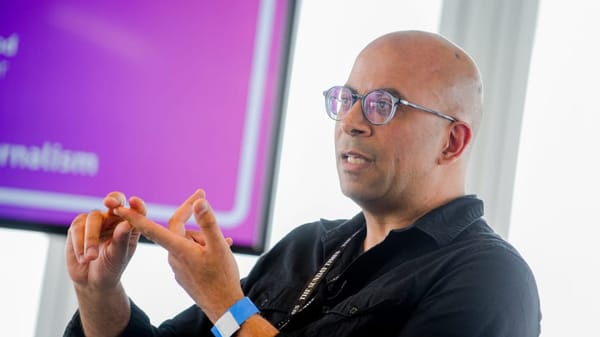
Speaking at the video journalism summit at the Financial Times, Stephen Folwell, director, business development and brand extensions for Guardian News & Media, explained how the Guardian sees commercial potential in video and an opportunity to move beyond the "text heritage" it is "lumbered" with.
"It is extremely difficult to make money out of on the web," he added.
In a film by Beet.TV , Folwell says that video is important for the Guardian for three reasons: it is a "really good way of storytelling"; there is potential for monetisation; and it gets the publisher into "places where we can't reach normally".
Folwell explains how the Guardian was "pretty early into video" and set up Guardian Films, which has done "groundbreaking investigations and documentaries", leading to Emmy Awards and Webby Awards .
"But that video struggled, in a way, to find an audience and a home as we are still as a desktop site pretty much a words and pictures site."
There used to be something here that couldn't be migrated - please contact us at info@journalism.co.uk if you'd like to see this updated!
There used to be something here that couldn't be migrated - please contact us at info@journalism.co.uk if you'd like to see this updated!
He said connected TV and tablets offer a new opportunity to the Guardian. "We are able to get into the living room in the evening in a way that we would never have been able to before. That for me is the most exciting aspect of what we are trying to do with video."
Folwell said the Guardian is starting to explore what a "stand alone video option" will look like, "divorced from the context of the article".
The requirements of that video are very different, with TV and tablets requiring films to be longer, better quality, with stories having "a beginning, middle and an end".
Folwell said the Guardian aims to stick to its editorial values while creating "very happy synergies" between brands and the editorial.
He also reveals that since adding video to its "frictionless sharing" Facebook app in January, video views "leapt extraordinarily", increasing "onsite traffic between 50 and 100 per cent, depending on the day". This has since dipped as Facebook changed the way news articles are displayed on the site.
Folwell told Beet.TV that Guardian videos are now getting 10 million hits a month.
Folwell said there was "potentially a big cannibalisation problem" with viewers watching the films on the player within Facebook. However, he said people do click through to the Guardian and said it also allowed the publisher to reach a "very different audience".
He said there were "internal discussions" so that Guardian journalists were careful not to simply push out videos with a potential to go viral that are removed from the editorial values of the Guardian.
Folwell urges publishers to look to video and social platforms. "There's no doubt that embracing Facebook and embracing YouTube is a direction any publisher has to go down."
Update 2pm
: The Guardian said that while there was an an initial increase in video traffic to 50-100 per cent, it is now more like 10 per cent as Facebook has changed the way it displays news content.