Guardian staff could report to morning conference via video links
Daily meeting has been internally broadcast online since December
– 1 min read


Daily meeting has been internally broadcast online since December
This article was migrated from an old version of our website in 2025. As a result, it might have some low-quality images or non-functioning links - if there's any issues you'd like to see fixed, get in touch with us at info@journalism.co.uk.
Morning news conferences at the Guardian could be expanded to include contributions from journalists outside of the newsroom using video links.
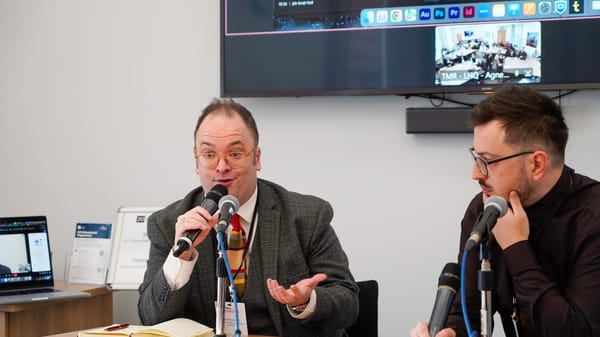
When the Guardian moved to new premises in Kings Place in December 2008, the paper's 10am morning conference was made available to any employee via IPTV on their desktop or on television screens around the building.
Employees from other offices, such as Manchester or Washington, could watch the meetings remotely and also be able to participate, the Guardian's technology manager, Karen Frankel told Journalism.co.uk.
The team experimented with iChat from the the House of Commons press room during the first week of the move: reporters were able to communicate via video cameras on their Macs with the team at Kings Place.
This system could be rolled out for financial and political updates from various locations, Frankel suggested.
The newspaper had an existing open-door format for news conferences, which allowed any employee to join the daily meeting, but in the Farringdon Road premises this would see people 'spilling out' into the corridor, Frankel said.
Conference can see anywhere between 50 to 130 people attending, she added.
The new offices feature a new open-plan conference room, with better acoustics and technology. Microphones now pick up the sound better and there is more space to fit everyone in, Frankel explained.
"People are generally more accessible in the new building," Frankel said, adding that new 'pods' see content teams with 'everyone sitting together' rather than spread out over different floors.
The latest conference format complements the way facilities have been made more inclusive of employees in the new offices, she said.