ITV retreat from regions is 'a real disaster', says former Central News presenter
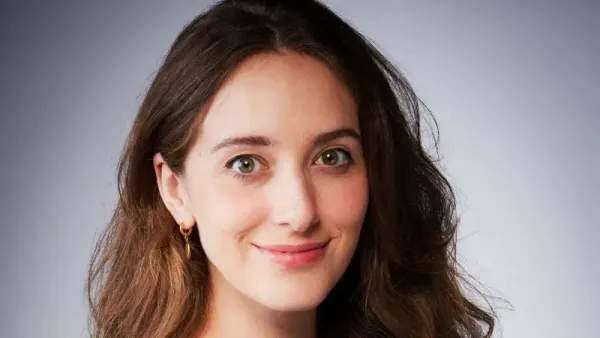
Arti Halai expressed her dismay at the broadcaster's recent decisions in the latest of the Coventry Conversations
– 3 min read


Arti Halai expressed her dismay at the broadcaster's recent decisions in the latest of the Coventry Conversations
This article was migrated from an old version of our website in 2025. As a result, it might have some low-quality images or non-functioning links - if there's any issues you'd like to see fixed, get in touch with us at info@journalism.co.uk.
There used to be something here that couldn't be migrated - please contact us at info@journalism.co.uk if you'd like to see this updated! Broadcaster Arti Halai joined the ITV casualty list last Christmas, but thanks to her own media training business has stayed afloat despite financial difficulties in the industry.
This week, the former face of the Central News morning programme spoke of her despair at the current state of her old programme.
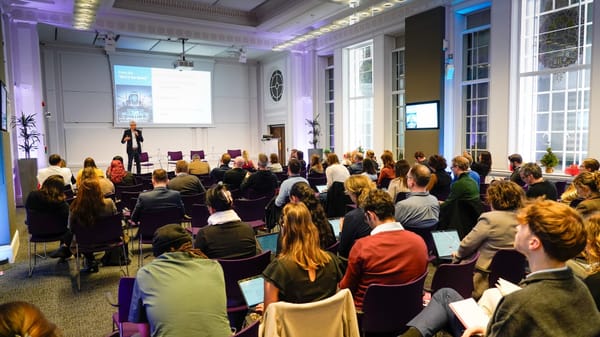
Indeed, she no longer even watches it. Speaking to an audience at the final 'Coventry Conversation' of the academic year on Thursday, she shared her disappointment and anger at the way ITV has decimated the region's coverage.
Halai was forced to apply for her own newsreader/producer job: "It took me three weeks to fill out my application form and another three weeks of waiting to be told 'Oh, you didn't get the job.'" She left at Christmas 2008.
It left her bemused, she told the audience at Coventry University, when after seven years at the ITV company 'the choice was taken away from me'. "If I was going to leave Central I wanted to make that decision not have it made for me."
She did not, in the long term, let it affect her confidence in her own talent. "It had nothing to do with my ability to do the job, with my professionalism, with my experience, with my expertise," she said. Rather, she added, it could be blamed on ITV's dire economic state.
Central News has contracted severely in recent years: from three news centres in Birmingham, Nottingham and Abingdon to a much smaller newsroom in Birmingham, but still serving a huge region. Today, it is a skeleton of its former self. Many journalism jobs - 60 in the last year alone - have been lost as a result.
Items are cut for economic reasons, Halai said. "It is dire. It's very unfortunate and it makes me sad. I think that there's a great place for regional television and I think there's a real need for it."
"I think it [Central News] provided a great service and it makes me sad to think that due to the budget pinching we are seeing lack of quality, which is inevitable I feel."
Halai's professional career developed at the BBC in Birmingham on the Asian Network, and on the Mirror-owned station Birmingham Live. She now runs AhAction , a media communications, consultancy and events business, which recently conducted talk show training for Al Jazeera.
She is committed to the Midlands, despite leaving ITV. It is not just ITV regionally that is affected, she said, adding that the BBC is going to 'suffer down the line' as well: "I think you'll find the BBCs downsizing and it has its own issues too and that's the reality."
The corporation's reaction has been to offer to share facilities with their commercial news competitors or what is left of them, she said. On screen, competition is fast fading away: "I don't think it's healthy at all; I think it's a real disaster actually because if you want to raise your standards, if you want to be the best, if you really want to excel in what you do, you need to have stiff competition," she lamented.
Central News has not only lost a key presenter figure, but a viewer as well. She now rarely watches it: "I just feel that it doesn't add anything to my life at this moment," she confessed.