Kyiv Independent is growing despite - or maybe because of - the war
As it celebrates its fifth anniversary, we caught up with the Ukrainian independent news outlet to talk about revenue, impact, and why

– 4 min read


As it celebrates its fifth anniversary, we caught up with the Ukrainian independent news outlet to talk about revenue, impact, and why
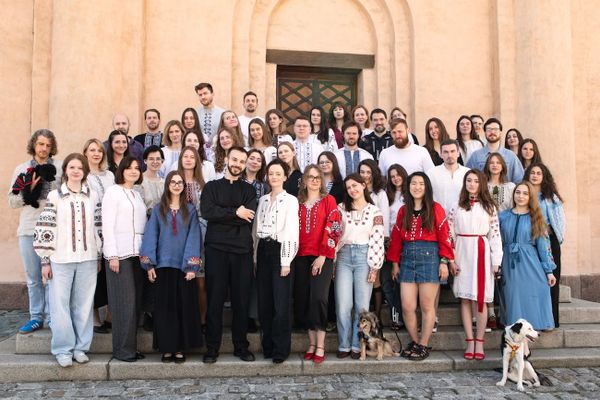
As the Ukrainian English-speaking outlet Kyiv Independent turns five, here is the story of a team that keeps building, keeps listening to its readers and keeps trying new things while the war goes on around it.
The publication started as a reaction. Another paper in Ukraine had an owner who fired the editorial team, so they launched a new outlet to protect their editorial independence. That happened only a few months before Russia's full-scale invasion.
There were rumours about the impending invasion, yet the newsroom was never planned as a war project.
CEO Zakhar Protsiuk sees that origin as something that stays with the team.
"We don't see ourselves as something that will end with the end of the war," he told JUK. Still, more than 90 per cent of the outlet's existence has unfolded during this war, and the coverage has grown with it. Readers who first wanted to know what was happening in Ukraine now look for the wider geopolitical shift between Russia and the world, and Zakhar believes the Kyiv Independent sits at the centre of that conversation.
The newsroom is organised around that vision. The team recently hired its first full-time correspondent in Brussels, because so many decisions with an existential effect on Ukraine are made there, and they matter just as much to the Baltic states, the Nordics and the European Union as a whole. In Washington, the opinion editor also reports from DC, and colleagues based in Ukraine regularly travel to the Baltics. The lens reaches beyond Europe too, to what Russia is doing in Africa and how it has moved out of the Middle East.
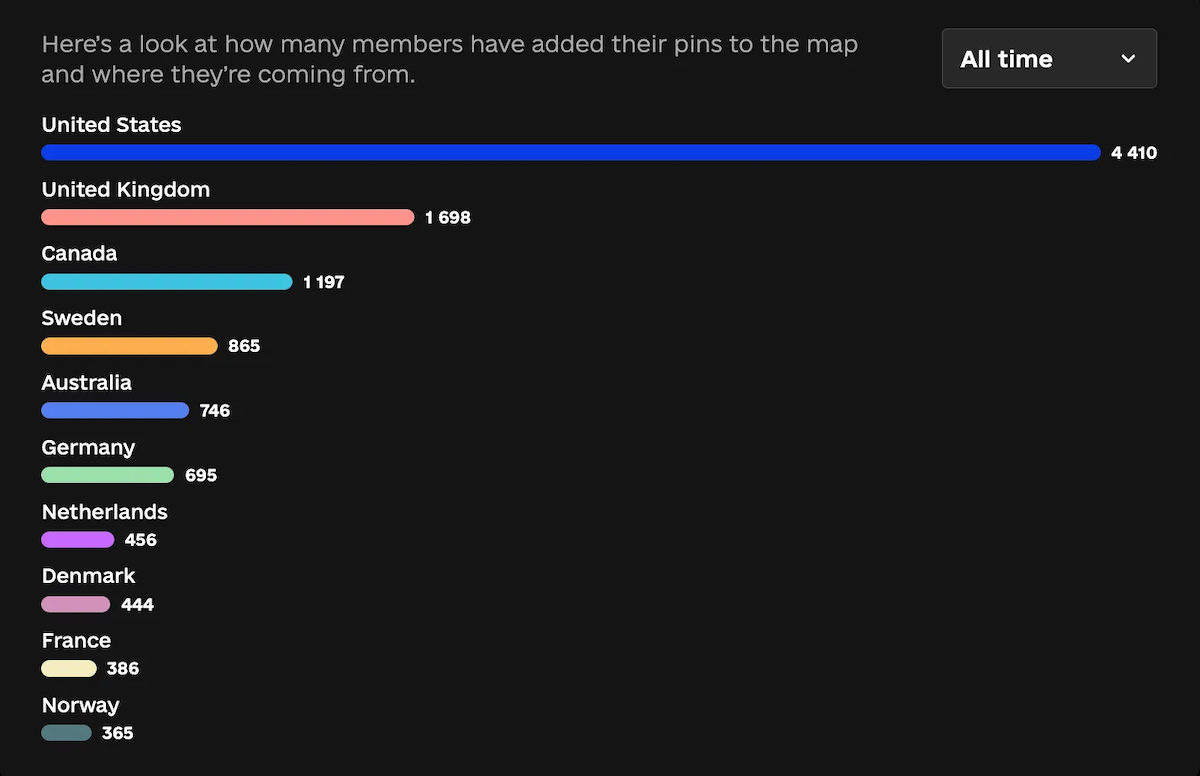
The journalism is published only in English, and Protsiuk likes to call the outlet a "global media on a niche topic". Over the last two years, the audience has tilted more toward Europe. The US remains the biggest market, with a share that has moved from a bit over 40 per cent of readers to between 25 per cent and 30 per cent, and more new members are joining from European countries.
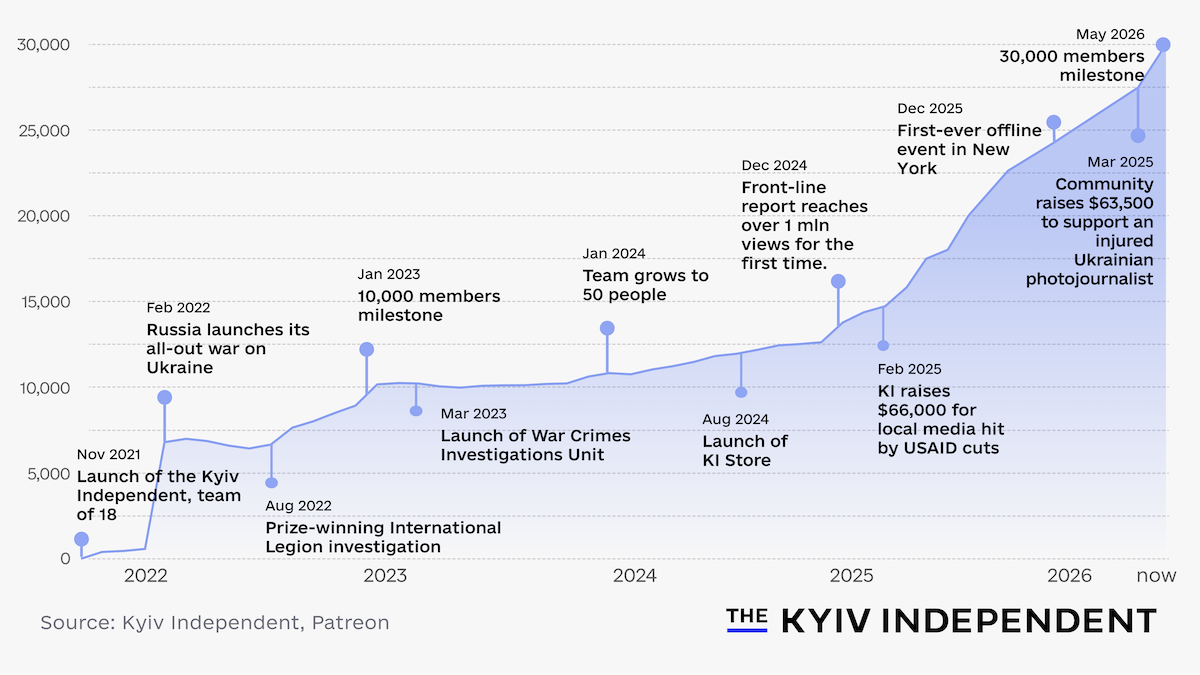
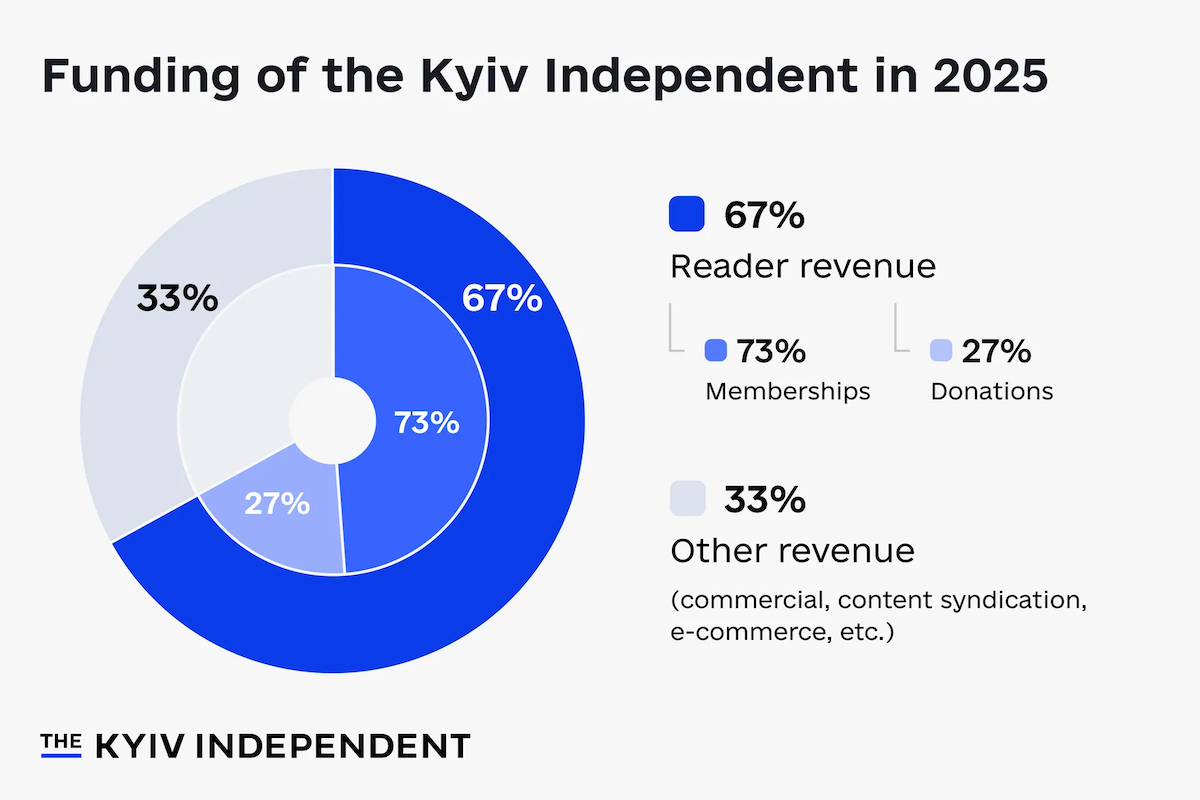
Around 70 per cent of the Kyiv Independent's revenue comes from readers, through memberships and one-time donations. The outlet now has 37,000 paying members, up from 14,000 two years ago, and Protsiuk expects to approach 40,000 by the end of the year. That is almost three times the size, at a time when many people assumed attention to Ukraine was fading.
Protsiuk told us this changed how he thinks as a manager. Two years ago he believed the ceiling was lower, and the growth of the community challenged him to be more ambitious. Next year the team plans to keep scratching at that ceiling.
He describes the approach as developing different muscles, so the organisation can grow whichever one the market calls for:
• Crowdfunding platform. Launched this year, it raises money for specific causes, sometimes the newsroom's own and sometimes to help someone in Ukraine.
• Store. Launched last year, it is now the second biggest revenue stream at around 10 per cent, which surprises a lot of people.
• Bookazine. This print mix of a magazine and a book sold almost 5,000 copies, with a second edition on the way.
• Syndication. The team sells its journalism to other platforms, including a feed for the Bloomberg Terminal.
• KI Insights. A B2B research arm in the spirit of Politico Pro or the Economist Intelligence Unit.
• Advertising. A small part of revenue today, with the door open for later.
Video journalism has been one of the biggest successes of the last two years, built from scratch. Frontline reporting is now first and foremost a video product, watched by hundreds of thousands of people on YouTube. The team just finished its first YouTube-specific membership campaign, aiming for 300 new members from the platform, and reached the goal.
He admits YouTube still converts at a smaller scale than other channels, and the experiment showed him it can accelerate when the team changes gears in the right way. Alongside video, the newsroom runs many newsletters and a documentary arm that has made more than ten films on Russian war crimes in Ukraine, which have won awards around the world.
For the past four years, the team planned for two scenarios: the war continuing and the war stopping. Now they accept that nobody expects a clean ending, so they keep building.
For 2027, the top priority stays extensive war coverage, including frontline reporting, which is getting harder and more expensive. The international angle and video keep expanding, and so does the community of supporting readers. AI, Google's AI overviews and the fall of social networks sit on the list too. Protsiuk does not let the team hide behind the war to dodge innovation, because readers who already know the Guardian or the Economist need a reason to choose the Kyiv Independent.
A lot of people still think of the Kyiv Independent as a small project, but it has grown well beyond a scrappy startup. The team is almost 100 people-strong, covering Ukraine, politics, the frontline, business, culture, Russia and Belarus.
"We have to want to be bigger," he said, and he believes that lesson applies to other media as well, with more urgency in Kyiv because the stakes are higher.
The work makes an impact. The team met the UK foreign secretary in London and heard from the FCO (Foreign & Commonwealth Office) team how they use the reporting in their foreign policy.
The Kyiv Independent team is focused on its audience, committed to good journalism and curious about what comes next, all from the middle of a war.
Happy fifth anniversary. We're curious what they'll do over the next five years.