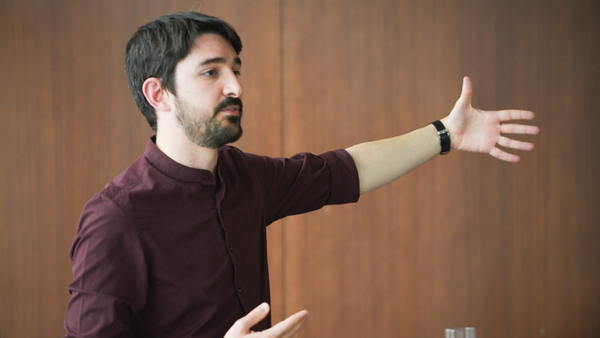
Local media must embrace revolution 'from the streets', says Rick Waghorn
Industry and NUJ should help re-skill journalists for 'cottage industry' future

– 2 min read


Industry and NUJ should help re-skill journalists for 'cottage industry' future
This article was migrated from an old version of our website in 2025. As a result, it might have some low-quality images or non-functioning links - if there's any issues you'd like to see fixed, get in touch with us at info@journalism.co.uk.
There used to be something here that couldn't be migrated - please contact us at info@journalism.co.uk if you'd like to see this updated!
The local media industry must learn from and support independent online news sites and technologies if it is to survive, former regional newspaper journalist turned digital entrepreneur Rick Waghorn has said.
The National Union of Journalists (NUJ) in particular must engage with 'people who have walked the digital walk' and help retrain and re-skill out-of-work journalists and those facing redundancy for a digital future, he told Journalism.co.uk.
"Craigslist provided a classified advertising answer for the print industry online. Where did it come from? It came from the streets. Everyone is presuming the answer is going to come from the top," said Waghorn.
"It is more likely that the answer, in part, will come from people like Linda [Preston] at Darwenreporter.com who are working their hyperlocal patch. Part of the answer is someone having the grace to sit down with Linda and ask how can we help.
"We [the industry] need to tap into that knowledge, that experience and starting to realise that part of the answer will come from the bottom not from the top."
While the hard work involved in independent online news should be acknowledged, lessons learned from Darwenreporter and Waghorn's own MyFootballWriter, which he set up in 2006 , could be shared with the industry.
The union should 'engage in the spirit of revolution' rather than looking at retraining journalists for work in PR , he added.
While there have been some attempts by the NUJ and newspaper groups to 'inject a note of urgency into people's thinking' about the future of the industry, it's time to think beyond maintaining the existing models and look at protecting journalists, he said.
"The future is clearly digital. Let's try and start re-tooling and re-skilling provincial, local and even national journalists for the 21st century," said Waghorn.
"The distribution model is broken beyond repair. If you are reliant on a bike to deliver your news product in 2009 you are in trouble. The means for distribution is in our hands; the means for production is in our hands."
Waghorn would like to see a digital toolkit set up, making use of services such as Audioboo and Addiply , to empower journalists to create hyperlocal journalism and a business online.
"The chances are in the current economic climate the only people who are going to help local and provincial journalists are themselves. It's going back to being a cottage industry," he said.
"All the functions of an old newspaper office you can distill down to a laptop and mobile."
Giving journalists the right tools and training in online publishing and journalism could create a collaboration of sites with the power to attract networked advertising and syndicated content, he added.
"If Linda can source local ads from her post code then both central and regional government can grant her some targeted local ads so she has two revenue streams," he said.
"It might be the case right now that all we can afford to give Linda is a part-time living. But if you give someone the organisation and elegance to do the right job they can do all the great functions of state that we used to expect from our local newspapers."