This article was migrated from an old version of our website in 2025. As a result, it might have some low-quality images or non-functioning links - if there's any issues you'd like to see fixed, get in touch with us at info@journalism.co.uk.
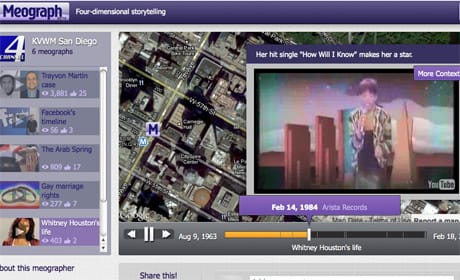
A new tool that will enable journalists to illustrate multimedia
stories over time and locations using Google maps is to launch in
around a month's time. Meograph will
also enable journalists to integrate multimedia content, such as
YouTube videos or images and link to extra context such as articles
or galleries on other website.
The graphic moves through a series of created moments through a
timeline and uses Google maps to show the geographical journey,
assisted by audio narrations uploaded by the user.
The platform, which is due to be launched publicly in around a
month, is the brainchild of Misha Leybovich .
Speaking to Journalism.co.uk he said the idea was prompted by his
own desire to visualise his travels.
"I started talking to people and putting together some ideas for
this and my friends just starting giving me ideas saying this could
be useful for journalism, for education, for genealogy – for all
kinds of stuff.
"So I decided to put together this platform and put it out there
and see what happens."
He said the ability to add extra context to a given "moment", such
as by linking to a news article, a gallery, a full video or a
wikipedia article, will offers a choice on their viewing
experience.
"That means you can either sit back and watch a Meograph in two
minutes, or you can spend an hour delving into every nook and
cranny of all the detail involved. It's up to the viewer."
He added that he sees the platform being equally useful in breaking
news situations, or to show the journey of a past event or
story.
"The neat thing is Meographs are living documents so you can add a
new moment to it, the breaking news or whatever has happened next,
and provide your readers with not only what's happened right now
but also in case they're just getting caught up now, what's
happened so far."
Added features are due to be added to the platform in the coming
weeks, including the ability to embed the final Meograph and search
for other projects by location or time.
Feedback from journalists who have already taken a look at the
platform has also been useful.
"A lot of the features you see here are actually results of talking
to real journalists," Leybovich added.
"For example the audio narration that you hear in between
transitions, that isn't something that I originally thought of.
"But I talked to one journalist, in the business for 20 years, and
he said it was missing that emotional connective tissue that really
helps bring the story home in more than just a collection of
facts."
"The playback controls, being able to go back and forth, and also
the more button, that was also feedback from journalists wanting to
give the viewer more control of the experience and also be able to
dive deeper into more context."
He added: "We're very excited about having journalists as early
partners because journalists are fantastic storytellers.
"They have a lot of content they have to share and for news
organisations it actually helps to then bring back and share with
readers old content that might never been used again, but is always
relevant in giving the context for tomorrow's news."
The technology will be free to use, with the platform looking at
"some sort of ad-support" and possibly video pre-roll adverts and
"some sort of premium plans".
Demos are available to view on the website and journalists can
register their interest in creating Meographs via email.