My mission to interview 100 Indigenous people ahead of COP30
As climate takes centre stage in Brazil in 2030, TBIJ’s Grace Murray is spotlighting local voices now — pushing the world to listen and act
– 7 min read


As climate takes centre stage in Brazil in 2030, TBIJ’s Grace Murray is spotlighting local voices now — pushing the world to listen and act
This article was first published by The Bureau of Investigative Journalism and has been republished with permission from the authors
There's a photo of Indigenous leaders protesting in front of the Eiffel Tower that really stuck with me. It was taken 10 years ago, before the signing of the historic Paris Agreement. The image of defiant leaders with the icon of hope and resilience in the background is striking.
Although Indigenous people are sometimes visible at climate summits, we rarely hear their stories. My team has been investigating deforestation in the Amazon and other ecosystems for over six years, and have reported with communities on threats tied to beef, soy, gold, even collagen. But ahead of this year’s Cop30 talks, I wanted to do something different.
The summit was being held in Brazil for the first time, on the edge of the Amazon rainforest. So I set out to interview 100 Indigenous people from the world’s tropical forests ahead of the talks. I wanted to hear about the challenges they face in defending ecosystems we all rely on, as well as their relationship with the forest and the support they need from the international community.

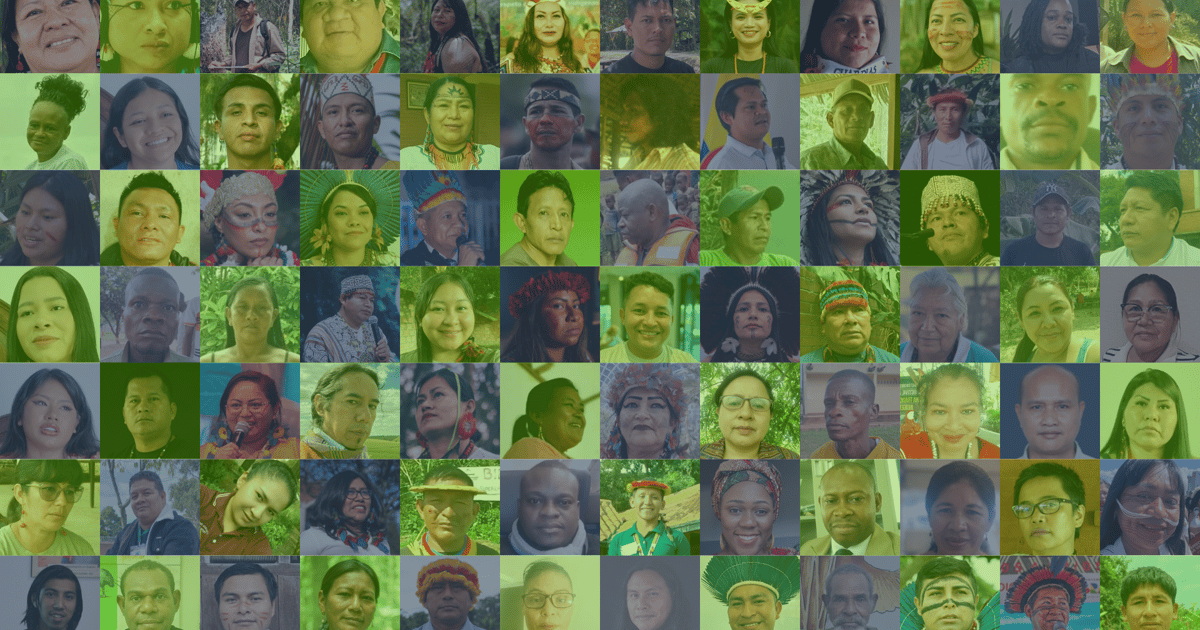
I knew it would be hard work. What I didn’t know is how it would change me. In my six months working on this project, I gained a deeper understanding on what it means to live with and defend nature. How Indigenous people hold the solutions to climate change by way of their very existence. And why we need to be led by our humanity, not by economic growth, in the fight against the climate crisis.
At TBIJ, impact isn't something that happens after stories are published, it’s part of how we do our journalism. So once the idea to interview 100 Indigenous people was approved, I started by speaking to NGOs, academics and organisers about how to approach the project.
I learnt about the sensitivities of language and the barriers to Indigenous participation at previous summits. At the Peoples for Forests event in France, there was laughter, tears and dancing as I heard stories from mainly Indigenous women forest defenders from Indonesia, Brazil and the Congo Basin. I realised that as much as anything else, I would need to find a way of conveying this humanity.

But I also wanted to generate useful data. So I spent a long time working out exactly what I wanted to ask people. And then spent time refining this into 10 questions that would be asked to all 100 people. This wasn’t easy – there was a lot I wanted to find out. How had people’s lives changed in the 10 years since the Paris Agreement? Did they feel supported by their countries? And what are their solutions to climate change?
Some questions would need to be technical – about the UN, or global progress tackling deforestation – while others were about what it means to be Indigenous, and ultimately human. Fausto Cruz from Colombia summed it up beautifully: "We are not the lungs of the world; we are life in its essence."
My first interview was in June, with Chief Almir Suruí of the Paiter Suruí people in Brazil. I’d been speaking with an organiser from Belém, Vanessa Gabriel, who told me he would be in London. I remember asking him if Indigenous people’s recognition as forest guardians translated into meaningful support. He laughed. “No, no, what is recognition without access [to UN policies]?”.
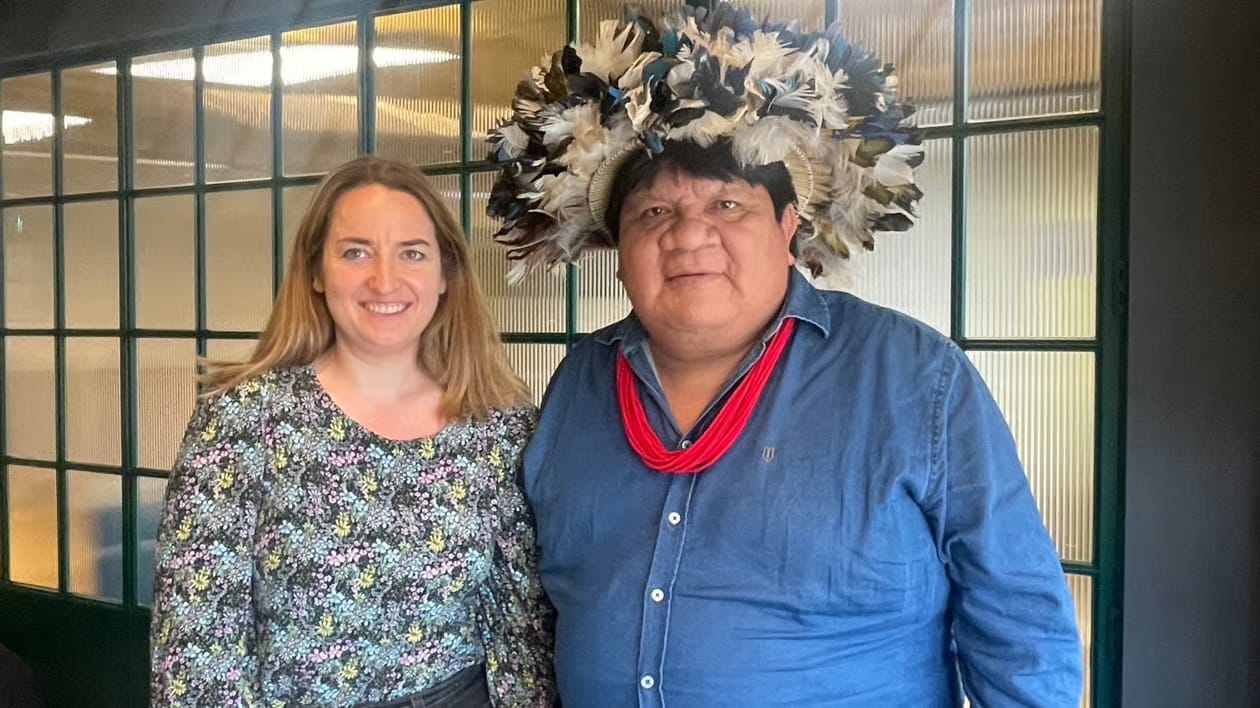
One interview down. 99 to go.
My first job after switching careers into journalism was booking guests for a daily politics TV show. I used to pre-interview around 30 people a week. So with this logic, I estimated that I would be able to interview the remaining 99 people over the course of 3-4 weeks (despite my limited Spanish, rusty French and non-existent Portuguese and Indonesian languages).
London Climate Action Week was a chance to interview a lot more people in person. It was a blur of tube journeys, zig-zagging across the capital to attend various events and speak to different Indigenous leaders. After that intense week (in which my phone crashed and I temporarily lost all the interviews I’d done to that point), I realised that to reach 100 interviews, I would need help.
We assembled a team of journalists, with one from each of the countries that would comprise the bulk of our interviews. These are the places with the largest areas of tropical forest: Brazil, Peru, Colombia, Indonesia, Venezuela, Bolivia and the Democratic Republic of Congo. Everyone had already worked on stories with Indigenous communities, had amazing contacts and understood the spirit of the project from the outset.
We set about contacting people to arrange interviews – on Zoom, WhatsApp or in person – combined with other field trips or events. I got through many interviews with my basic Spanish. One Indigenous woman I video-called in her territory said goodbye at the end of the interview and blew me a kiss.
Our journalist in Bolivia, Rocío Lloret, told me that although she had been reporting on Indigenous issues for several years, she had never asked people these kinds of questions.
Not every person we contacted wanted to be interviewed. The question of compensation came up, as did "research fatigue" – which refers to the fact that some communities are often interviewed by academics, journalists and NGOs. One leader I asked to interview replied with a voicenote. She sounded weary and angry. She did not want to speak to another journalist, she said, since she’d spoken to too many, and nothing had changed for her people.
As the interviews came in, I started translating them and organising them in a gigantic spreadsheet. I was so struck by the range of answers to some questions – particularly to the one asking what it meant to be recognised as the “best forest guardians”. Many people in Peru forcefully rejected this term. But other similarities across countries and continents, particularly on the relationship with the forest, became clear.
We asked questions about access to food, water and healthcare, and solutions to climate change. And time and time again we heard how Indigenous people were experiencing the climate crisis here and now, through floods, droughts and diminished crop harvests.
The Belém talks are now over. And many are disappointed at the lack of agreement on the roadmap to phase out fossil fuels and to end deforestation. But new announcements were made around the formalising of ownership of Indigenous lands. And there was huge civil society mobilisation around the event, particularly from Indigenous people, and on a scale not seen in recent years.
One demonstration in Belém ended with Indigenous peoples storming the conference venue, and another saw several members of the Munduruku community peacefully blocking the main entrance. The second resulted in a meeting with the Brazilian head of the climate negotiations.
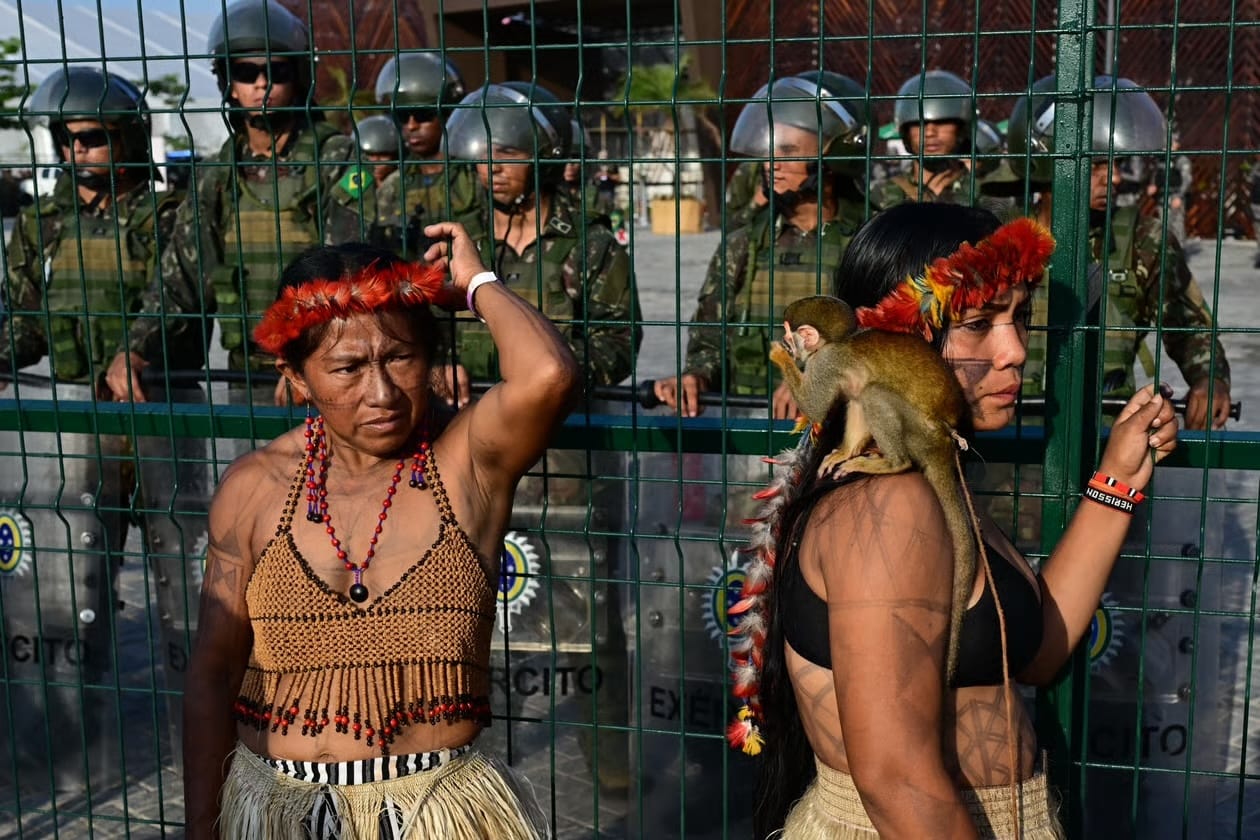
Their righteous anger was justified. Indigenous people are facing the most extreme effects of climate change and yet are least responsible for this crisis.
I heard this anger and pain firsthand. Sara Omi, from the Emberá People in Panama, was in that photo from Paris in 2015. When I interviewed her in London – and showed her my crumpled printout – she wept while describing female leaders being arrested and chained up. “It hurts us deeply as women,” she said.
Once the reporting was done, we were left with a final, extremely tough challenge: to put together a story that meaningfully represented this huge diversity of voices. So my colleagues Frankie and Edin built a unique web page that enables readers to hear from all our interviewees. If you have clicked on the story more than once, you will see that each time different people come up with short and longer quotes from their interviews.
You can also click through to more of the most powerful testimonies on the different issues we drilled into: ranging from threats to their lives and lands, to what the forest means to them.
The question "What is the forest?" brought so many profound and moving answers – it was described as a mother, pharmacy, supermarket and temple – that I wanted to commission a mural to represent them visually, and take our story “off the page”. So with our colleagues at MídiaNINJA, we brought together an incredible group of urban artists from the Amazon region. They painted the courtyard of Casa NINJA – a hub of climate-related artistic activity throughout Cop.
Within the 100 interviews, there are at least 100 potential investigations: from personal stories of illegal gold mining in the Amazon to the 11 climate activists detained in Indonesia, and to reports of violence against women and girls within Indigenous communities. With so much more to be uncovered, hopefully this project is just the beginning.
 Jacob Granger