New interactive toolkit helps local journalists report on science
The Science Reporting Navigator equips community reporters with practical templates, worksheets, and lessons to weave scientific evidence into stories on any beat - no science background required
This article was migrated from an old version of our website in 2025. As a result, it might have some low-quality images or non-functioning links - if there's any issues you'd like to see fixed, get in touch with us at info@journalism.co.uk.
Local journalism plays an integral part in informing the public and dispelling misinformation. Yet there’s a common misconception that covering science falls solely under the purview of reporters with a background in science who write for niche outlets. This artificial divide between science journalism and the rest of journalism weakens the industry to the detriment of the communities we serve.
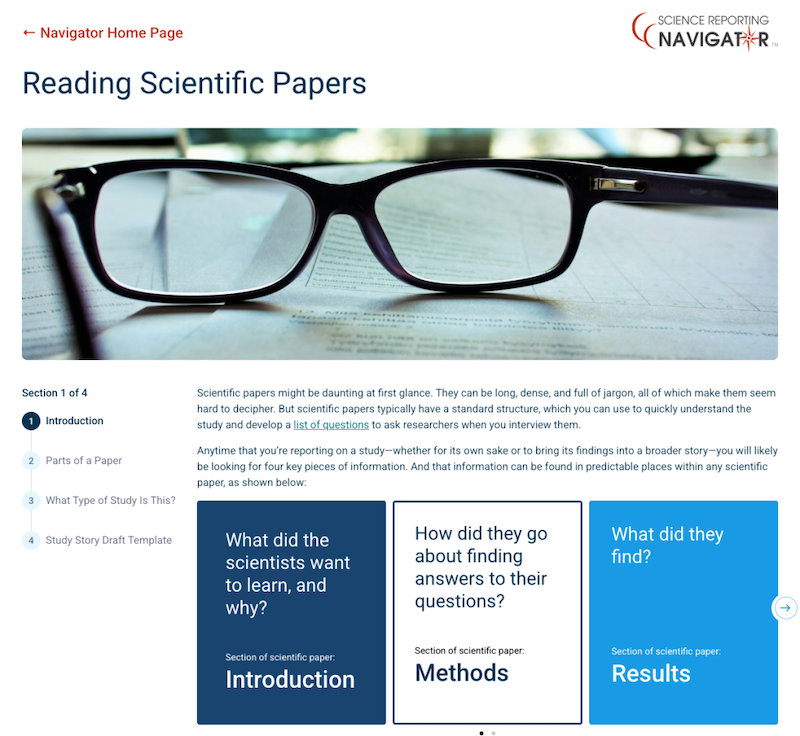
You can choose how you navigate through the toolkit by selecting one of three options that best suits your needs:
Follow a learning path: Journalists can select one of six scenarios that aligns with their work and walk through a series of lessons addressing those reporting needs.
Explore by topic: If you have a little more time or prefer to explore on your own, you can browse through all ten lessons available in this toolkit and choose where you want to strengthen your skills.
3. Browse the resource library: RJI's lessons are packed with downloadable templates, worksheets, and checklists. Choose this option to quickly access a helpful resource for a specific task.
This is an edited version of an article that wasoriginally publishedby the Reynolds Journalism Institute and is republished here with permission.