This article was migrated from an old version of our website in 2025. As a result, it might have some low-quality images or non-functioning links - if there's any issues you'd like to see fixed, get in touch with us at info@journalism.co.uk.
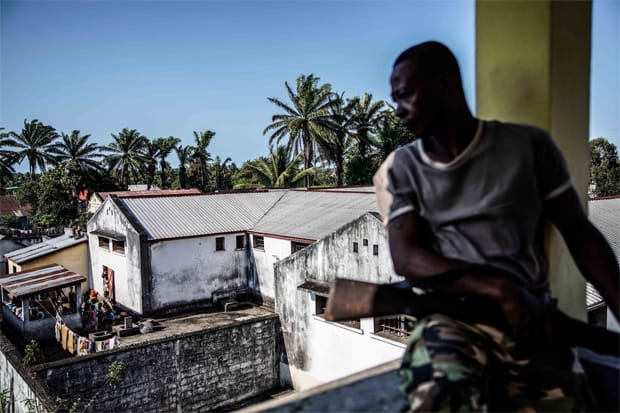
The BBC has released a 360-degree video which transports viewers from the comfort of their homes into Madagascan prisons where women are incarcerated for their male relatives' crimes.
As part of the BBC’s investigation, the video serves as an ‘immersive partner’ for an initial piece published in November 2018.
Unlike the linear version, the 360-video enables the audience to look around the surroundings of the prison as the video is played and narrated. Senior journalist Marc Ellison who leads the project, said virtual reality headsets, such as the Oculus Go or Google Cardboard Headset, are effective at placing the viewer in the moment.
"It's one thing to watch a regular two-dimensional video but it's another to watch it through a headset and actually feel like you are there in a prison and seeing women on camera. You’re there as they are getting ready for church, as the door shuts on their prison cell, and you can see how cramped and dirty it is," he explained.
Also available on desktop and mobile, the viewer can click, drag, swipe and tilt up and down, left and right, to take a look at life inside two of Madagascar's prisons.
"360 has become known as the ‘empathy engine’, which has become a bit of a cliché in the VR industry but there’s a certain element of truth to it," Ellison explained.
"It really just gives you that visceral, personal, intimate experience of being there in the prison with them, to some extent arguably that does generate a bit more empathy than a traditional linear video would. That’s what we wanted to achieve."
There used to be something here that couldn't be migrated - please contact us at info@journalism.co.uk if you'd like to see this updated!
Because 360-video shoots in all directions, Ellison said that he needed to be especially aware of consent and anonymity, which made for a rigorous editing experience.
But the payoff is providing an insight into those ‘otherworldy’ conditions which the viewer would otherwise never get to see.
As the video explains, some detainees were still awaiting trial and filming them could have prejudiced their legal proceedings. Ellison also blurred out children's faces to protect them from the stigma associated with growing up in a prison.
"We played it safe. We knew in one prison everybody was fine, but in the second one, where it was a mixture of half-and-half, I would make sure every woman was comfortable before I even started recording or got them to move out of the perimeter.
"Any time there was even a slither of doubt about consent, we would just not use that scene because we didn’t want to be blurring out everybody in the frame; there would be no point using something fully blurred out."
Copyright: Marc Ellison
However, Ellison had more editing to do than just blurring out faces.
"One of the first things I do in the editing process is remove the tripod legs. Nothing breaks the illusion of immersion faster than looking down and seeing tripod legs.
"When I watch other people’s 360-videos, one of the first things I do is look to see if they’ve taken the time and effort to remove the tripod legs," he said.
"The challenge is being well organised and having a bucket list of types of shots that you want. Typically, I write a skeleton script beforehand to help me come up with those shots.
"I don’t like to be in the video myself because it’s not my story to tell. I want people to be engaged in their stories."
Interested in using 360-degree video but unsure how? We have just the course for you. Book your place on our in-house360 immersive reality video trainingon 15 April in London