The rise of personalities: Why young journos need to build their brand early
Media employers want journalists who are confident on camera and can tell a story in 60 seconds

– 6 min read


Media employers want journalists who are confident on camera and can tell a story in 60 seconds
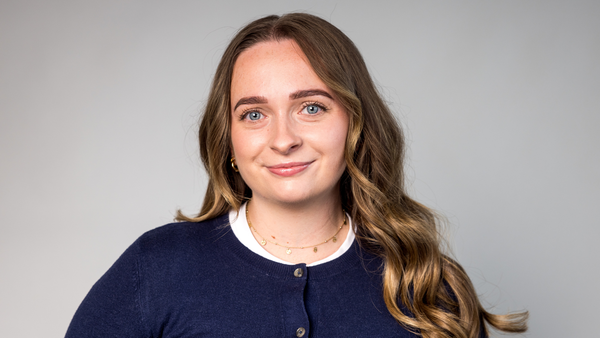
This article is from our community spotlight section, written by and for our journalism community.
We want to hear about your challenges, breakthroughs and experiences. Want to contribute? Get in touch and help shape the discussion around the future of journalism.
Think about how you like to consume your news. Do you buy the paper? Tune in to the radio? Subscribe digitally? Discover stories on social media? For an increasing number of people – and no, not just Gen Z – their answer is the latter.
It’s no secret that platforms like TikTok, Instagram and Reddit are de-throning traditional outlets of news consumption in the age of digital and social media-dominance. But what is becoming increasingly noticeable is the rise in favour of not just video-led, but personality-led journalism. And industry hopefuls would do well to pay attention.
The shift toward personality in journalism
Speak to anyone who feels disenchanted with legacy media organisations, and they'll likely say one of three things: lack of trust, too much misinformation, or too negative. I can guarantee you that these disillusioned audiences are in fact engaging with the news, just in untraditional ways.
While they're unlikely to have subscribed to a newspaper, they’re probably following a news creator. Journalists like Dylan Page and Sophia Smith Galer are some of the most recognisable – both are known for presenting global news events on TikTok and have been able to foster larger followings than most legacy publications.
Ask a Gen Z if they read the latest foreign report from Gaza, I’d bet the majority would say no. But ask if they watched Tommy G’s YouTube investigation into Israeli influence over US politics? Many more would say yes.
Why? People trust people, not brands. And this is true across much of the media industry. It is irrefutably linked to the rise of influencers and social creators; trust is earned now not through branding or by name, but through authenticity and likeability. And newsrooms are starting to pay attention.
Why personalities matter in the newsroom
In my own newsroom, The Times & The Sunday Times is definitely embracing this shift.
In the past six months, our social strategy has pivoted away from still creatives, text-based posting and heavily-designed campaigns to almost entirely video. It’s been embraced across all sides of the business, from editorial right through to paid marketing. And we’ve reaped the rewards: as a result of this shift, our TikTok and Instagram accounts have grown at a faster rate than ever before. The Times' Instagram account has grown by almost half a million followers this year – which is astounding.
Yes, consumers have converted to video-first, but that’s not where it ends. Following TikTok’s astronomical success, Meta’s algorithms are also favouring video, meaning reels on Instagram, Threads and Facebook have been favoured over all other types of content.
@thetimes Separation rates are falling in much of America — but not in some conservative states where women are often told man and child is the limit of their ambitions #conservative #republican #alabama #marriage
♬ original sound - The Times and The Sunday Times - The Times and The Sunday Times
And now, we're putting our journalists at the front and centre of this strategy. Based on the success of our videos, we've invited more reporters, correspondents and editors to tell their stories on camera. It’s been quite the transition – I'm sure it’s not surprising that some of the best writers and investigators are not actually the most compelling on camera. But engagement rates on piece-to-camera videos compared with the static, text-based posts that used to dominate newsroom socials is indisputable, so more and more journalists are starting to see the value in learning how to be social-first and camera ready.
Why young journalists should pay attention, too
Knowing how to turn a 1000-word exclusive investigation into a 60-second, engaging and visually arresting social video is an incredibly valuable skill. And it is the upcoming generation of young journalists – those who likely grew up using social media and are social-natives – that will bring these skills into newsrooms.
Building and retaining an audience is, I would say, the number one priority in newsrooms today, as we face news apathy, the threat of AI, and increasing distrust in the news. If you can demonstrate that you are able to build and foster an audience of your own on social media, you are more desirable to a media organisation that is trying to do the very same.
Building camera confidence
Now, personal branding online is not something to take lightly. I am completely aware that to put yourself out there on social media can feel incredibly vulnerable. That’s why it’s important to set boundaries.
When I first started my TikTok, I knew what I wanted it to be: a go-to page for inspiration, practical advice and accessible information about the journalism industry and career opportunities in the field.
@luc.obrien The handbag scene at the end has finished me off but I’m trying to be creative for you guys 🤣 #workvlog #workvlogtimestamp #timestamps #timelapse #timestampedroutine #worklife #cometoworkwithme #working #officejob
♬ カフェでボサノバを聴く休日 - ya-su
I knew that this meant sharing a part of my personal life and career journey, which I was comfortable with. But you don’t have to do the same thing. You can make a page entirely dedicated to your journalistic ideas, stories, and passions, rather than your daily life as a writer, etc. Katie Inglis is a great example of an emerging news creator who has built a niche reviewing headlines and stories that she enjoys reading every week.
@katieinglis_ Hello! I’m a journalist and here are my top features I’ve read this week 📚 Let me know what you’ve been enjoying 🫶🏼 #journalist #culture #magazine #news
♬ original sound - Katie Inglis | Journalist
Carve out a niche, establish what you are comfortable with sharing, and create regular formats that your audience will want to return to.
The competitive advantage
Employers are becoming increasingly aware of the importance of personality-led journalism and social media audiences, so building a presence online can often work in your favour.
Most organisations are starting to collaborate with journalists' individual social media accounts – not only to help build trust in the personality, but also to leverage their engaged followers. In the last few months, I’ve seen first-hand how people with successful Substacks, blogs, media presence or social accounts have been prioritised in the hiring process.
Practically, of course it makes you stand out on job applications, but it is also a really creative, alternative way to create a portfolio. Rather than building a website on Wix, why not start a TikTok based on the journalism that interests you?
I'd argue a concise and engaging 60-second reel is just as impressive as, if not more than, a published written piece. It’s killing two birds with one stone: starting to build your presence as a journalist while also keeping a digital portfolio of all your work.
For me personally, building my TikTok has led to many more opportunities, particularly this early on in my career. My bosses, having seen my social profile, began to see me as a more serious player on the team. I was encouraged to present on-camera for Times stories early on in the birth of our video-first strategy, and was listened to as a voice who understands social video.
@thetimes Can you handle a heated debate? Classroom debating in the UK will become commonplace in most subjects under the new national curriculum, the education secretary has said. #schoollife #debating #uknews #educationtiktok #ukschools
♬ original sound - The Times and The Sunday Times - The Times and The Sunday Times
Outside of my role, it has definitely fast tracked my career. It’s led to speaking and mentoring opportunities, helping out with newsroom accessibility events like the Times Summer School, and with networking. I’ve even had someone who works in PR approach me at a pub!
Tips to try out tomorrow
My advice is to follow your instincts, create content on what interests you, and try new things.
You don’t need to be an expert in Adobe Premiere Pro or CapCut to make an engaging social video. I filmed and edited my videos organically on the TikTok app, which is easy and intuitive. Take inspiration from the content that you engage the most with and ask yourself why.
I’d also say not to overthink content – lots of social journalists and content creators gain virality by simply talking to the camera. Have a hot take? Film it, don’t write it. Have a video series idea you’d love to see your favourite publication do? Try making it yourself.
More than anything, if you see a gap in the market or an unexplored niche that interests you, don’t hesitate to fill it. Even if you have doubts. I have been overwhelmed by the response to my TikTok videos, and truly underestimated the amount of people that would find it helpful and fun to watch. I’m so glad I decided to post that first video:
@luc.obrien Come to work with me 👩🏻💻🗞️ I hope this account will help somone looking to break into journalism/media. Ask me anything !! gradlife corporategirlies londonlife twenties journalist
♬ Walking Around - Instrumental Version - Eldar Kedem