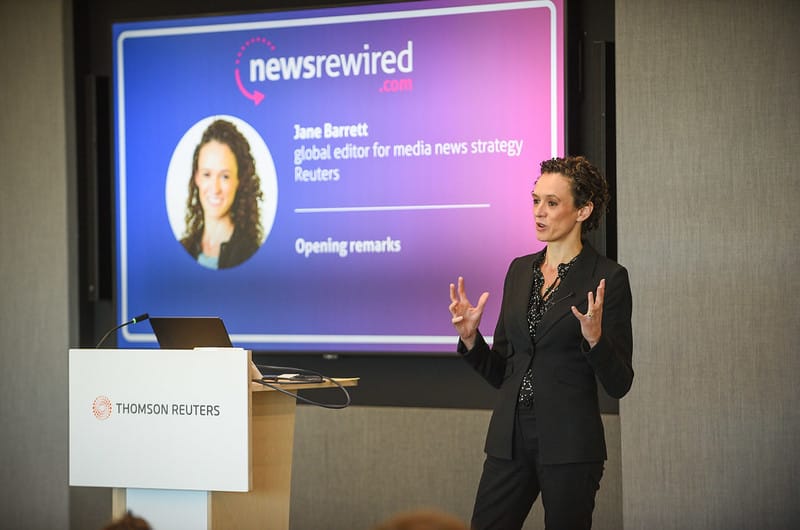
Journalists are typically strong communicators. They're used to pitching in editorial meetings or presenting on camera. But put them on a stage to talk in front of a crowd, and you'd be surprised that even experienced presenters can have a hard time getting their point across.
I've seen it many times at journalism conferences. People talking in circles, losing their point, and ultimately, getting discouraged. Public speaking is a skill in its own right.
If public speaking is on your 2026 skills-to-master wishlist – and it should be, stage time is great for your career – we asked keynote speaker, consultant, author and communications coach Martin Brooks for firsthand tips and guidance.
1. Recognise that public speaking is a distinct skill
Expert insight: Even experienced professionals can struggle when moving from familiar environments to the stage. "Being good at talking about what you do is different from being good at doing it," he says.
Action: Treat public speaking as a craft to be learned and practised, not an automatic extension of your journalistic skills.
2. Avoid the 'runaway train' effect
Common pitfall: People – journalists included – often start speaking before they've processed what they want to say. They end up being unable to stop, repeating points and losing their thread.
Solution:
Pause before you speak. Remember the Mark Twain quote as motivation: "It’s better to keep your mouth shut and let people think you’re an idiot than to open it and remove all doubt."
Breathe in before answering. This simple act buys you thinking time and helps you map out your response.
Embrace silence. Don’t rush to fill every gap — audiences appreciate considered answers.
3. Structure your points: the power of three
Why three? The 'rule of three' is a timeless way to make your message memorable and manageable. Handy if you need to prepare a speech or can anticipate a question coming up.
How to use it:
Before answering, quickly identify (ideally) three key points. Take a moment to collect your thoughts if you need to.
You can buy yourself a bit of leniency by saying "a few things" instead. The worry for many is committing to three points and then not being able to deliver.
Use three descriptive or catchy words to reinforce your message. Many memorable slogans are in threes: i.e. inform, educate and entertain.
A focused, three-step response emits confidence and clarity.
4. Speaking with your body language
First impressions count: Audiences judge speakers visually before they process words.
Be selective: Research shows top TED speakers use more gestures per minute than less engaging ones. Use your hands to illustrate points, but avoid overdoing it.These are Brooks' top tips:
Confidence: Most speakers instinctively step back when starting. Instead, take a small step forward, smile, and use a confident gesture (like the 'parallel handshop') to project assurance – it looks as if you’re holding an invisible box in front of you, with your palms facing each other and parallel to the ground.
Jane Barrett, head of Reuters AI strategy
Precision: When talking about technical or nuanced subjects, the 'pinching' gesture is effective at getting people's attention – skilled public speakers like Barack Obama are well-known adopters of this technique.
Charlie Celino, director, commercial services, NewsUK
Calmness: Audiences often pick up on how speakers are feeling. Tension is quite visible, while calmness puts the audience at ease — lower your shoulders and take deep breaths to appear and feel more at ease.
Dmitry Shishkin, strategic editorial advisor, Ringier Media
5. Practise, practise, practise
Mindset shift: Be aware of your common habits. Record yourself speaking and play it back if you have to. For me, editing my own podcast for years has made me painfully aware of my filler words (sort of, kind of, like). Rushing is also common, and all these habits do is strip you of credibility.
Brooks’ advice: "Don’t practise until you get it right — practise until you can’t get it wrong". Repetition builds confidence and helps to iron out your bad habits. It also helps you internalise new techniques.
6. The underrated tip: Own the opening
Differentiate yourself: Most speakers are most nervous in the first 10 seconds, and then report calmer feelings once they've 'gotten into it'.
Start with a strong, positive smile. Greet the audience warmly. Don't waste any time trying to establish a welcoming, positive tone.
Fun fact: Brooks coached AI futurist Andrew Grill, who recently spoke at our Newsrewired conference. You can see the training coming through here:
Remember the power of talking with your hands. Grill is clasping his hands at the start of his presentation to invoke a welcoming sense of togetherness and bonding. And he is doing this early to hit his stride right away.
This article was drafted by an AI assistant before it was edited by a human. All images by Mark Hakansson / Marten Publishing