Share licence fee between broadcasters, say Ross and Bazalgette
Disaggregating licence fee would boost plurality, say industry experts
– 2 min read


Disaggregating licence fee would boost plurality, say industry experts
This article was migrated from an old version of our website in 2025. As a result, it might have some low-quality images or non-functioning links - if there's any issues you'd like to see fixed, get in touch with us at info@journalism.co.uk.
There used to be something here that couldn't be migrated - please contact us at info@journalism.co.uk if you'd like to see this updated!
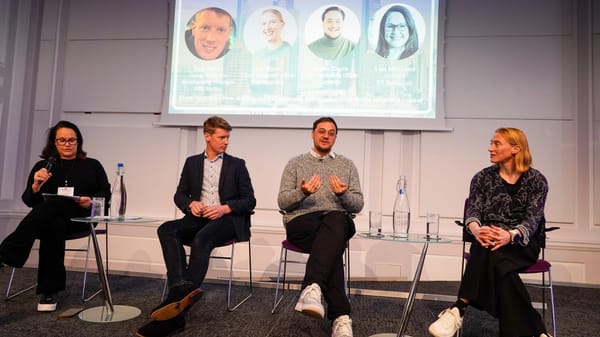
The television licence fee should be shared between all broadcasters, BBC presenter Nick Ross told an industry gathering last night.
Ross, who presented Crimewatch for 23 years, added that the licence fee was becoming arbitrary, because programmes such as The Apprentice were erasing the distinction between the BBC and commercial television channels.
"If we're going to give subsidies, why give them to just one organisation?" he asked the audience at a Media Society debate on the future of British television.
"If there are 120 really good programme makers, why only give money to the BBC?
"We should give money to everybody who's prepared to make great programmes and do it on an investment basis, so that if they make money, we get some money back (...) I think it's the future and I hope it is."
Ross argued that an independent funding council could offer a more 'nuanced' approach in determining which programmes constituted a public service. He highlighted the BBC's Dragon's Den as an example of a popular programme which fulfilled a public service role by 'teaching venture capitalism', but said The Apprentice fell into the category of 'commercial entertainment'.
He also accused the BBC of spending increasing amounts of money 'protecting itself' instead of protecting its public service remit.
"The BBC is craven and has to be craven because the licence fee is dictated by politicians," he said.
"If we don't get enough bums on seats and reach the right spread across the population, we will not be able to justify the licence fee. It's very similar to working in commercial television."
Ross dismissed the suggestion that sharing the licence fee would damage the BBC's reputation as an independent broadcaster.
"Does Google lose its independence because it's not funded by the government? Does Sky News or The Times? I don't accept that what makes independence is taking money from the government," he said.
Fellow panellist Peter Bazalgette, who brought Big Brother to British television, added that Google was becoming 'a fantastic public service tool in its own right', helping the public to find relevant content despite the 'erosion of the schedules'.
He also voiced his support for the disaggregation of the licence fee to encourage 'genuine plurality' in public service content, but warned this would mean 'thousands of voices, not just ITV and Channel 4'.
He added that it would also be possible to fund programme makers by 'taking a knife' to the major broadcasters.
"The BBC and Channel 4 have to put much more of the money on screen," he said.
"They need to cut the swathes of bureaucracy and stop saying how wonderful they are.
"But commercial television has a future because what's being undervalued are mass audiences (...) In the digital diaspora, that will be as rare as hens' teeth."
BBC director-general Mark Thompson on disaggregating the licence fee