What is it like to be a young, female photojournalist in a male-dominated industry?
Reuters’ photojournalist Hannah McKay talks about winning the Pulitzer Prize for reporting on Rohingya refugee crisis and the upsides — and downsides — of being a 30-year-old female news photographer
This article was migrated from an old version of our website in 2025. As a result, it might have some low-quality images or non-functioning links - if there's any issues you'd like to see fixed, get in touch with us at info@journalism.co.uk.
However, the gender gap was not the only problem; she was by far one of the youngest news photographers around. Six years on and with a first recently-won Pulitzer price under her belt, she reflects on what it is like to be a young female photojournalist today.
“It is a very heavily men-dominated industry but I don't see that as an issue at all,” she told journalism.co.uk. “I am respected by my male colleagues and I respect them.”
However, while McKay welcomes initiatives aimed at increasing the number of women in photojournalism, she also wants to see more young photographers out on assignments.
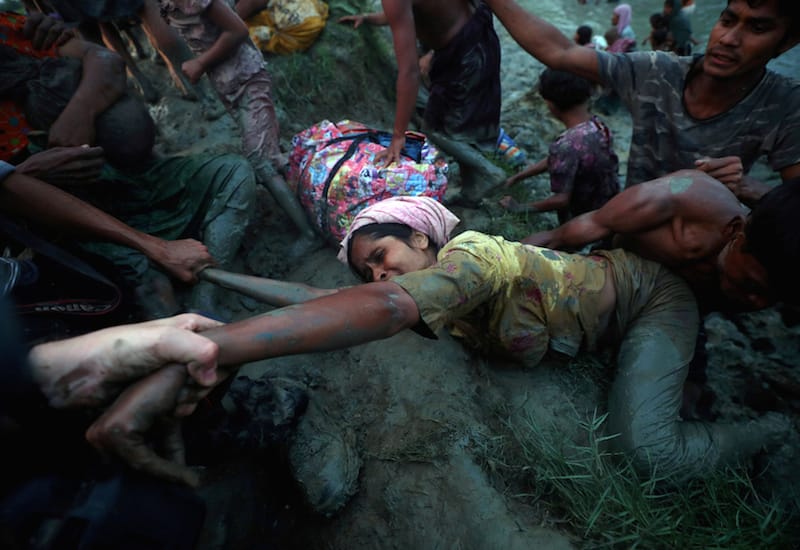
Photographers help a Rohingya refugee to come out of Naf River as they cross the Myanmar-Bangladesh border in Palong Khali, near Cox's Bazar, Bangladesh. REUTERS/Hannah McKay
“There are very few people under 30 and we should promote them because they see the world differently.
“Just like women see the world differently from men, someone who's 25 has a very different perspective from someone who's 45."
Last year, and only three months after she joined Reuters, McKay travelled to Bangladesh for her first foreign assignment to document the plight of Rohingya Muslims in refugee camps.
"I have a real interest in people so I have a natural instinct to photograph them. They help me to tell the story.
"Bangladesh was about people who lost their loved ones during their journey. A lot of time I focused on women and children because they seemed to be the most vulnerable in these situations.
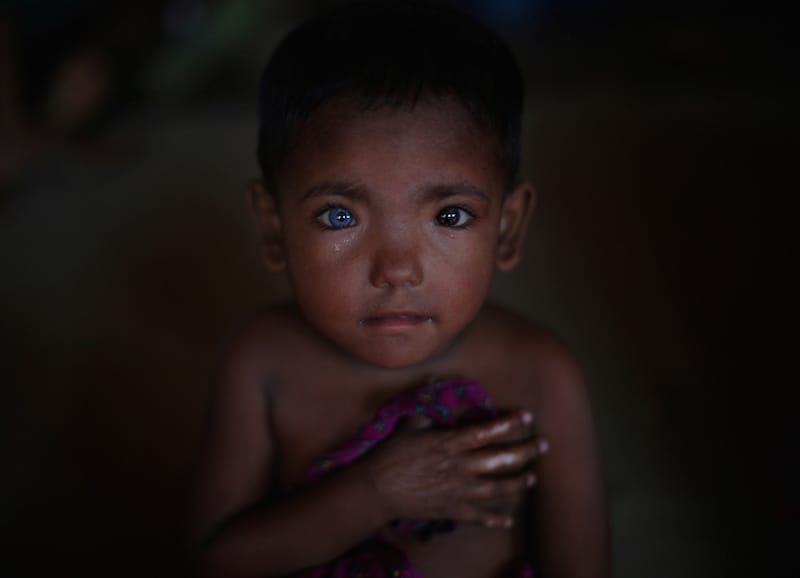
Hosne Ara, 4, a Rohingya refugee who fled Myanmar two months ago listens to children singing at a children's centre in Kutupalong refugee camp near Cox's Bazar, Bangladesh. REUTERS/Hannah McKay
“The guys are able to jump on a truck and hold on for 20-30 km but women with pushchairs and babies can't do that,” she said.
As a female journalist, McKay was able to approach and photograph women in circumstances where a male photo reporter would not be allowed, such as at clinics where female patients have been examined.
However, there were situations where she was not able to take pictures, such as at a funeral where a group of men went on to burry a body in a field and McKay, the only woman around, could not follow them on as she had to think of her own safety.
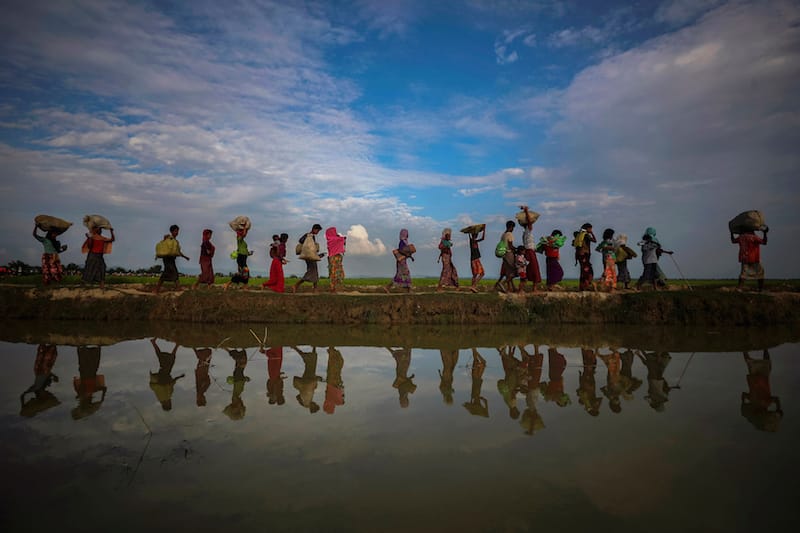
Rohingya refugees are reflected in rain water along an embankment next to paddy fields after fleeing from Myanmar into Palang Khali, near Cox's Bazar, Bangladesh. REUTERS/Hannah McKay
Even back in the UK, being a female photographer has an upside, as often people warm up to you easier when you are a young woman.
“Occasionally, however, people think I'm doing work experience. I sometimes turn up at a job and I'm not being taken seriously because people were expecting a middle-aged white man.”
And how was her award-winning work received by her male colleagues?
“One of the nicest comments that came out in response to my trip to Bangladesh last year was: ‘you're actually alright’,” she said light-heartedly.