12 rules for writing smarter polls
A review of polls by FT, The Times and Yahoo shows that engaging questions capture the heart of debates while staying neutral and accessible
– 4 min read


A review of polls by FT, The Times and Yahoo shows that engaging questions capture the heart of debates while staying neutral and accessible

This article was migrated from an old version of our website in 2025. As a result, it might have some low-quality images or non-functioning links - if there's any issues you'd like to see fixed, get in touch with us at info@journalism.co.uk.
This article first appeared on Opinary and has been republished with permission from the author
Good polls don’t just ask questions. They frame the debate. A strong poll highlights what’s at stake in a topic, makes readers pause, think, and want to weigh in.
Opinary reviewed millions of poll questions across publishers like The FT, The Times of London, and Yahoo. This guide shares 12 clear checks to help editors write sharper questions, surface better angles and drive meaningful engagement.
If you use polls in your editorial workflow, this is the framework to work from.
To write an engaging question, it is best if you address the essence of a current debate.
Ask yourself whether your question deals with the most important aspect of the topic or if there is a bigger picture that should be addressed.
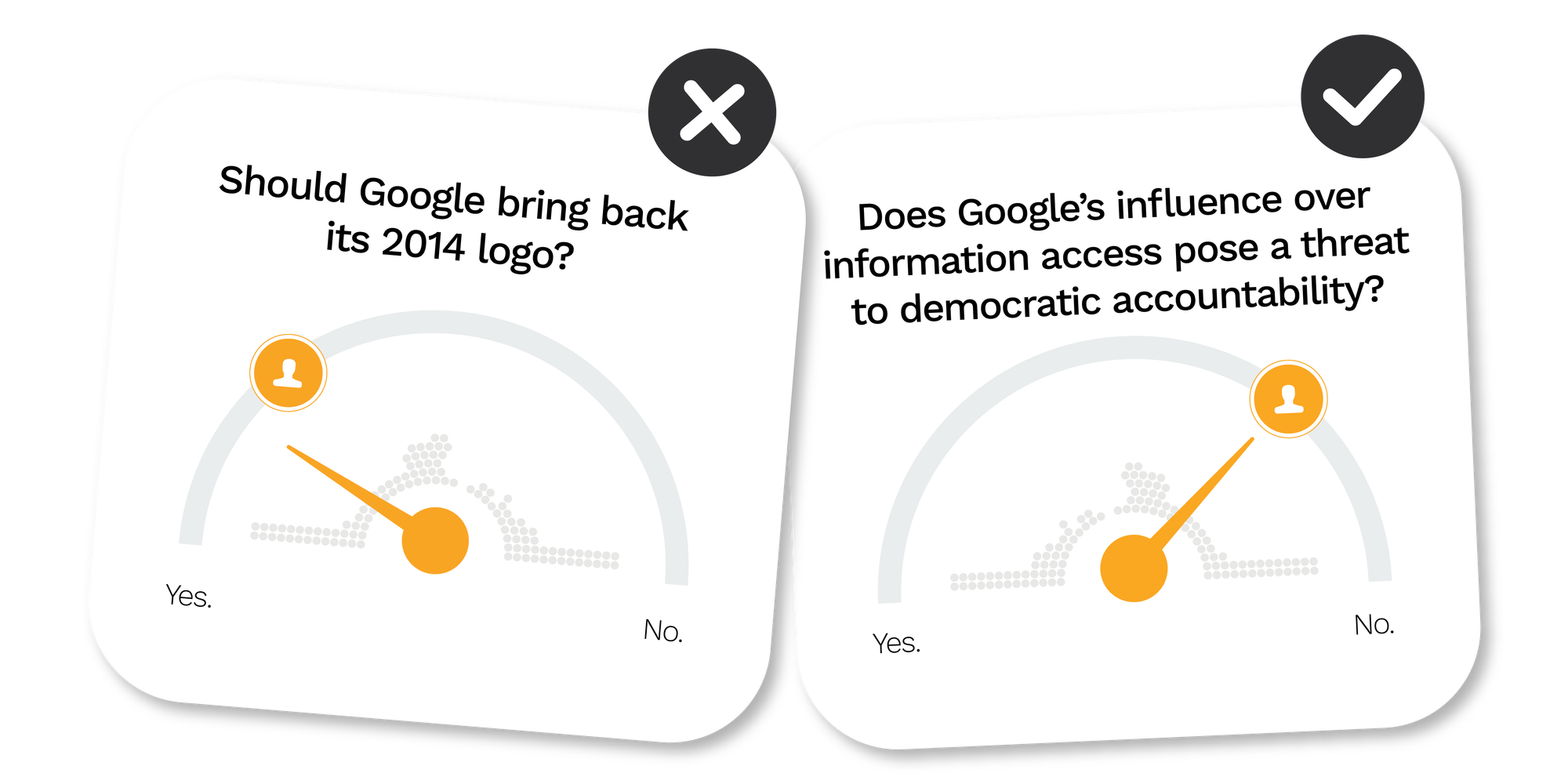
Is the question you pose interesting to your audience? Great! An interesting topic will gain much more attention than an average one.
We know, not every topic is inherently exciting. But every topic has an interesting angle to it. It’s worth looking back at the debate you talk about and considering which point of it could also create interest within your audience.
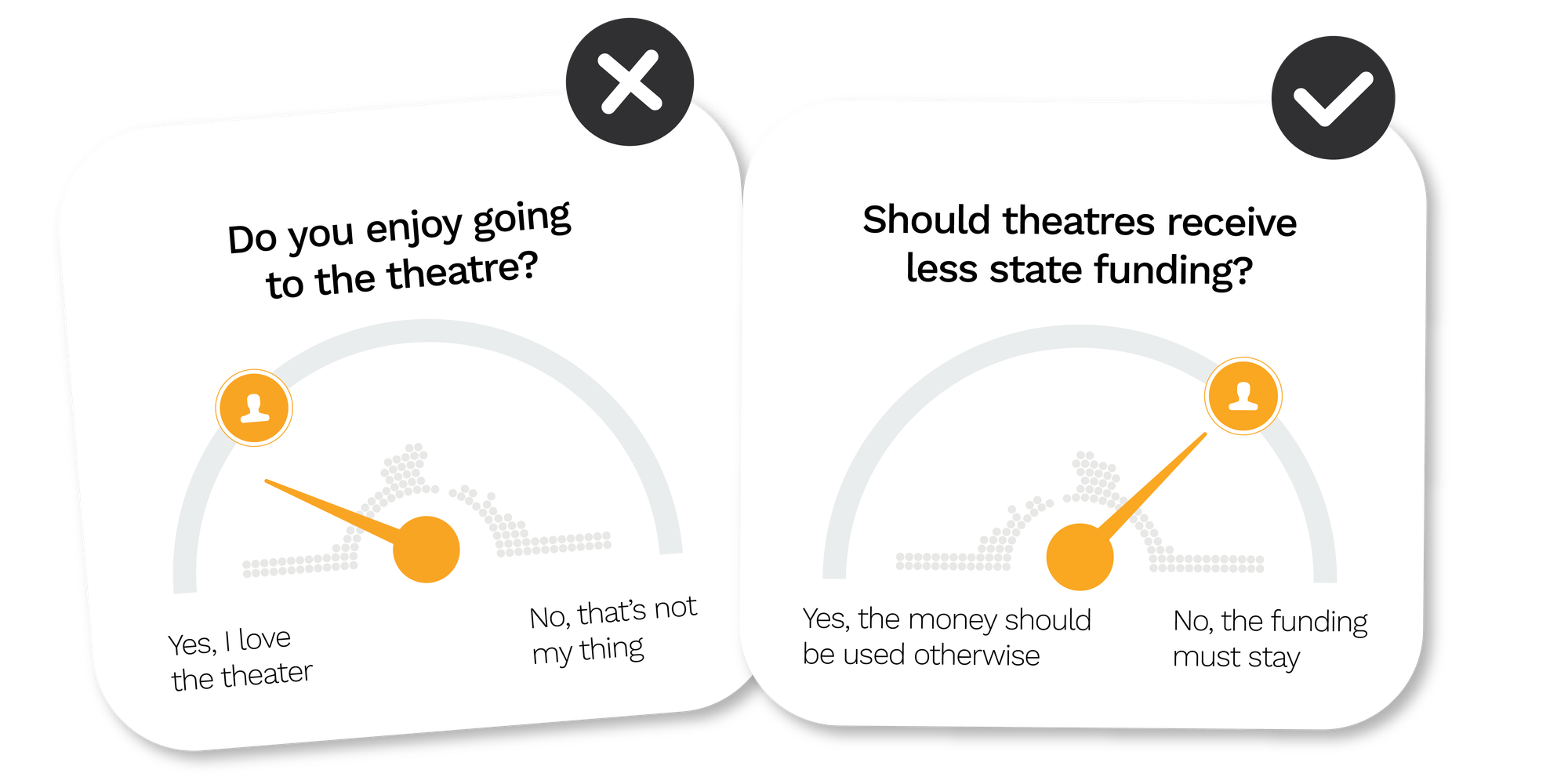
Is the question relevant to all readers? When your question is too narrow, it can exclude parts of your audience by making them unable to participate.
Try to ask your question in a broader and less specific way unless you aim to appeal to a very pointed target group.
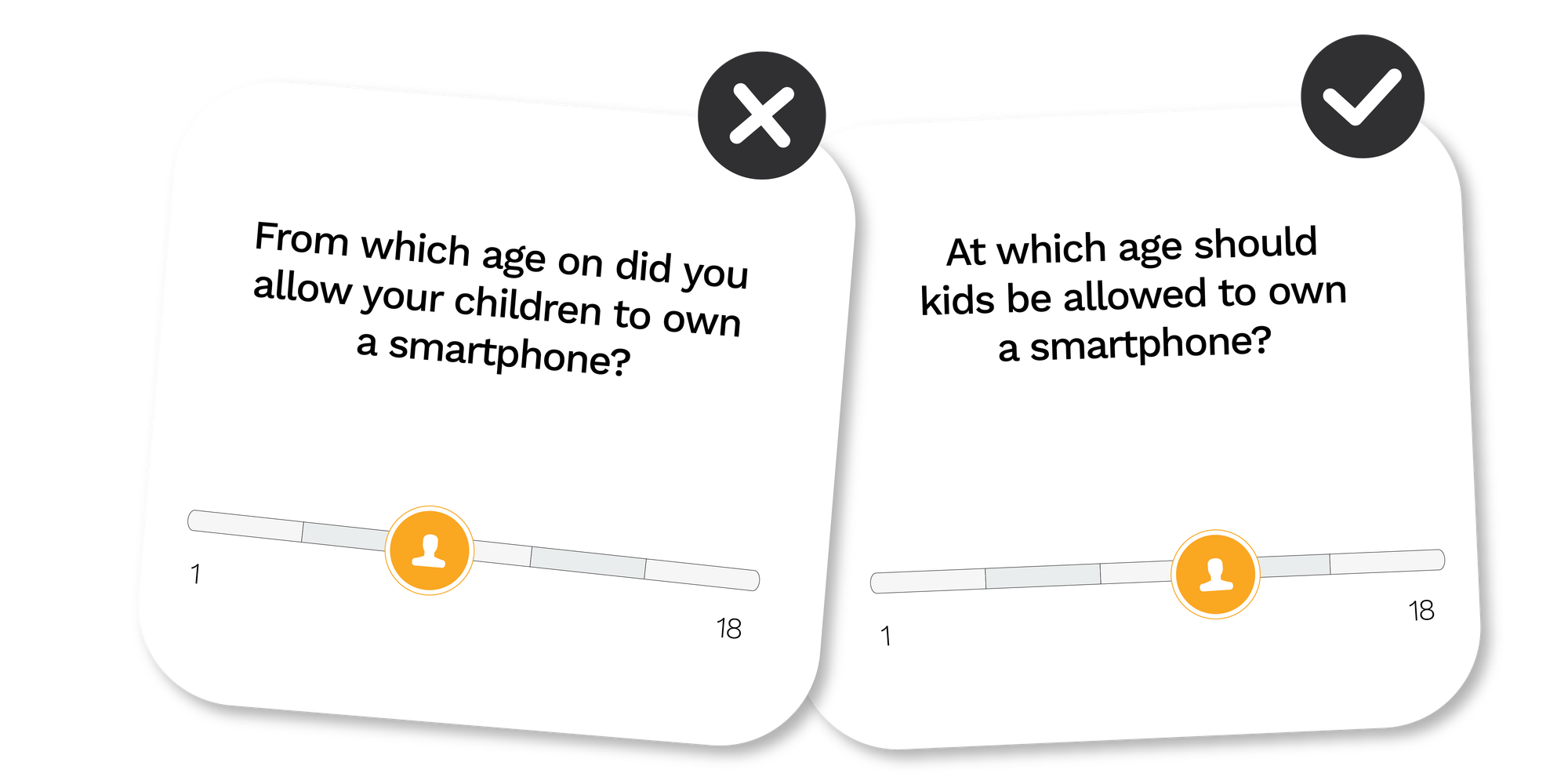
Ensure your question is unbiased. The poll should address the topic in a politically neutral way.
Your answers can still contain opinions but shouldn’t be stereotypes.
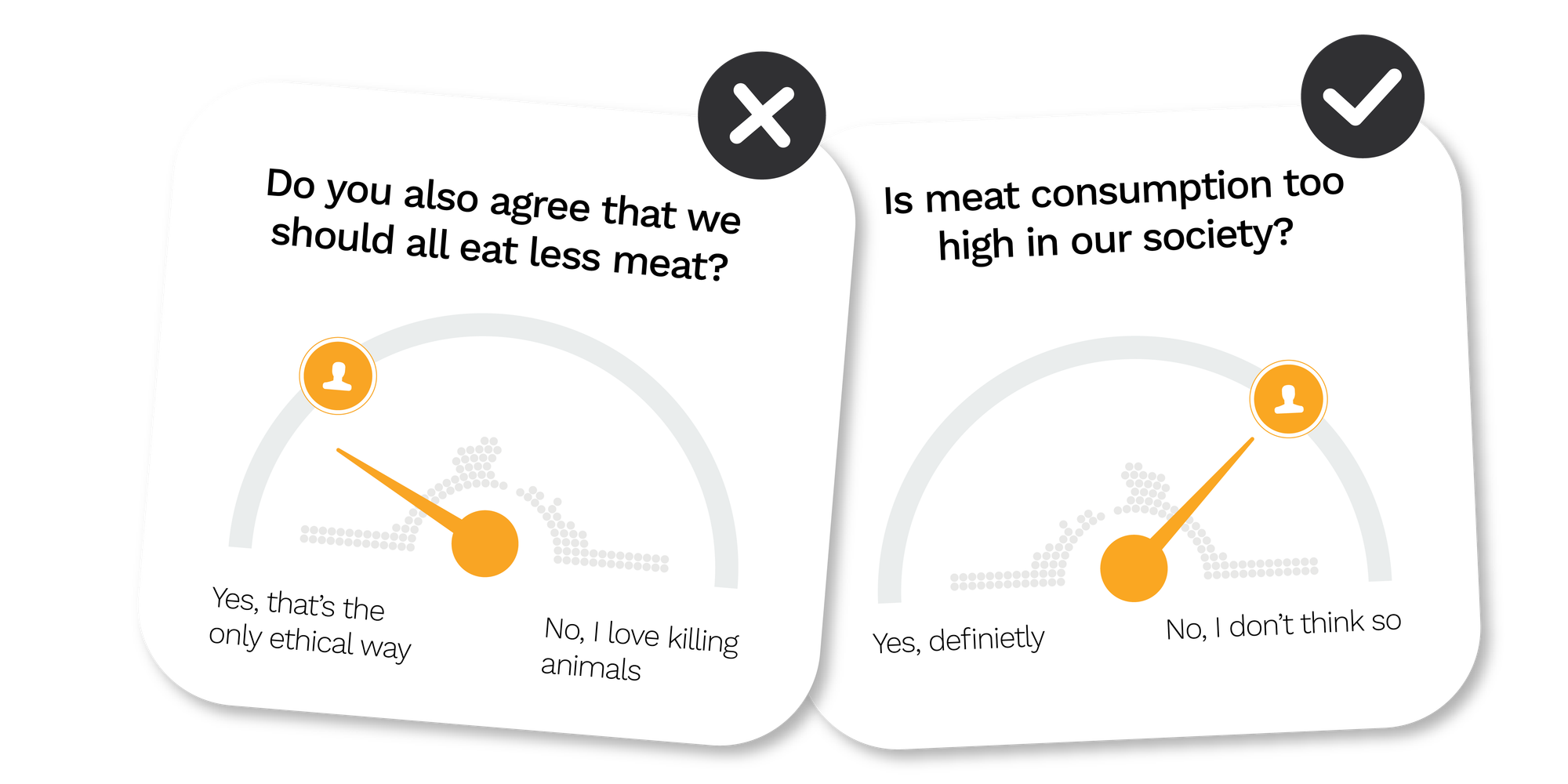
Readers should be able to grasp the content of your question quickly.
Keep questions short and easy to understand. If the wording can be simplified, do so—but without losing the core message.
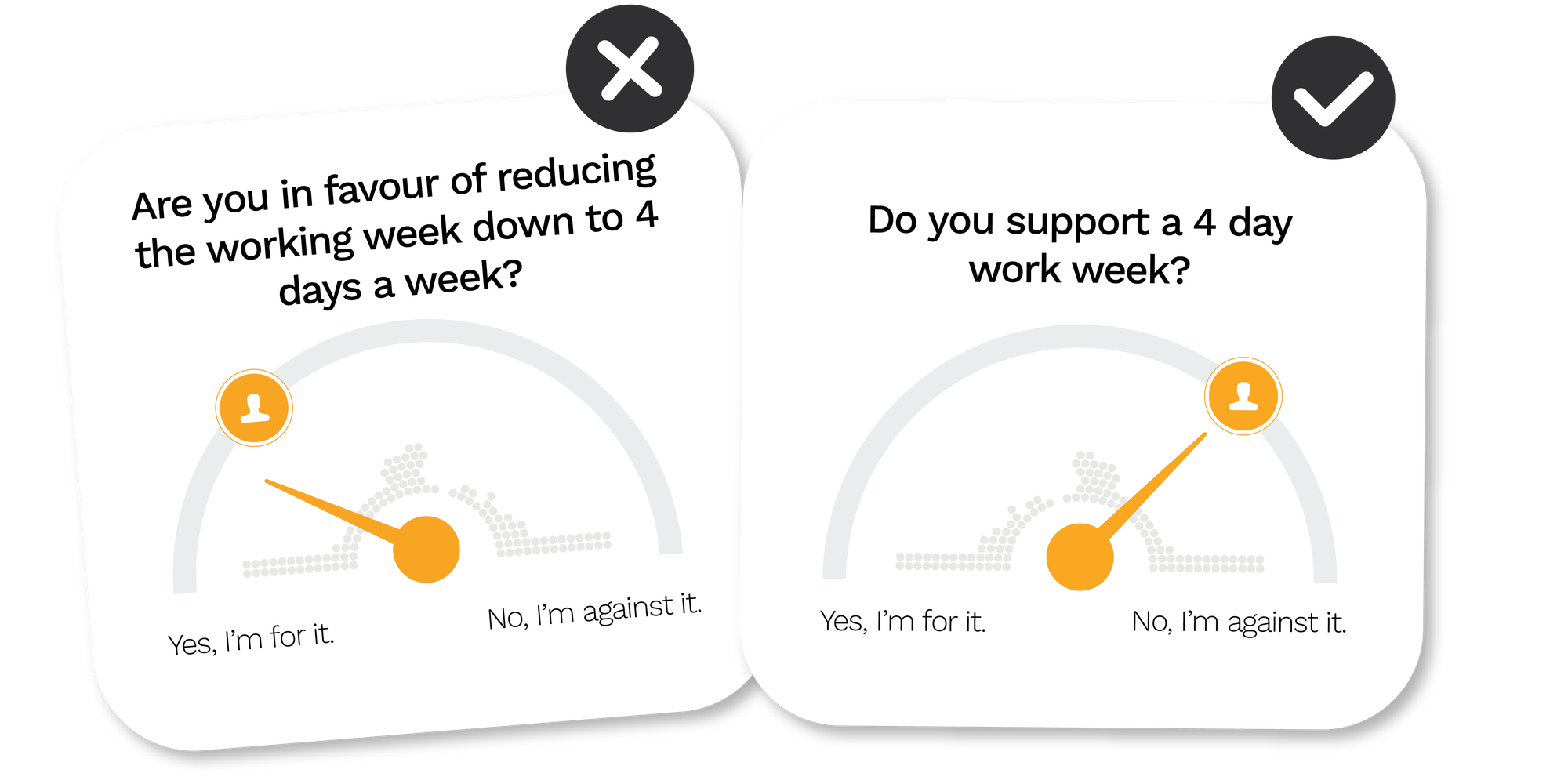
Your question must contain all the information that readers need to understand the discussion.
So, if it is too short, don’t shy away from adding necessary details.
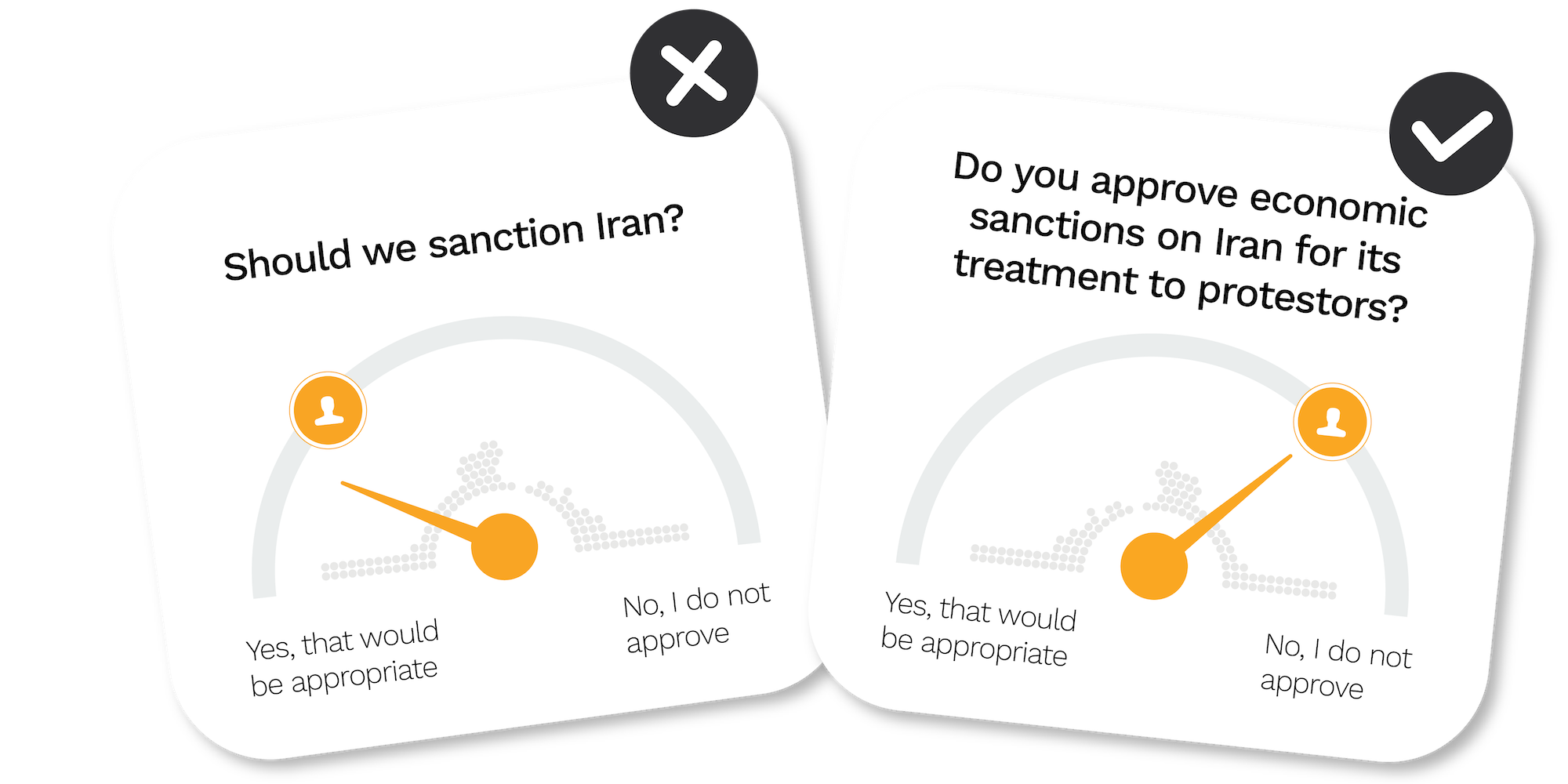
Every publisher and each news section have a distinct style. Your polls need to mirror this to not feel out of place.
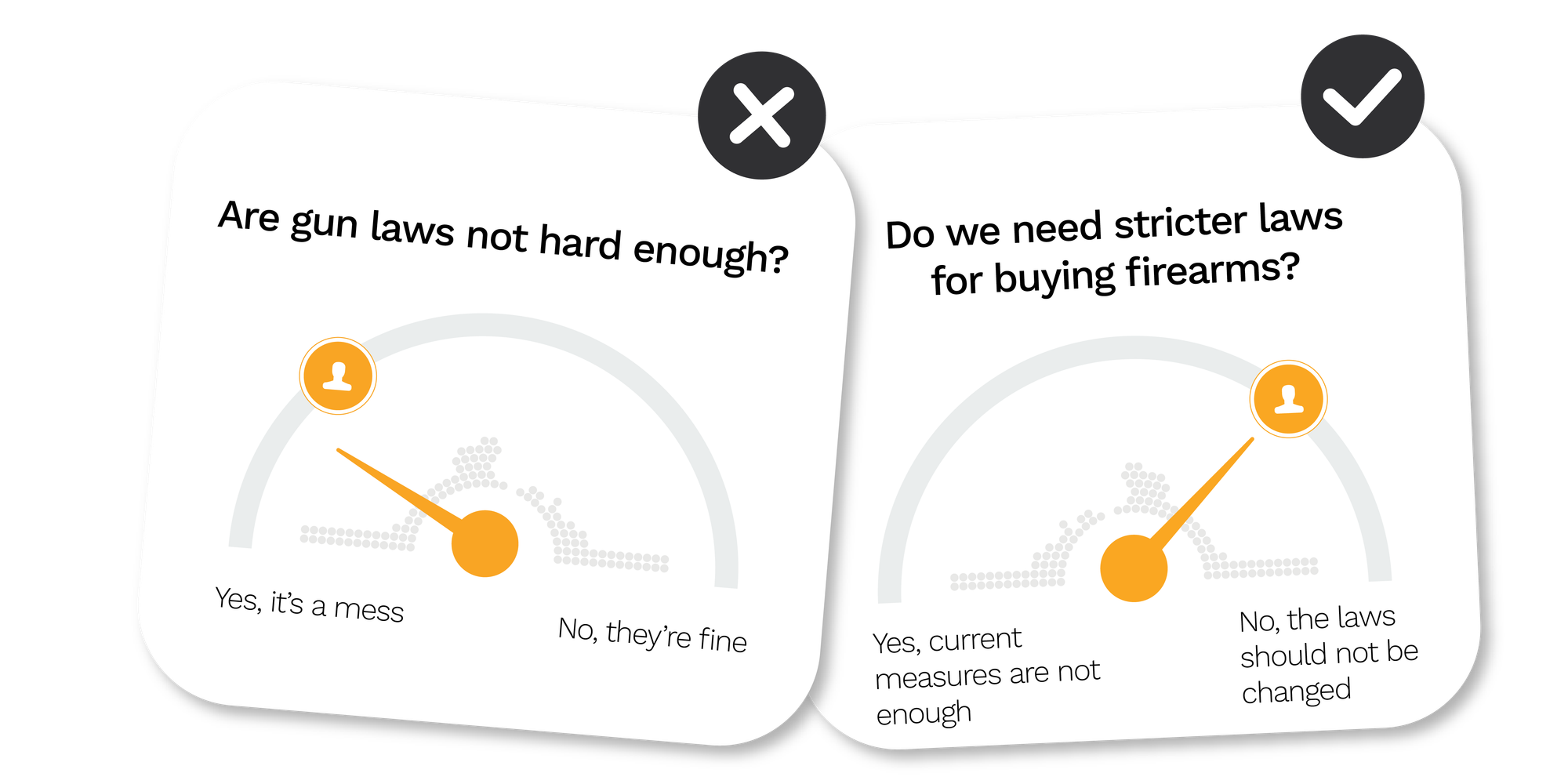
Some topics are more emotionally charged than others and need to be handled with care.
If you still wish to ask a sensitive question, it can help to approach it from a meta-level perspective to check its appropriateness.
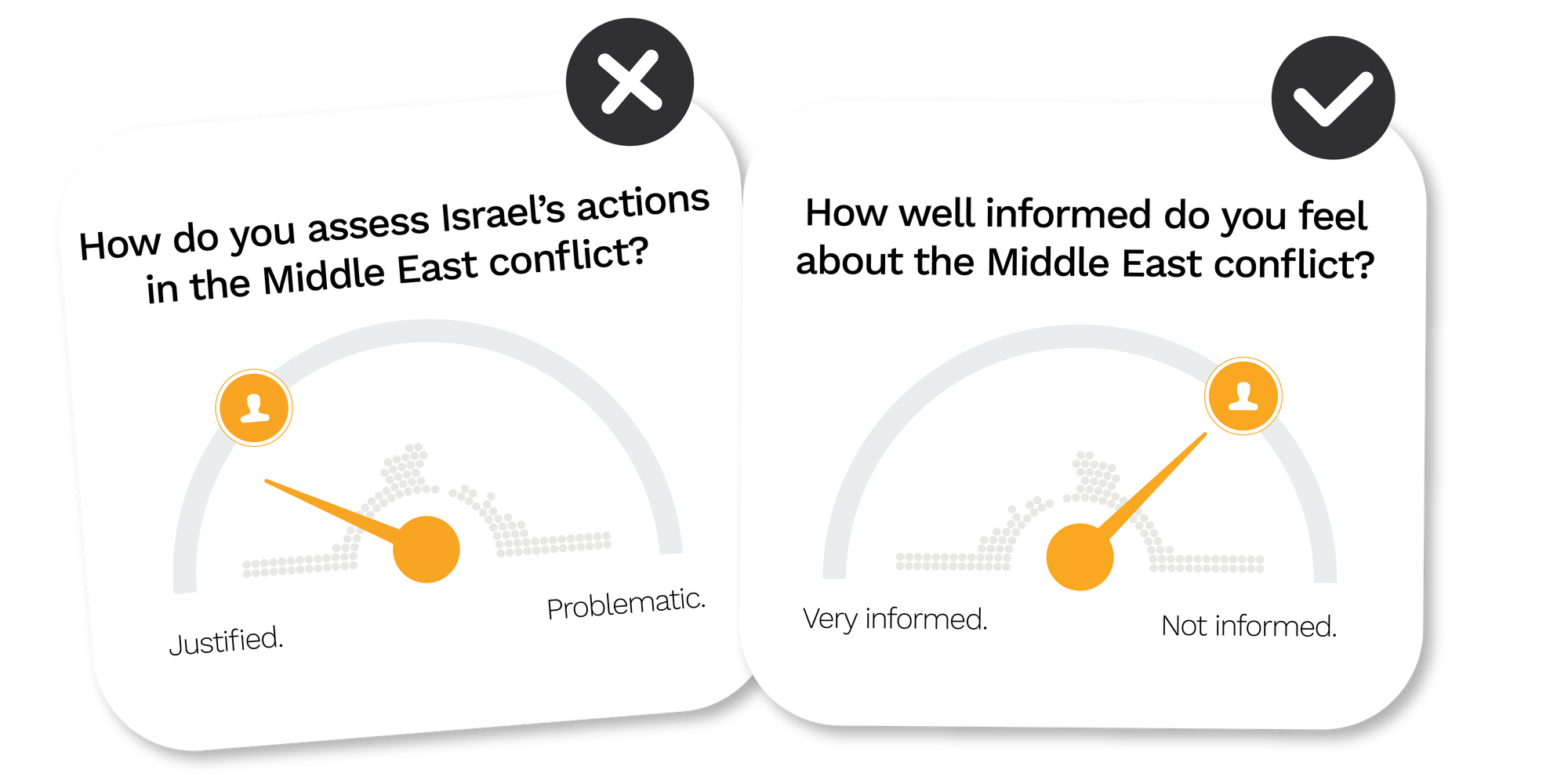
Frame questions in a way that avoids manipulation or exploitation.
Keeping questions neutral helps maintain integrity.
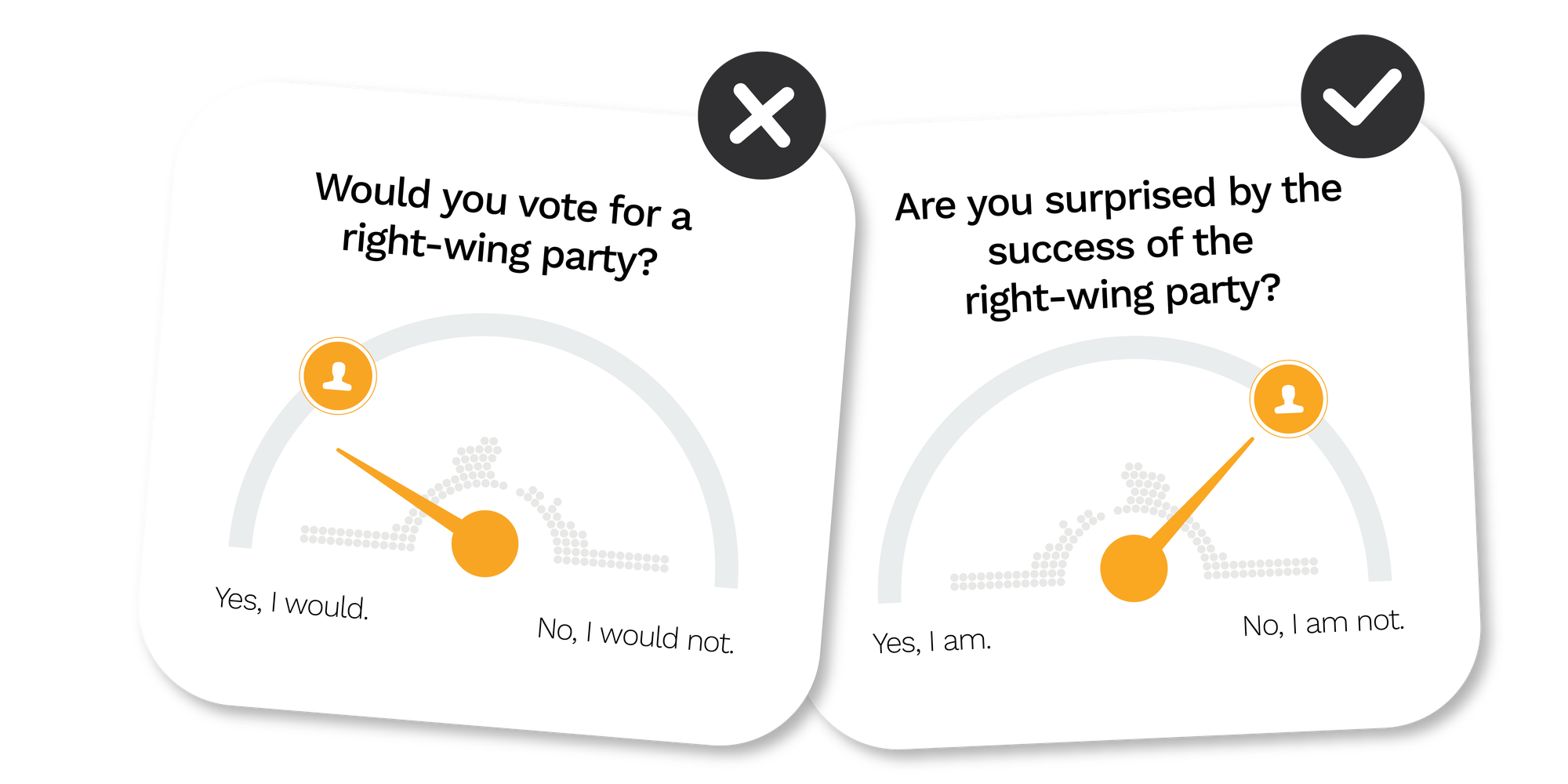
The more diverse the arguments of a debate, the more general the answer options of the poll should be.
If the answers cover the entire debate, you’ve done a good job.
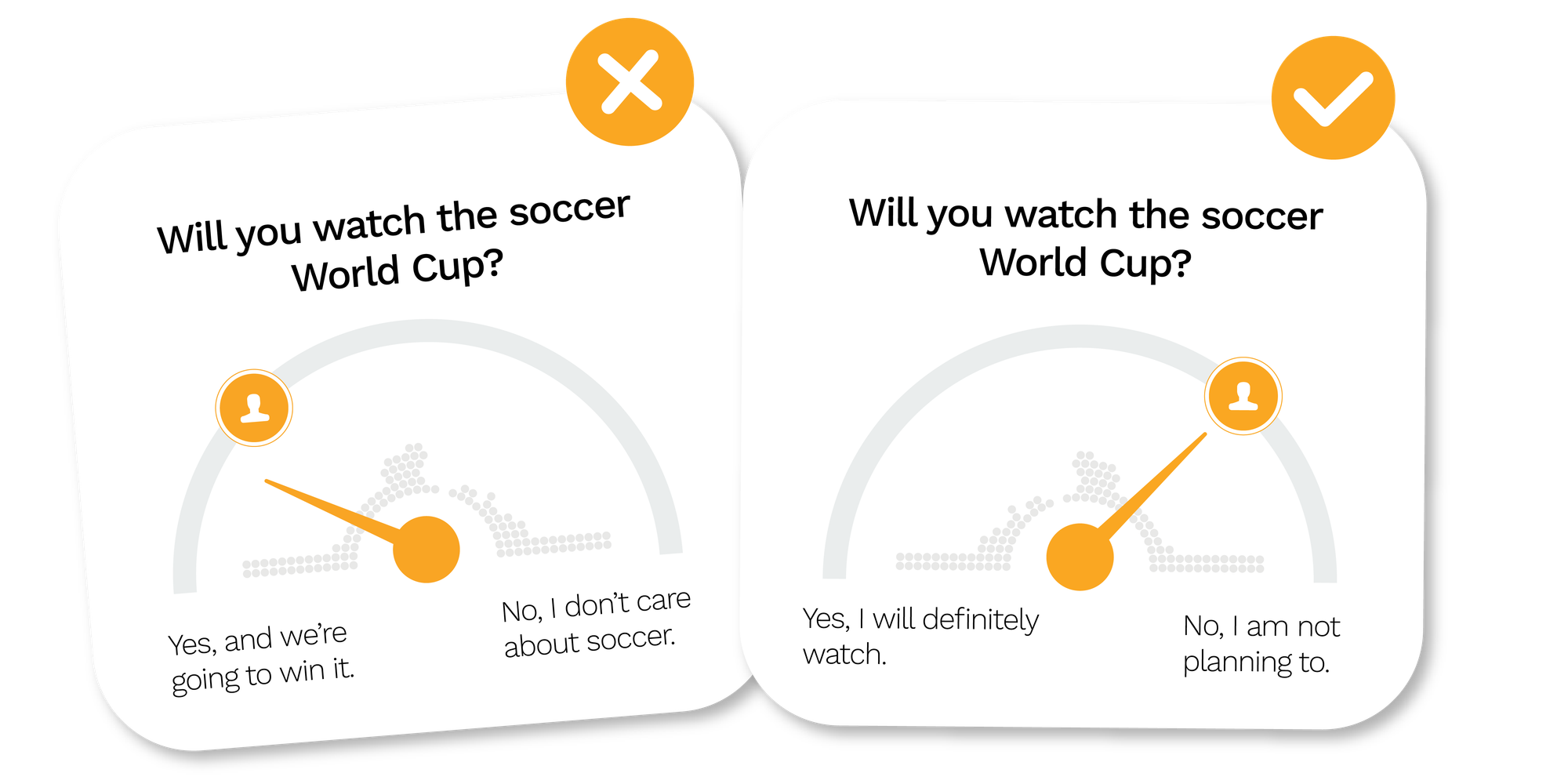
Poll answers usually express opposing opinions to give the readers the chance to express their own degree of involvement on the speedometer's arch.
The answer options should be framed in a way that they are equally "far" away from the center, avoiding extreme positions.
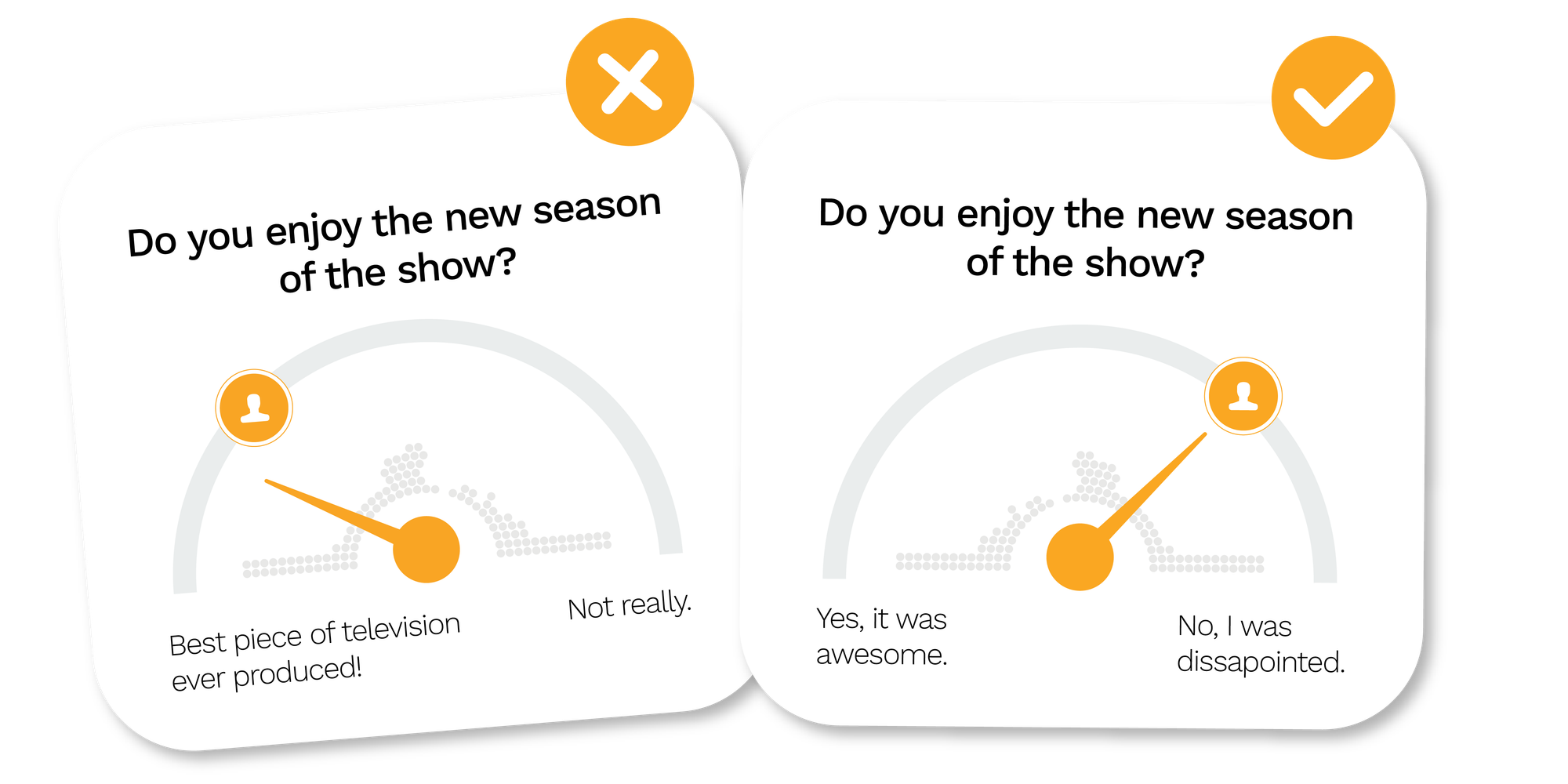
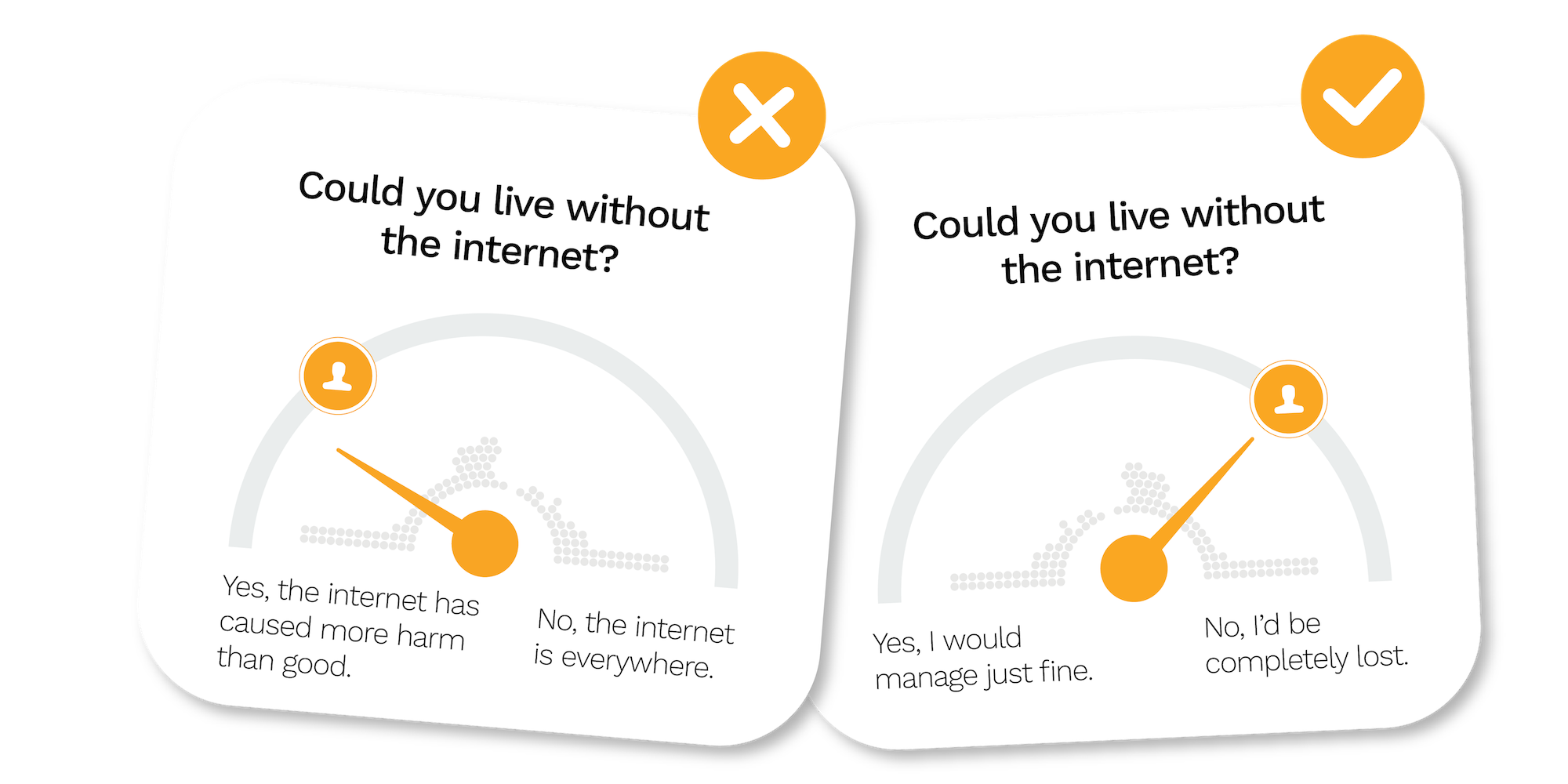
The answer options can be used to elaborate arguments for and against. But they must always directly address the question asked.
Vera Solevska leads communications, brand, and design at Opinary, overseeing teams in Germany and India. With a background in visual communication, she drives strategic messaging and design execution across markets.