Sign up for Journalism UK
A one-minute read, every weekday. Unsubscribe anytime.
No spam. Unsubscribe anytime.
A new report from the Sir Lenny Henry Centre for Media Diversity shows that diversity initiatives in UK television newsrooms are falling short. In some cases, they even perpetuate the very problems they aim to solve, leaving minority ethnic journalists facing persistent racism, stalled career progression, and a growing backlash that undermines genuine inclusion.
Diversity schemes: access without advancement
The report, ‘Breaking’, compiled by ITN's global security editor Rohit Kachroo and Dr Ellie Tomsett of Birmingham City University, draws on anonymous testimony from 80 on- and off-screen journalists. While diversity schemes have opened doors for some, many participants say these initiatives have not delivered meaningful change where it matters most: editorial power, newsroom culture, and career progression.
- 63 per cent of respondents said they had experienced racism at work.
- 70 per cent reported insufficient opportunities for career progression.
- Several journalists recruited through diversity schemes said they felt stigmatised as "diversity hires", rather than being recognised for their merit.
One respondent described the newsroom as an "apartheid newsroom", where people of colour are concentrated in junior roles while white colleagues dominate senior positions and enjoy easier routes to seniority. Others recounted their everyday experiences with racially charged jokes and remarks in the newsroom:
The assistant editor I work with every day calls me Mohammed when that’s not my name and just things like that.
You’re often made to feel that you’ve got the job you’ve got due to your race and so there is added pressure on you to continually prove yourself. It’s painful.
These conditions pose a serious risk to diverse talent leaving the industry, as another respondent put it:
I work for one of the biggest news broadcasters in the UK. I’ve seen a succession of young, diverse talent leave in recent years with no attempts made by management to keep them. Not only is young, diverse talent leaving; there is a glaring lack of diversity and range in the editorial output.”
Backlash and structural barriers
The report documents a growing resentment against diversity initiatives. Black and brown journalists report that they must work harder to tell stories, are paid less, and rarely progress to senior editorial roles.
Dr Ellie Tomsett, senior lecturer in Media at Birmingham City University and co-author of the report, told JournalismUK via email:
"Change will not be easy. Our research identified that in several instances attempts to address inequities over the last five years (through ill-thought-through initiatives) simply created a more difficult environment for journalists of colour, or directly perpetuated harm," she explains.
"Firstly, newsrooms need to address the harmful impact that the backlash against EDI (equity, diversity and inclusion) – experienced through belittling comments about schemes, or directed at individuals themselves – can have on racially minoritised staff.
"Goalposts for progression need to be consistent for all, unbiased, and not based on favouritism. Ensuring off-screen diversity is given the same attention as on-screen diversity will be important, as there was significant concern from respondents that most diversity schemes are simply performing a public relations function for news organisations. Enacting these changes would be a starting point for creating a more inclusive environment where everyone can succeed."
Symbolic change, not structural reform
The authors stress that diversity initiatives themselves are not the problem, but without structural reform, transparency, and consistent leadership, these programmes risk becoming symbolic rather than transformative. The report’s recommendations include:
- Involving journalists of colour in evaluating the effectiveness of diversity initiatives.
- Emphasising the need for awareness and commitment from white staff.
- Taking stronger action to protect minoritised journalists.
- Establishing clear, protected mechanisms for raising concerns about racial bias.
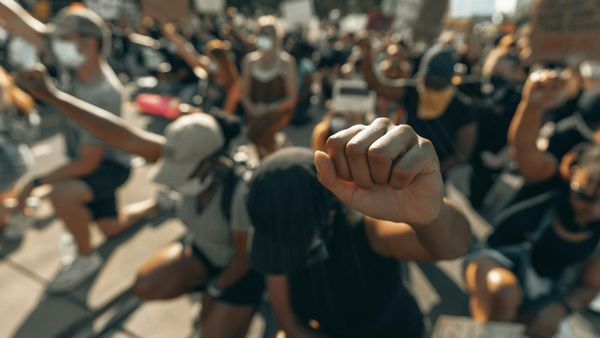
The authors conclude that if newsrooms are serious about their diversity commitments post-2020 (in the aftermath of the Black Lives Matter movement that made news headlines), they must thoroughly recalibrate decision-making power, progression, and newsroom culture, not just recruitment targets.
Ethnic diversity in UK journalism: slow progress, persistent gap
Data from the National Council for the Training of Journalists (NCTJ) shows that ethnic diversity in UK journalism has climbed gradually over the past decade, but the industry still lags behind the wider workforce:
- Currently, 14 per cent of UK journalists are from ethnic backgrounds, behind the national workforce average (17 per cent)
- UK journalists from ethnic backgrounds have increased 6 percentage points since 2016, though the figure slumped to 6 per cent in 2018
- UK journalists from ethnic backgrounds have only increased by one percentage point since 2022
While the trend is upward, the pace of change remains slow, and journalism continues to underrepresent the communities it serves.
This article was drafted by an AI assistant before it was edited by a human.