This article was migrated from an old version of our website in 2025. As a result, it might have some low-quality images or non-functioning links - if there's any issues you'd like to see fixed, get in touch with us at info@journalism.co.uk.
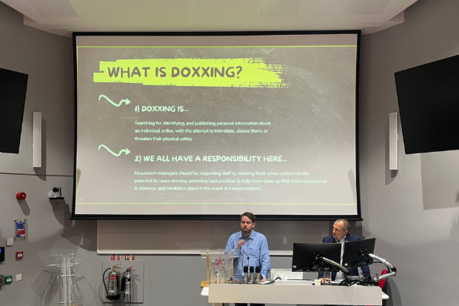
"It’s better to have a smoke alarm than to put out a fire," says Jon Laurence, supervising executive producer at AJ+ at Mediastrong Symposium last week (2 July 2025)
He was talking about doxxing, when the information that journalists put out on their public channels is used to intimidate them and/or silence their reporting.
Laurence manages a team of 35 staffers across three continents as they pump out daily content to social media feeds and accounts.
He has seen firsthand the doxxing attempts in the immediate aftermath of critical reporting, whether that's from government bot farms, vigilante extremists, or anonymous trolls.
Doxxing doesn’t just affect the journalists - it can also concern partners and close family members.
"It’s all about risk vs reward," Laurence says. "You don’t want personal information out there that’s high risk - and that’s not important to you."
It goes without saying that major threats to security should be escalated to relevant in-house teams and senior managers. But there are some proactive steps and personal measures that can be taken to minimise the risks for journalists to be doxxed.
The basics
View your internet presence through the eyes of a doxxer: Think about how different pieces of information can be cross-referenced to build up a picture of your daily life that is used to threaten you.
Think before posting: Don’t put common security answers in your posts (no first pets or street you grew up on). Be wary of birthday posts as this can be used to figure out date of birth, and ‘routine’ posts which can show your everyday movements like tube stations and favourite coffee shops.
Pet and child accounts: People often lower their guard with what gets posted here, but these can be very handy for those looking to doxx journalists.
Two-factor authentication: An absolute must, as doxxing and hacking often go hand-in-hand. Also, check your older accounts. These are often targeted. Make sure 2FA is enabled or delete them if they're not in use.
Google and YouTube: Google your name in direct quotes, plus the words “home address.” Or plus “phone number.” That will tell you if that highly sensitive data is visible via search. It’s good to do a regular search and sweep of your information. Delete old and inactive YouTube accounts, too.
Instagram: Particularly dangerous because of its visual nature. You may need to make your account private or have a chat with your close family members. Unfortunately, they tend to be visible on your profile, often through comments or consistent likes, and can be targeted as a result.
Facebook: Use the security settings to view your profile through the lens of someone outside of your ‘friend’ circle. Some parts should just be private, like your photos and your friend lists. This can be used to piece all sorts of information together, like your educational history or family members. Keep your ‘memories’ on. You could thank yourself years down the line.
WhatsApp: It doesn’t hurt to be cautious with your profile picture. Be careful saying where you are in your ‘status’, particularly if you’re working on a sensitive assignment.
TikTok: Susceptible to giving away daily routines, which should be a concern when doing big-hit stories. Going dark for a while is recommended when certain stories are about to be published.
X: Your old posts will come back to haunt you, particularly when used in bad faith and out of context. Clean up your profile, especially if a big story is about to drop. The ‘media’ tab is particularly important, make sure that is spick and span. Come up with 10 harmful keywords that could be used against you and do a keyword search against your name.
LinkedIn: Nobody needs to know your secondary school, it's just a needless risk to include it here. This could all be traced back to a childhood town, one step at a time (and then your parents’ address). Graduation years can be a clue as to your age as well.
Venmo: This will be lost on the UK crowd. Venmo is a payment app popular in the US. Its default setting is public and it is therefore a big indicator of close contacts and regular acquaintances. Make this account private at all costs.
"Silencing journalists is the intention, but through intentional strategies we are able to get through the worst-case scenarios," concludes Laurence.