"Artificial intelligence is not the future - it is happening right now"
Cardiff University is introducing a new module to prepare journalism students for working with AI tools while teaching critical thinking to ward them off over-relying on machine learning
This article was migrated from an old version of our website in 2025. As a result, it might have some low-quality images or non-functioning links - if there's any issues you'd like to see fixed, get in touch with us at info@journalism.co.uk.
As artificial intelligence (AI) becomes more commonplace in newsrooms, Cardiff University will be introducing the technology into its syllabus to produce 'industry-ready journalists'.
As well as these practical skills, the module also offers the theory of using this technology for problem-solving.
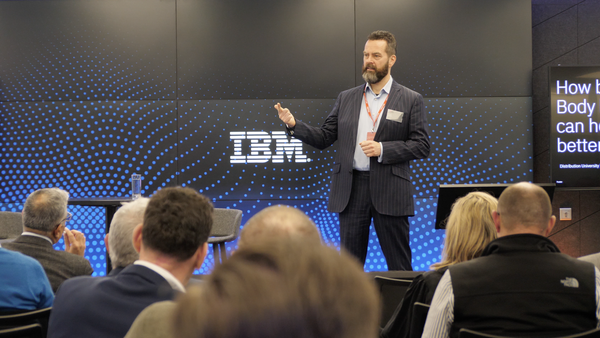
Former associate editor of Mirror.co.uk, Gavin Allen, now digital journalism lecturer, Cardiff University’s School of Journalism, is one of the tutors the course. He stressed that aspiring journalists need to come to terms with AI, or risk being left behind by its advancements.
"There's a feeling that we need to stand back and see that this technology is proven," said Allen.
"But this technology advances so rapidly that we need to start adapting now."
"There are traditional print journalists who think 'That's not for me, I don't need to think about AI', but it is becoming widely used at publications. AI is not the future - it is happening right now."
But there is a limit to what journalists need to know. The university will bring in experts from business and computational science departments to help with the more finite solutions, such as hardcore coding.
Journalists today require a working-level proficiency in user-friendly programmes like Dataminr. When it comes to post-graduate job-seeking, this prepares them for life in a digital newsroom and provides insight into how the technology works.
"If a student is able to talk about AI in a job interview which is relevant to a newsroom or organisation, it puts them ahead of a student who can’t," said Allen.
"We need to be aiming to 'future proof' our students by looking at programmes already in use while teaching them critical thinking skills so they can fit those new roles rather than just filling the role of reporter."
Of course, there are significant challenges to learning and integrating this technology in a newsroom's workflow.
For one, programmes like Dataminr are costly, although the university uses the free version of Chartbeat. The big risk, however, is the temptation to become over-reliant on AI.
"Teaching students to use AI within newsrooms includes establishing the balance," Allen said.
"It may allow faster work process and that’s something the industry demands, but there needs to be an understanding that algorithms can get it wrong and human oversight and interpretation are always going to be required for good journalism."
Correction: The previous version of this article said that the module was set to start in September 2020. Gavin Allen's previous job title and other details about the course have also been updated.