Australian laws to make tech companies pay for news will help, but there are four key problems
Australia’s new laws will make major tech companies pay news publishers, but critics warn the scheme favours large media outlets, excludes AI platforms, and leaves small independent newsrooms with little support, highlighting persistent gaps in funding and digital regulation
The Australian government has finally tabled its News Bargaining Incentive legislation to make big tech companies pay for the Australian journalism they use on their platforms.
The government developed these laws to fix a problem with the original News Media Bargaining Code introduced under the Morrison government.
While the code generated between $200 million and $250 million a year through deals struck with Meta and Google, it allowed them to stop making deals with news companies by not carrying news on their platform.
The newlaws aim to close this loophole by making social media and search companies strike deals with eligible news publishers, or pay a charge based on their Australian digital advertising revenue, which would be distributed to news organisations through the News Journalism Payment Scheme.
While setting up new revenue streams for struggling newsrooms is a welcome move, the laws themselves are far from perfect.
How would the laws work?
The News Bargaining Incentive is made up of a couple of parts.
First, the government wants large social media and search companies with an annual digital advertising revenue of more than $250 million in Australia – likely to include digital giants such as Google, Meta and TikTok – to enter deals with at least eight eligible Australian news businesses.
If they fail to strike enough deals, they will be forced to pay a charge: 2.5 per cent of their Australian digital advertising revenue.
To encourage deals, the charge is offset by 150 per cent, and this increases to 200 per cent if the deal is with small or medium-sized businesses.
Revenue collected from the charge will be administered through the News Journalism Payment Scheme. These funds will support the production of core news content in Australia. That means, according to the Australian Communications and Media Authority’s definition:
[…] content that reports, investigates or explains issues or events that are relevant in engaging Australians in public debate and in informing democratic decision making; or current issues or events of public significance for Australians at a local, regional or national level.
The scheme is primarily designed to sustain the employment of journalists and help build capacity of news organisations.
Funding to news publishers will be decided by a weighting formula based on the number of full-time equivalent journalists in each organisation.
In a welcome move, the definition of journalist has been broadened to include a range of essential news roles, such as:
journalists
photojournalists
videographers
data or visual journalists
editors or producers who are involved in the production of news content
and freelancers and volunteers (low-revenue organisations) who produce core news content.
Of the charge funds, 10 per cent will be set aside for grants, including 5 per cent to fund AAP (Australian Associated Press) in recognition of its public-interest role, and a further 5 per cent for small organisations that are not eligible for funding from deals under this scheme.
Exactly how the collected funds are to be administered is not clear.
What will it mean for media companies?
On the positive side, the new laws will guarantee a steady flow of revenue for the Australian news industry, either through deals or charges.
Screenshot: Reform UK's leader Nigel Farage hosting his show on GB News
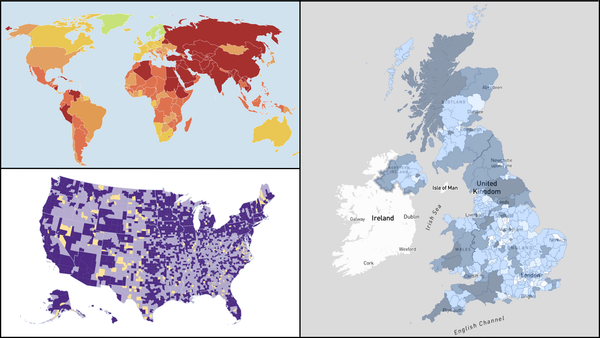
Screenshots of Reporters Without Borders Press Freedom Index (top left), Northwestern Local News Landscape (bottom left) and Public Interest News Foundation Local News Map (right)