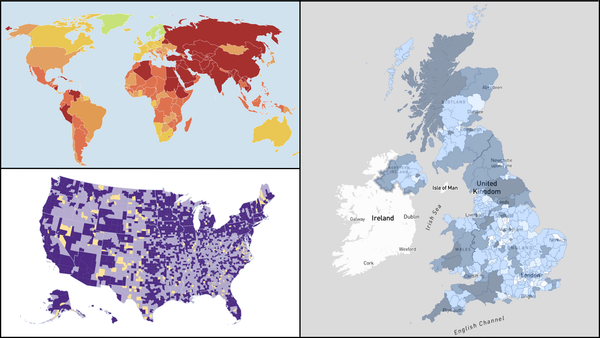
Screenshots of Reporters Without Borders Press Freedom Index (top left), Northwestern Local News Landscape (bottom left) and Public Interest News Foundation Local News Map (right)
There's a really handy type of tool that has begun surfacing: interactive maps, directories and indexes that allow users to see broad industry trends at a glance or drill deep into case studies.
These are no doubt useful for academics and students, but journalists and editors can use them to concoct their strategy, be that for inspiration, to find potential collaborators or to understand growing challenges facing their sector.
We've pulled together ten of the most useful interactive resources currently tracking our industry, spanning global audience trends, independent media ecosystems, local news collapse, media ownership, press freedom violations and the rapid spread of AI in newsrooms.
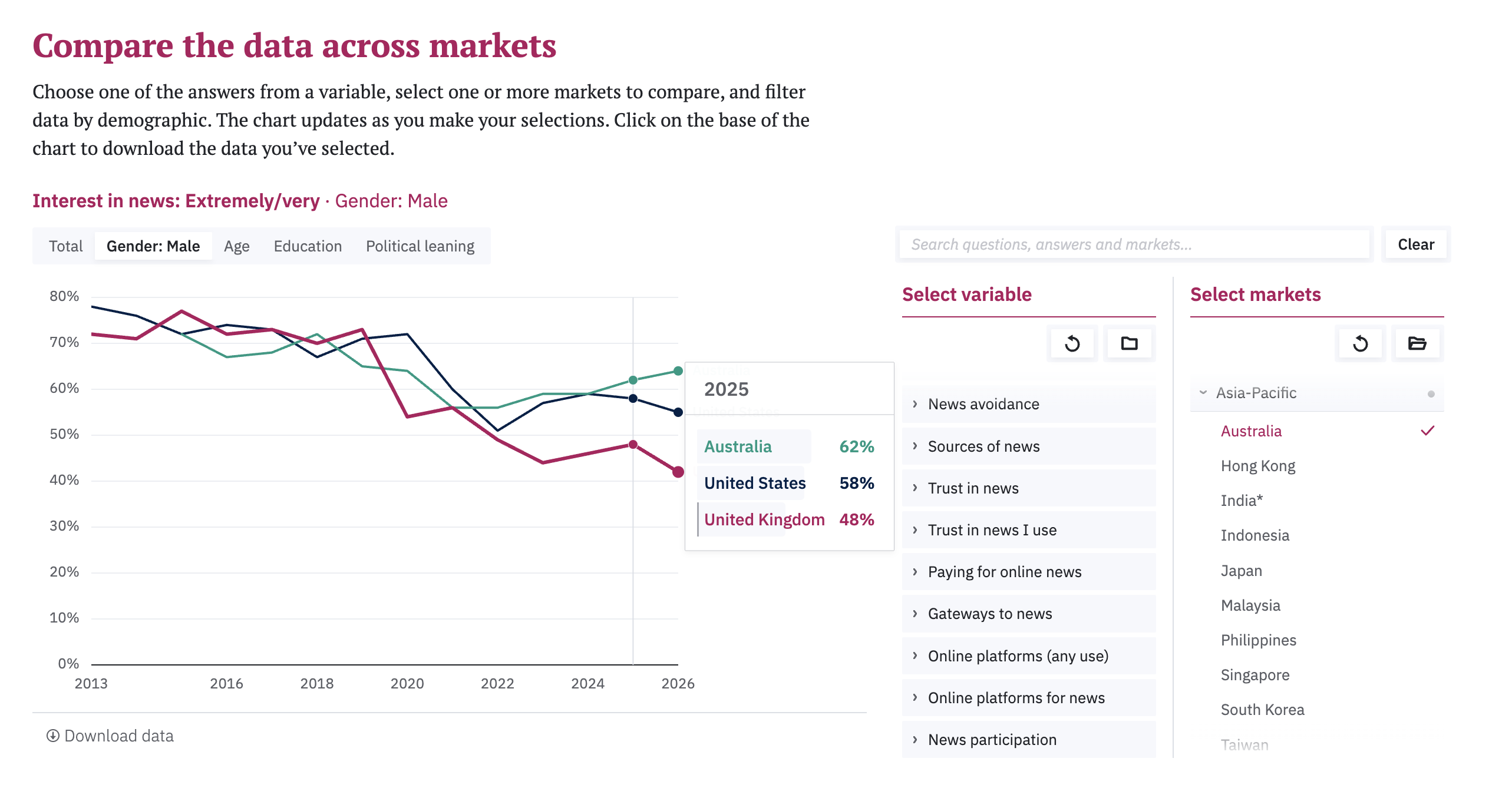
We all know and use the Reuters Institute's Digital News Report, the world's most authoritative annual study on news consumption, technological disruption and market-specific trends. No stone is left unturned; researchers look at trust, news avoidance, platform use, payment habits, user needs and AI attitudes across 48 markets.
Is there a specific datapoint or market you're after? Use the tracker to look back at this comprehensive research, with data stretching back more than a decade.
One of the super powerful things you can do is isolate and compare key markets side-by-side across a number of variables.
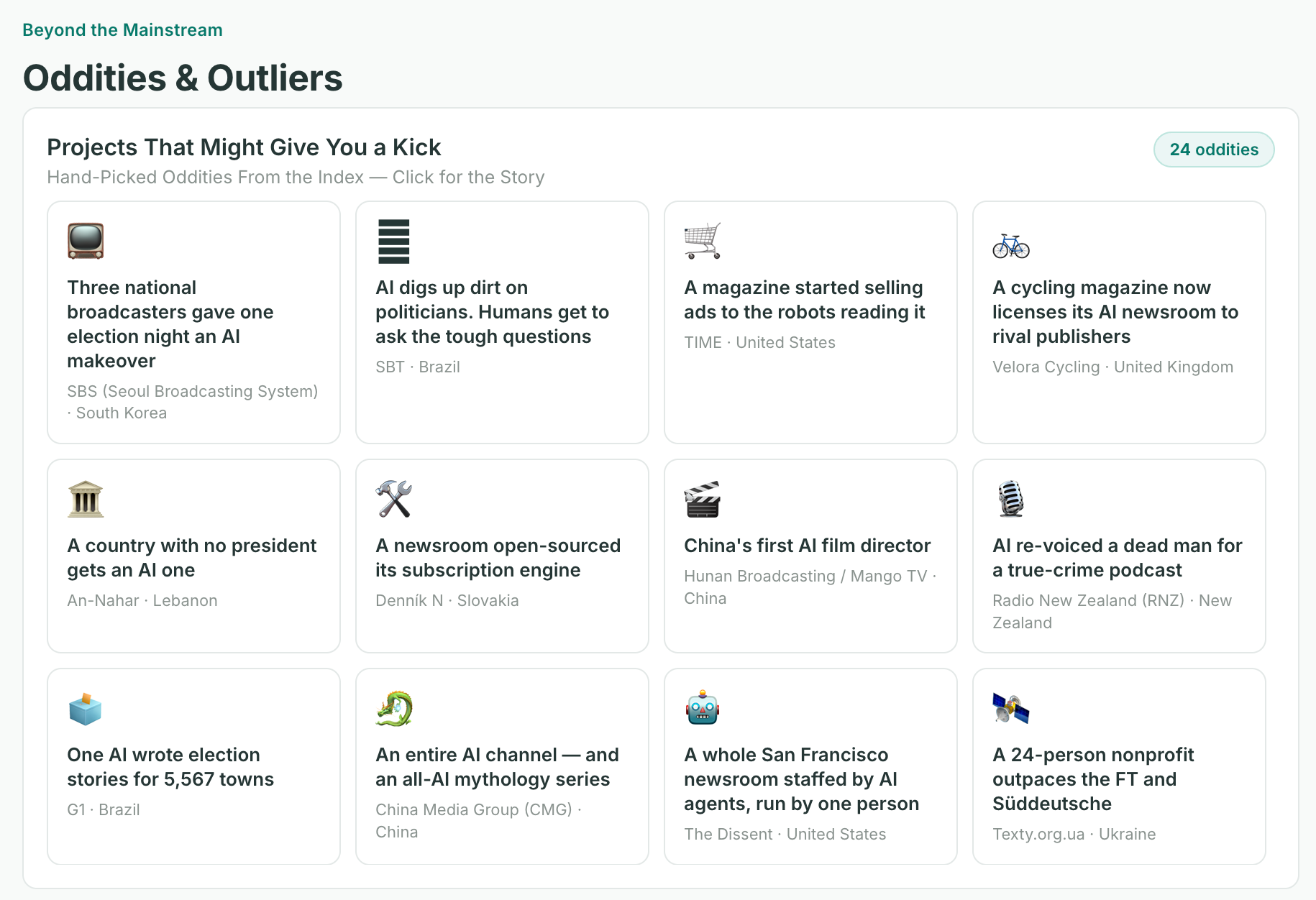
An independent project, amazingly created by one incredibly passionate and digitally-savvy journalist, Katya Gorchinskaya. This is a treasure trove of publicly reported cases of AI adoption, now featuring around 3,200 verified cases, 2,000 organisations, and 140 countries over the last ten years.
There's a lot you can do with this resource, which is why the "Six Ways to Use Jindex" is a helpful starting point.
Gorchinskaya breaks down AI adoption into functions (editorial, distribution, audience, monetisation, operations), and helpfully categorises by maturity stage.
She's really thought of everything: publisher-AI deals, AI policies, and open-source tools. There's a handy map of adoption worldwide, who is funding it, whether it's pushing journalists out of jobs and yes, who has cocked up in the process. And my personal favourite: the oddities and outlier case studies.
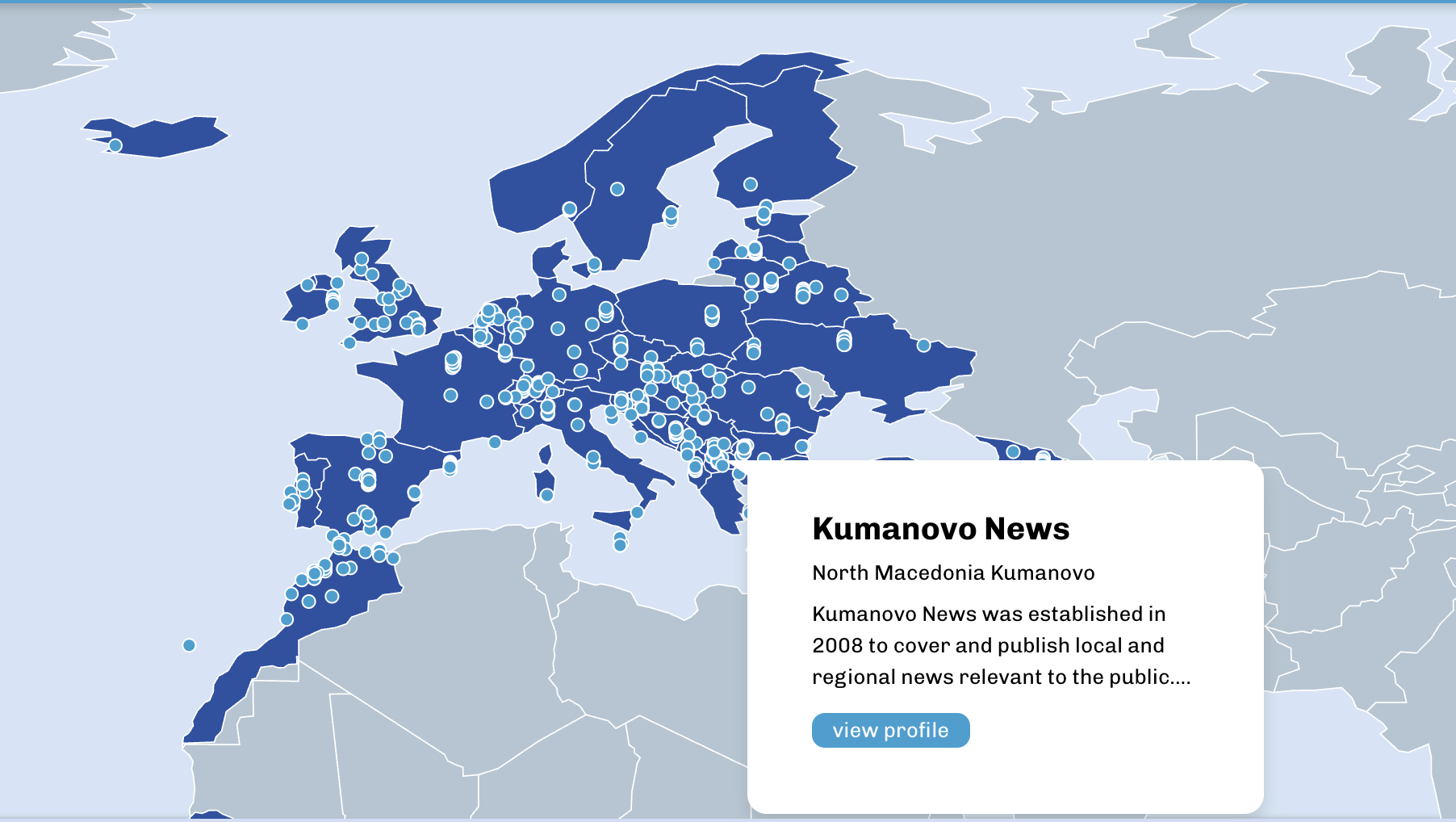
SembraMedia (in collaboration with several media partners) has profiled 4,159 independent digital media organisations and plotted them on a lovely, interactive global map to get a deeper sense of sector challenges and industry solutions. Click around, and you can find various news companies and more information about their operations.
If you're looking for a specific outlet, you can filter search results by country, content focus, organisation type (non-profit, for-profit, hybrid), revenue model and geographic reach, from hyperlocal to international.
One of its greatest features is the individual profiles of news companies, which set out their content, business, ownership and audience model. But it sometimes also includes their editorial policies. Not listed but want to be? Submit your news organisation for listing. It is planning to expand the map to India, Australia, New Zealand, Nigeria, and South Africa next.
Courtesy of SPUR Coalition co-founder David Buttle