Crowdmap gets major upgrade and goes mobile-first
The crowd-mapping tool has been used by news outlets including the Guardian and the BBC

– 1 min read


The crowd-mapping tool has been used by news outlets including the Guardian and the BBC
This article was migrated from an old version of our website in 2025. As a result, it might have some low-quality images or non-functioning links - if there's any issues you'd like to see fixed, get in touch with us at info@journalism.co.uk.
Ushahidi's Crowdmap has had a major upgrade, re-launching as a mobile-first site.
The crowd-mapping tool has been used for both crisis mapping and for news stories, ranging from the BBC using Crowdmap to plot tube strikes , to the Guardian using it to coordinate clean-up operations after the 2011 riots , as pictured in the screenshot below.
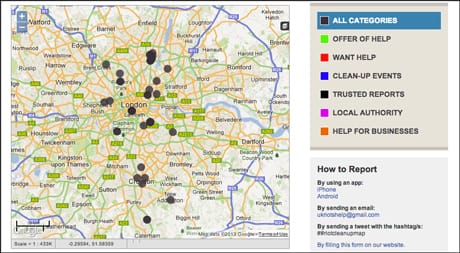
Crowdmap allows anyone to add photos, text and multimedia to a specific location and invite others to contribute. Maps can then be embedded in a news story or shared via social media.
The new-look free tool went live yesterday, and is now responsive. A short (38 second) video shows how the re-launched tool can be used on mobile.
Crowdmap is a free tool from open source platform Ushahidi. Ushahidi, which means "testimony" in Swahili, was initially developed to map reports of violence in Kenya after the election at the beginning of 2008 and has been used for numerous projects since, including crowd-mapping crisis information following the Haiti earthquake in 2010 . Ushahidi received Knight News Challenge funding in 2009 .
In an email to Crowdmap users, the Ushahidi team said the new 'Crowdmap Beta' has been a year in the making. The email explains that the old Crowdmap, now called 'Crowdmap Classic' can still be used.
A separate email announcing the release of the re-launched site says the changes were made after "Crowdmap mappers requested greater functionality and flexibility for their maps and posts".