Derbyshire: opening up about my experience of domestic abuse helped me win survivors' trust
A journalist should never become the story. But when investigating domestic violence in lockdown, talking about her violent father enabled the BBC presenter to produce a raw and honest Panorama documentary
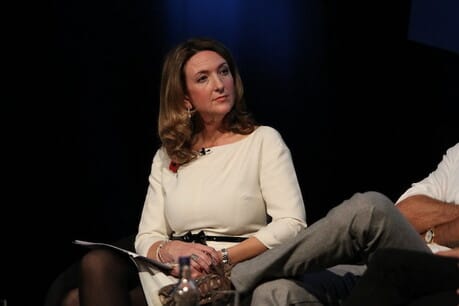
Credit: "Victoria Derbyshire" by The Radio Academy, licensed under CC BY-NC-SA 2.0
This article was migrated from an old version of our website in 2025. As a result, it might have some low-quality images or non-functioning links - if there's any issues you'd like to see fixed, get in touch with us at info@journalism.co.uk.
"I'm drawn into the stories I cover and I don't think that's a bad thing. I can be impartial, but I don't have to be dispassionate," said Victoria Derbyshire, an award-winning BBC journalist, speaking yesterday at a virtual event held by Empoword Journalism, a community for young women journalists.
Derbyshire discussed a range of topics from how she broke into the industry, dealing with imposter syndrome, the role of women in the newsroom, and her recent appearance on I'm a Celebrity. But she mostly focused on her reporting on domestic abuse during lockdown last year.
In a viral tweet in April 2020, she posted the number for The National Domestic Abuse hotline that she jotted on her hand. It was accompanied by some recent statistics on the sharp increase of calls to the number. She would then go on air and present for the BBC with the number on clear display, reporting the same story.
When the UK went into lockdown, her mind went to those stuck indoors. She says in the documentary: "When Boris Johnson told us all to stay at home, one of my first thoughts was: what if you are living at home with a violent partner? You would literally be trapped."
Derbyshire travelled across the UK and visited refuges for women survivors domestic abuse. But she was also open about her own experience of her father's violence.
"It felt relevant," Derbyshire explains. "I'm asking these women to talk to me about their experiences and I felt I should share mine with them."
Later in the documentary, the interviewees would even reverse the question and ask Derbyshire directly to open up about her history.
"There was that mutual trust," she continues. "It let the audience know that I knew what some of these women had gone through and that felt appropriate. The reaction, by the way, was overwhelming."
There used to be something here that couldn't be migrated - please contact us at info@journalism.co.uk if you'd like to see this updated!
Some of the women opened up about their experiences around rape and genuine fear for their lives, so the show had to take many precautions to protect their identities. The first step was to agree whether they wanted to appear on the camera and whether they wanted to use their own voice or a voiceover.
All women wanted to remain anonymous. To go beyond the typical 'silhouette' image, the show used a lot of close up shots of eyes or bodies, or filming them from behind to preserve anonymity.
Some women wanted to tell their stories with their own voice which gave them sense of ownership and control. This added another challenge for the producers to protect the survivors from being identified. If the women were recognised, this could cause alarm to those who knew them but not the situation, or make it easier for their abusers to pinpoint their location.
Want to receive journalism news and job updates straight to your phone? Subscribe to Journalism.co.uk on Telegram on ourjobs channelfor latest job opportunities and ournews channelfor a weekly digest every Monday morning.