Newspapers taking fewer risks, says former NoW editor
Former News of the World editor and now chairman of PHA Media Phil Hall says "things are being suppressed" due to a lack of resources and industry pressures
– 3 min read


Former News of the World editor and now chairman of PHA Media Phil Hall says "things are being suppressed" due to a lack of resources and industry pressures
This article was migrated from an old version of our website in 2025. As a result, it might have some low-quality images or non-functioning links - if there's any issues you'd like to see fixed, get in touch with us at info@journalism.co.uk.
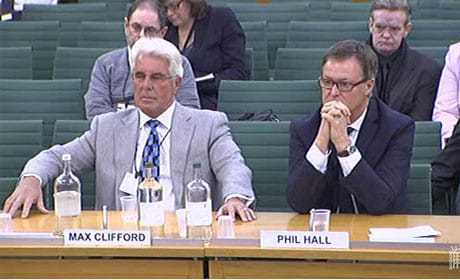
Former editor of the News of the World Phil Hall told the
joint committee on privacyand injunctions
today that newspapers are being "a lot safer" in reporting as a result of newsroom cutbacks and that "things are being suppressed".
In evidence to the committee, Hall, who is now chairman of PR agency PHA Media, said newspapers no longer have the "luxury" he enjoyed as an editor of "sitting on [a news story] for two weeks to check it again and again".
"If you just look at the front pages of some areas I used to work in Sunday papers, and to a certain extent the daily papers, they are a lot safer. They're following live news stories rather than digging out their own."
He added there is "also a real issue with resources", adding that at the time of its closure the team behind the News of the World was "half the size I had only ten years ago".
"When we had an investigative team we had to allow the team to work sometimes for four or five months on one story ... they don't have that luxury any more, so generally the good public interest stories take a while to dig out, and I think as a result of that we're not getting those types of stories."
When asked by MPs if this is "a result of the economic model or what's happening currently", he said it is "a combination of both".
"Now people are very wary of it ... they're getting stories that are in the public interest but because of the sheer amount of energy and effort that has to go into it, plus the risk with the privacy actions ... the PCC [Press Complaints Commission] has sharper teeth, despite criticisms it has sharper teeth now then when I was on it ten years ago. Yes I do think things are being suppressed."
Publicist Max Clifford, who gave evidence alongside Hall, also told the committee he was aware of stories which previously would have made the front pages of the tabloid press, but which no longer get published in the "current climate".
"I think in the current climate, investigative reporters are not doing what they should be doing because they're frightened over what came out at News International.
"... It's gone from one extreme to the other and hopefully it will get back to a halfway-house sometime."
He added that stories such as the MPs expenses scandal would not have come out today, "because editors haven't got the desire to potentially antagonise people in powerful positions in the way they wouldn't have thought about two years ago."
"It's not black and white, but it would be a lot more difficult to bring out a major expose ... that involved anybody remotely powerful in the current climate."
He added: "I think they would be far more cautious and there has definitely been a change".
Asked later by MPs for their definition of the ideal "halfway-house" Clifford said "what you've got to do is find a halfway-house to everybody's right to privacy.
"Super injunctions don't exist for normal members of people ... We must have a situation where ordinary men and women have the right for someone to stand up for them."
Hall said he does "share Max's frustration", adding "unless you get to the PCC before something happens then it's very hard to stop."
During the evidence to the committee Clifford called for greater protection for members of the public, particularly when they are "approached by a newspaper about to write a major story about them".
"The British public desperately need real protection from the excesses of the media".
"I know the need that's out there," he added later in his evidence. "If one good thing comes out of this, we will have a press complaints body that's truly independent, that is there for the British public ... before anybody destroys them in the papers."