Freelance collectives: How Sweden and Germany are reinventing the newsroom for independent journalists
Across Europe, journalist-led organisations like Stockholm's Blue Office and Berlin's Publix are reviving the sense of community, collaboration, and support once found in traditional newsrooms — offering a contrast to the more solitary and digital freelance experience common in the UK
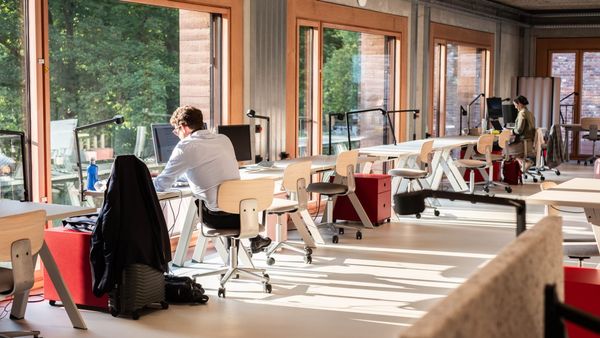
Publix coworking space for freelancers. Credit: Paul Probst
For many British freelance journalists, work can be a solitary experience conducted from a spare room, coffee shop or shared office space. Across continental Europe, different models of freelance community are taking shape.
From Stockholm's collectives to Berlin’s Publix, organisations and business models are recreating some of the functions once provided by traditional newsrooms. These include collaboration, mentoring, networking, training and professional support. Such a comparison, though, is not always straightforward.
In Stockholm, one answer can be found in a multi-storey office block in Norrmalm close to the city centre.
Known as 'The Blue Office', the collective has operated for 30 years and today houses 34 freelancers sharing 27 desks. Members pay around SKr3,500 (£272) a month for a full-time desk, with cheaper rates available for those sharing desks or working part-time.
For Fredrik Nejman, a board member who has worked there for 12 years, the attraction is straightforward. The office provides desks, internet access, meeting space and office facilities. More importantly, it provides a sense of belonging.
"What do you get? You get a lot of colleagues," Nejman laughs. "We workshop ideas or have a chat over lunch with a fellow journalist in an office setting.
"This is not a co-working space. You can’t come here and pay for one day or so. After two months, you become a member."
When journalists are overloaded, assignments are shared around the group. "Often someone gets work they can't do themselves and emails the group asking if anyone else is interested. It's a hugely supportive environment."
The collective organises breakfast talks, invites authors and journalists to speak, and arranges social activities ranging from dinners to running trips abroad.
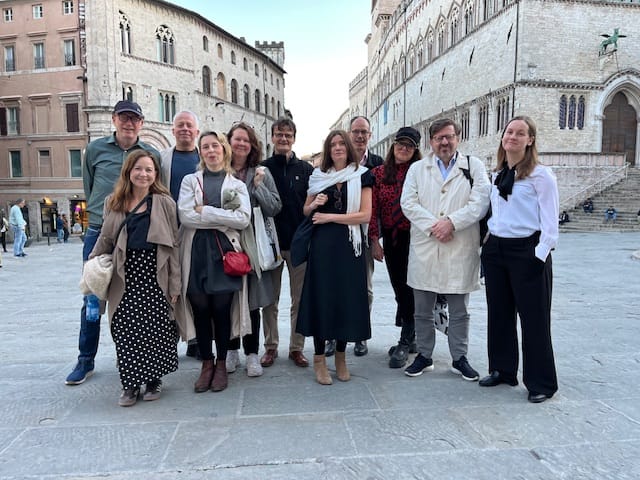
Credit: Blå Kontoret (The Blue Office). The team attending the International Journalism Festival in Perugia in April 2026CreditCred
The Blue Office is not unique. According to the Swedish Union of Journalists, there are thought to be up to 25 freelance collectives across the country. The union describes The Blue Office as one of Sweden’s best-known and most established examples.
Screenshot: Reform UK's leader Nigel Farage hosting his show on GB News
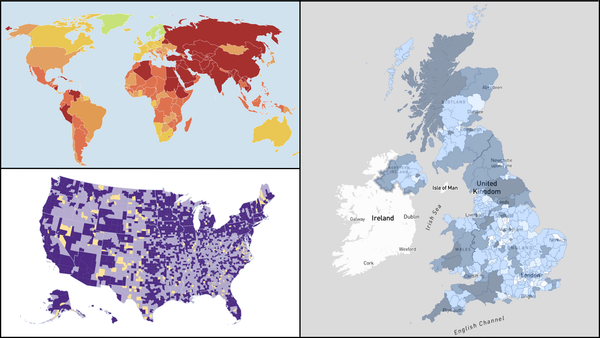
Screenshots of Reporters Without Borders Press Freedom Index (top left), Northwestern Local News Landscape (bottom left) and Public Interest News Foundation Local News Map (right)