How Croatia's Telegram.hr built a successful subscription model in a country where users won't pay
Innovative strategies include a "pay what you want" anniversary campaign and a lifetime subscription offer

– 5 min read


Innovative strategies include a "pay what you want" anniversary campaign and a lifetime subscription offer
A one-minute read, every weekday. Unsubscribe anytime.
No spam. Unsubscribe anytime.
This is an edited version of an article that first appeared on FatChilli. It has been edited and republished with permission from the authors
“When it comes to subscriptions in 2025, we ended up with a 54% growth in revenue. Not counting our first year [a decade ago], it was our best year,” Telegram.hr CEO Miran Pavić said to audience monetisation agency FatChilli on a recent morning catch-up call.
"When we started, it was all about, ‘Oh, you can’t do this in Croatia. No one will pay. People like free content. Who’s going to pay for your stupid content?’ But it’s always the same reaction," Pavić recalls.
Telegram Media Grupa was founded in Zagreb, Croatia, in 2015, as a digital media company with the flagship news portal Telegram.hr – not to be confused with the Telegram messaging app.
Pavić had considered launching a subscription program since the company's inception, but waited until 2021, believing it was too early for Croatia due to limitations in the local payment infrastructure.
In early 2026, direct audience revenue now constitutes a significant part of overall revenue, making Telegram.hr a Croatian market leader.
Yet, Croatian audiences remained reluctant to pay for online news. The proportion taking out a subscription, donation, or membership was at 6 per cent, one of the lowest figures in the Reuters Institute Digital News Report 2025, which is based on data from six continents and 48 markets.

Even with approximately 1.3 million unique monthly users, relying solely on reader donations was insufficient. Securing advertising revenue was difficult because the Croatian economy is largely dominated by public businesses. This financial strain, coupled with the commitment to high-stakes journalism, pushed CEO Miran Pavić to experiment with a subscription model.
The company’s strategy was to appeal directly to its most loyal readers, avoiding discounts and free trials in favour of honest messaging about the need for support.
Initially, Telegram.hr used a large proprietary subscription platform but soon switched to REMP, a more flexible and affordable solution developed by Slovak daily Dennik N. This allowed for greater customisation and better suited the needs of a small but ambitious publisher.
Telegram.hr positioned itself as the most expensive news subscription in Croatia at €9.99 per month for its Premium tier, maintaining a premium brand despite initial scepticism from competitors.
It just takes a lot of time. You really have to find a way to emotionally and functionally appeal to the audience. People respond the same way in every single market. You have to be honest, appeal to the readers, and say why this is important, why they should consider supporting you, joining you on the journey. And not just saying, 'Well, now you have to pay
In 2023, Telegram Media Grupa received an investment from Pluralis, an impact investment fund, which acquired a minority stake in the publishing company.
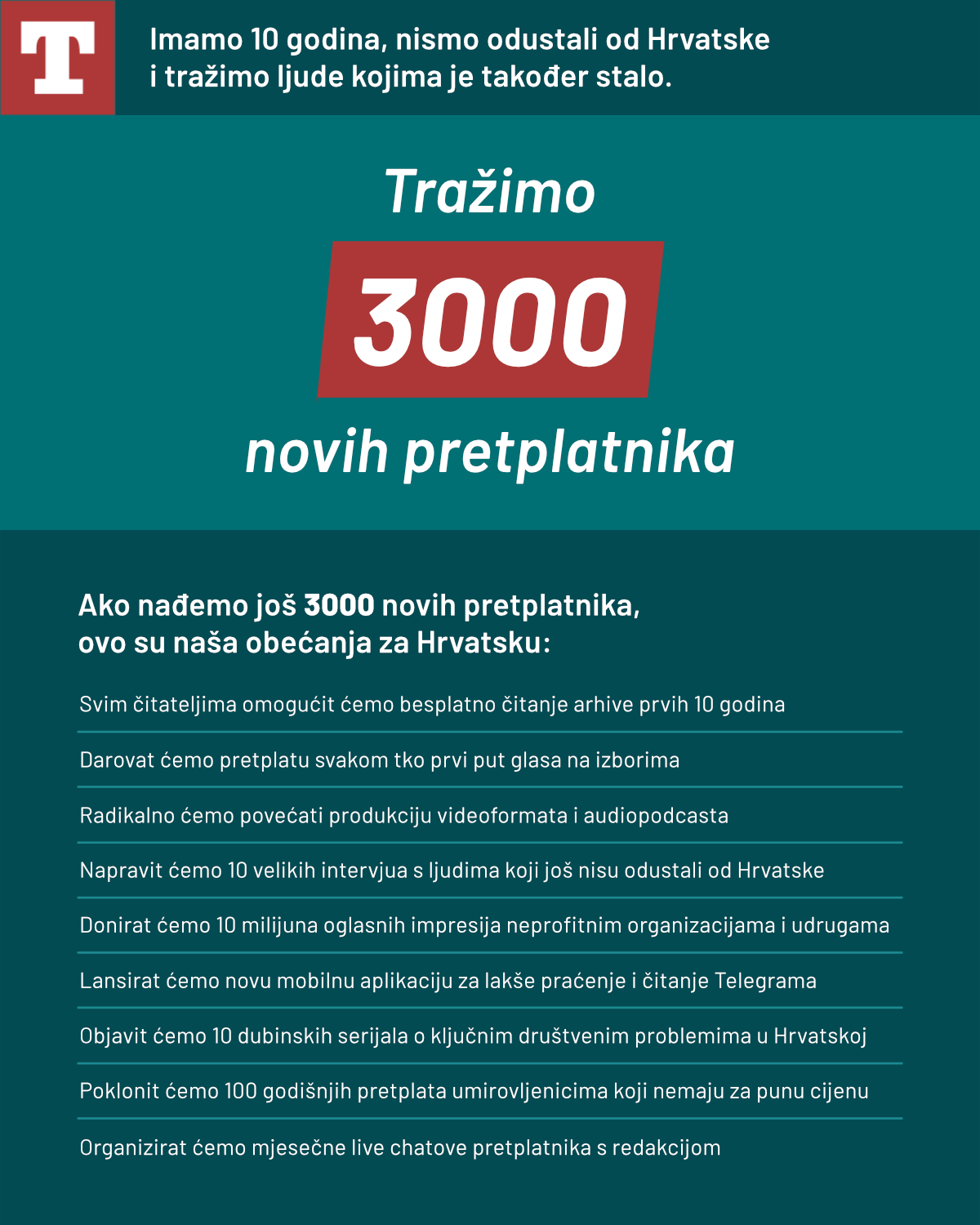
In 2025, Telegram.hr marked its 10th anniversary with a major subscription drive, inspired by a similar successful campaign at Dennik N.
 Marcela Kunova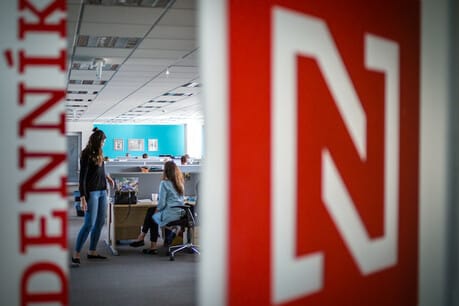
The month-long campaign aimed to gain 3,000 new subscribers, offering a "pay-what-you-want" model for 10 weeks, with a recommended price of €5 but a zero-euro option for those unable to pay.
Promotion spanned the website, newsletters, social media, radio, and cinemas, with public figures lending support. The campaign exceeded expectations, bringing in 3,209 new subscribers — 7 per cent above target. Only half opted for the free tier, with the average payment at €4.06. The subscriber base grew by 27 per cent and 80 per cent of new subscribers stayed after the introductory offer.
Special newsletters and thank-you emails welcomed new subscribers, and a 24-hour "grand finale" offered a lifetime subscription for €399, which proved popular with existing subscribers.
"A high share of the users who bought the lifetime subscription were existing subscribers, and they wanted to support us additionally, and it felt really great," says Drago Grahovac, head of digital subscription at Telegram.hr.
Internal on-site marketing, using REMP’s campaign tools, was the most effective channel for acquiring new subscribers.
Readers could also easily click through and see also the 10 promises that were split into 3 goals, each after reaching one thousand new subscribers.
Dennik N, which ran a similar campaign with very similar initial results in January 2025 and in February reported over 90-thousand subscribers (85k of them paying), had over 74-thousand subscribers after Q3 of 2025 and stayed over 70k at the end of 2025. However, there was significant churn after all discount periods ended.
"We managed to broaden the funnel and get more people engaged with the product. What we also saw was that people who churned after the initial promotional campaign ended remained as registered users and started using the site more. Some of them we were able to convert back to paying customers with additional promotions later down the line," Pavić added.
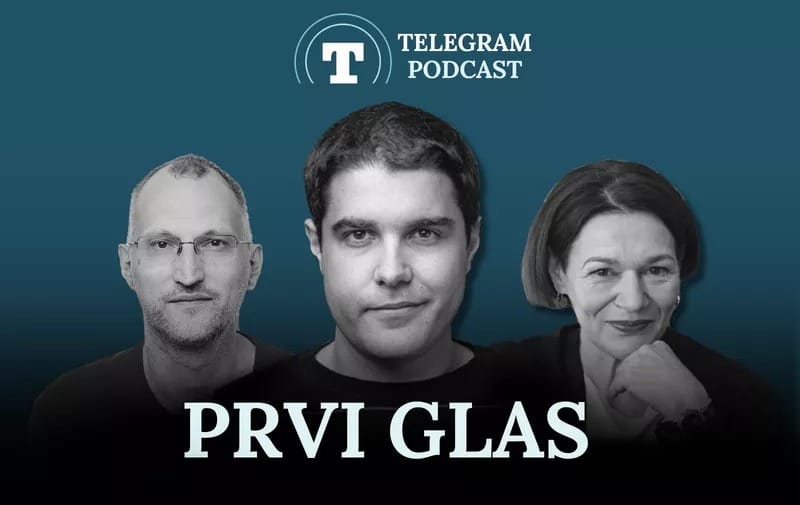
Elsewhere, in April 2025, Telegram.hr launched its daily news podcast, Prvi glas, offering a 15-minute analysis of the day’s top story. The podcast quickly became one of Croatia’s most listened to, surpassing international competitors. By November, it had over 2.3 million views and listens, averaging 120k per episode, making it its fastest-growing format.
The success of audio led to experiments with AI-generated audio versions of articles and the acquisition of a popular radio network. Book publishing also became a significant revenue stream, with 14 titles released in 2025.
Looking ahead, Telegram.hr is closing in on the goal of 30,000 paying subscribers, and plans to further expand its podcast and video offerings, and continue growing direct audience revenue.