How NowThis Media's social news videos are 'optimised for speed'
The company has almost reached 600 million video views in October, but how does NowThis aim to make real time news for different platforms?
– 3 min read


The company has almost reached 600 million video views in October, but how does NowThis aim to make real time news for different platforms?

This article was migrated from an old version of our website in 2025. As a result, it might have some low-quality images or non-functioning links - if there's any issues you'd like to see fixed, get in touch with us at info@journalism.co.uk.
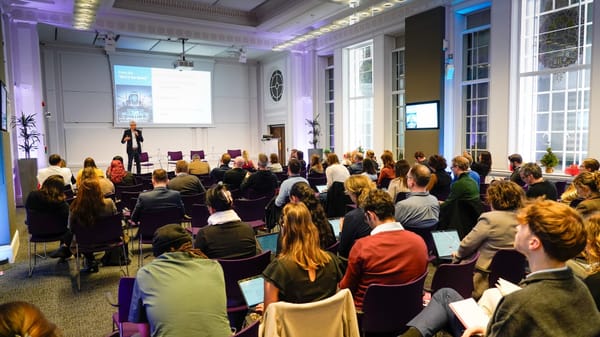
NowThis Media is about to close in on 600 million video views for the month of October, said Ashish Patel, the company's vice president for social media, speaking at the Monetising Media conference in London last Friday.
Launched as NowThis News in 2012, the video news outlet aims to reach mobile-first audiences who get their news from social media, and now publishes on eight platforms : Tumblr, Kik, YouTube, Facebook, Twitter, Vine, Instagram and Snapchat. To date, it has gathered over 2.3 billion video views.
And because the idea is to create video that is "very close to real time", the company shut down their desktop website at the beginning of the year and now publishes exclusively on social feeds.
"We took the stance that it was too late for us to build a standalone destination," said Patel, "and tackled only social, because people are there already."
However, in July, NowThis Media released a mobile app called Tap For News , which features a single button that people can tap as many times as they wish to watch a collection of short videos across a range of categories.
On Facebook, NowThis has 1,765,207 likes and publishes native video, mostly around the one-minute mark, organised into playlists on topics like politics, science and technology or entertainment.
NowThis Politics and NowThis Entertainment also have individual Facebook pages to showcase their videos, although out of the 25 videos posted daily on the platform, 15 are uploaded to the main NowThis page.
Patel said they expect to be able to monetise Facebook videos, but for now, their goal is to reach a large audience and "constantly pop up in people's feeds".
We can't just sit here and think of 'what if', we have to think of 'what is'," he added.
Videos between 45 seconds and one minute perform best with NowThis' audience, which is "not a lot of time if you're trying to compete in time, on Facebook, with other publishers" – so the goal is to "optimise for speed".
NowThis Media built Switchboard, a video management system aimed at equipping its producers to create and publish video as quickly as possible.
For example, if there's a ferry crash in the Mediterranean, Switchboard's analysis feature will be automatically triggered to look for similar footage uploaded in the past, although Patel said they are not looking to build an algorithm to fully automate video production.
Switchboard gives the producers an overview of the ideal length, what platform they should distribute it on, as well as possible correlations between the text placed in the footage, the colour and the sound used in the video.
Patel said the key is to "follow the audience and build for their context of usage", thinking of how people actually come across a video online and how they interact with it.
This also applies to monetising social video. NowThis experimented with pre-roll adverts in videos, he said, but after seeing a drop out in audience, the team decided not to pursue this model and focus on branded content instead.
"Understand the use case of a platform or a mobile app and try to build assets for it," he added, "whether that's from a visual, content or context perspective.
"But what you shouldn't do it waste time thinking about where an audience from a certain platform has gone, because platforms change and audiences move all the time."