How the World Cup was really watched: Inside the data behind football's biggest live blogs
From Curaçao's historic goal to Spain's final glory, analysis of 1,362 World Cup live blogs reveals what kept 24 publishers' audiences hooked (it wasn't just the scoreline)
I watched it a lot when I was a kid, but found myself losing interest as I became an adult and increasingly unwilling to waste an afternoon watching a 1-0 game.
In time I replaced watching TV with a live blog, typically booting up the Sky Sports News app on my phone or typing the fixture into a Google search bar. It became a much more convenient way to see the scoreline at a glance, the run of play and which players were having a blinder (or a game to forget).
But when international tournaments come around, I can't help getting sucked in. It's not just the 'It's Coming Home' anthem, and not just to follow the England scores. When else are you going to get New Zealand versus Egypt?
Turns out, I'm not the only one. Tickaroo is a liveblogging platform for news publishers, specialising in sports reporting across Europe. I checked in with CEO Naomi Owusu to see what trends she noticed throughout the summer's tournament.
Disclaimer: Tickaroo is a commercial live blog provider. We're not getting any money from them for publishing this article.
Q: What were the most highly engaged matches from the liveblog and why?
NO: From our analysis of 24 publishers' 1,362 World Cup live blogs across 104 matches, the tournament followed a pattern that will be familiar to many sports editors, with some surprises thrown into the mix.
As expected, the biggest audience came from the latter stages of the competition. The Spain-Argentina final generated more than 4 million page views across publishers, making it the most viewed match of the tournament.
Knockout fixtures consistently attracted larger audiences than group-stage games, with page views and unique users roughly doubling once the tournament entered the elimination rounds.
However, audience engagement wasn't determined solely by the importance of the round or size of the teams involved. Matches that featured compelling narratives consistently outperformed expectations, with fixtures involving emerging teams or unexpected results attracting strong audience figures. Think Cape Verde’s surprise run, and Turkey's group-stage exit, which one German publisher saw clock up more viewers than their coverage of Germany’s group stage games.
One of the clearest lessons came from our detailed analysis of Germany vs Curaçao. Although Germany won comfortably 7-1, Curaçao's first-ever World Cup goal drove a 186 per cent page view jump; bigger than any German goal. Readers were responding to the significance of the moment, not simply the scoreline.
Help us shape JUK. Take our quick audience survey for a chance to win one of six brilliant books. It only takes five minutes - your voice will directly influence our future coverage and make a real impact
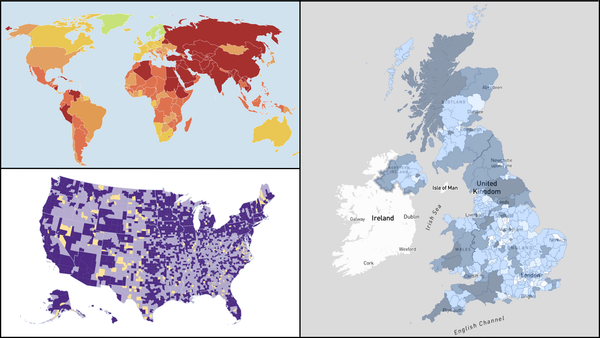
Screenshots of Reporters Without Borders Press Freedom Index (top left), Northwestern Local News Landscape (bottom left) and Public Interest News Foundation Local News Map (right)