How to earn the click: Navigating Google’s unpredictable search results
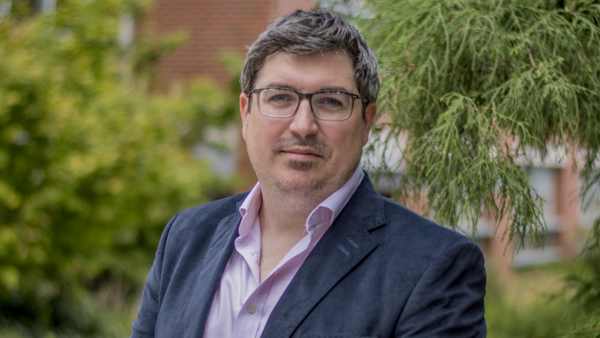
Maddie Shepherd, SEO director at CBS News and Stations, says there is both an art and a science to getting highly ranked on Google: prioritise time on page and deliver on your headlines
This article was migrated from an old version of our website in 2025. As a result, it might have some low-quality images or non-functioning links - if there's any issues you'd like to see fixed, get in touch with us at info@journalism.co.uk.
It's never quite clear what you're going to get when you punch a query into Google.
Sometimes, you’re presented with a classic list of links - what SEO pros call a SERP (Search Engine Results Page). News publishers have classically tried very hard to appear as high up on this list as possible. But sometimes users will see a sponsored link first. And - to the disdain of news publishers everywhere - Google’s AI Overview is now clawing up the attention, summarising the answer at the top and pushing website links further down.
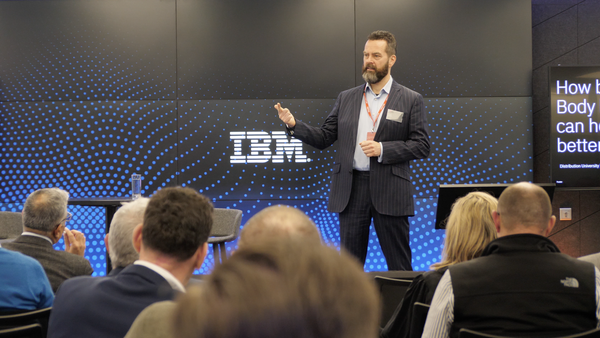
For Maddie Shepherd, SEO director at CBS News and Stations, this unpredictability is the new normal. Speaking at yesterday's (21 October 2025) News and Editorial SEO Summit 2025, she says newsrooms must be both artists and scientists in their approach to earning every click. She shared a set of best practices for newsrooms.
Three pillars
First, you need to understand the three factors that decide where a news page ranks.
Body: What the article says about itself (does your story accurately deliver on the headline and explain well the main topic)
Anchors: What the rest of the web says about the article (such as links and references).
User interactions: How readers engage with the article.
This last pillar is crucial. Google’s systems, including a feature called Navboost, pay close attention to "long clicks". This is when users click a result and stay on the page for a long time, rather than quickly bouncing back. The more your story keeps readers engaged, the more likely Google is to show it to others.
Make every pixel count
Shepherd's data shows that CBS' 50 top performers on Google Discover - a personalised mobile news feed on the rise - also see a 104 per cent higher click-through rate in traditional search. In other words, visibility breeds more visibility. But once your story appears in search, you have to then earn the click. To do that, you have to be better than the competition.
Focus on winnable keywords
Not every news query is dominated by AI Overviews. Using tools like NewzDash and AI overview visibility trackers, Shepherd found that AI Overviews only account for about 10–12 per cent of visibility for daily trending news queries. That means the majority (88–90 per cent) of news searches are still up for grabs.
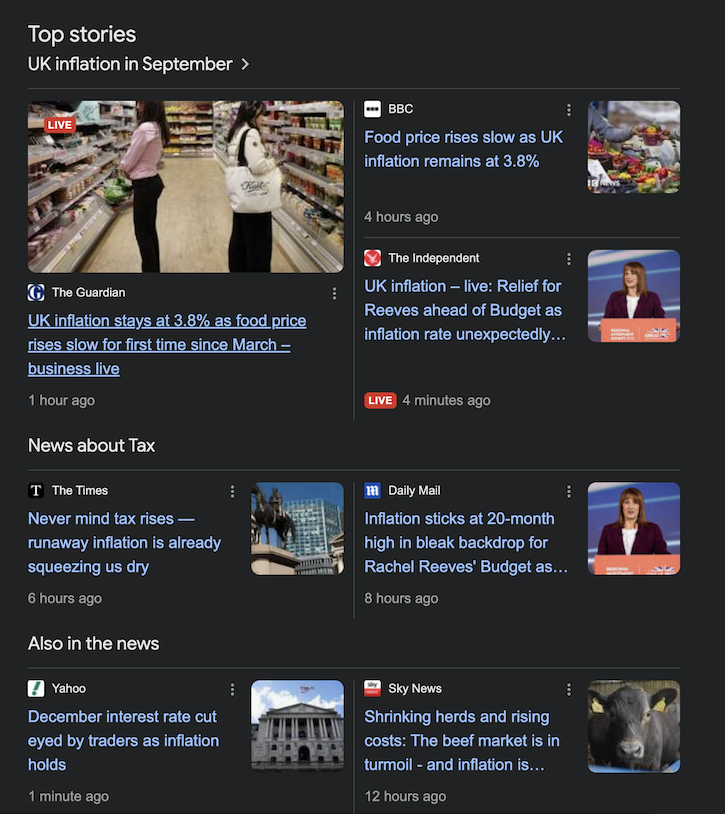
Her advice: always check the current search results manually before targeting a viable keyword. In this case, "inflation" and "tax" are currently winnable terms.
SERPs: Google search results for "inflation"
Headlines that promise and deliver
Your headline is the one piece of real estate you can control in the search results. Shepherd urges newsrooms to make a clear "SERP promise" that sells the facts plus what makes your coverage unique.
For example, the CBS headline "Watch live: Trump’s joint speech to the 2025 joint session of Congress” beat rivals to the top result result because it included an actionable call to action. Elsewhere, "Oscar winners list for 2025: live updates" promises real-time information, beating out static sources like Wikipedia.
Check secondary searches in Google Trends for inspiration. Terms like "list," "map," "full video," or "live stream" tend to crop up.
Timestamps and thumbnails: Small details, big impact
This is a contentious one. News stories often need updating, but Google doesn't like this much. Having multiple dates on articles (i.e. date published, date updated) will confuse Google and harm your click-through rate - some experts claim up to 22 per cent.
This can conflict with the generally approved practice of being transparent for returning readers about when changes to articles have occurred. Shepherd recommends using only the most recently updated time, but a workaround could be having a drop down menu that shows previous publishing dates (evading Google's notice).
Thumbnails (small images next to your headline) are another powerful asset that gives credibility to articles on Google. Even though you’re not always guaranteed a thumbnail displayed, optimising them is easy and effective. Choose images where people are clearly visible and recognisable, or use a video thumbnail that matches the story’s main image.
"We use the thumbnail of the video as much as possible, so that it aligns with what’s going on at the top of the page and sets up realistic user expectations," Shepherd notes.
The “live badge” advantage
For breaking news, earning a "live badge" in Google’s Top Stories can make your coverage stand out. This badge signals to users that your story is being updated in real time, which can drive more clicks, especially if your timestamps aren’t updating perfectly. Implementing live posting schema (a type of code that tells Google your story is live) can help, though it’s not always guaranteed.
Meta descriptions can be automated
While meta descriptions (the short summaries you write for search engines) can sometimes help with visibility, Shepherd finds they rarely appear in the search results and don’t reliably earn clicks. She agrees that automating them to a reliable gen AI makes sense, so you can focus on the more impactful areas.
This article was drafted with the help of an AI assistant before it was edited by a human