How will the media landscape look in 10 years?
Attitudes towards new technologies and trust in public institutions will shape the media landscape by 2025 – here is one way to prepare for uncertainty and change
– 2 min read


Attitudes towards new technologies and trust in public institutions will shape the media landscape by 2025 – here is one way to prepare for uncertainty and change

This article was migrated from an old version of our website in 2025. As a result, it might have some low-quality images or non-functioning links - if there's any issues you'd like to see fixed, get in touch with us at info@journalism.co.uk.
There are four possible scenarios for the future of journalism over the next ten years, according to a report commissioned by the Dutch Journalism Fund in The Netherlands.
The research involved working with 150 participants, both from the media industry and other sectors, to look at trends and explore scenarios emerging from the "uncertainties" highlighted in the discussions.
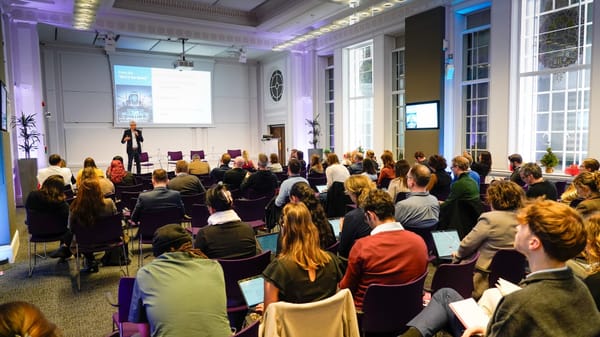
René van Zanten, general director, Dutch Journalism Fund, explained there are two unpredictable trends that will affect the future of journalism by 2025, presenting the findings of the report at the International Newsroom Summit today.
The first question mark relates to the acceptance of technology. "Will it go all at the same pace," he asked, "or will something change? Will our world be dominated by drones, sensors, 3D printing, virtual reality... or will people get fed up with new technology?"
The second uncertainty is around public trust – will people resent the fact that their privacy is "in the hands of big companies", or will they be happy to hand more data over to technology giants like Facebook or Google?
The thoughts were collected and explained in the final report, "What's new(s)? Scenarios for the future of journalism," which puts forward four different scenarios based on the possible combinations between the two "uncertainties".
Here's what the media landscape could look like in 2025:
This model combines a radical approach to technology with a reluctance to trust public institutions. In this scenario, journalism would be dominated by individuals who have taken it upon themselves to invent news products – it would "remove any requirement for large organisations," the project team wrote on the report website.
The second scenario again sees an open attitude towards new technologies, but also the dominance of a few big companies. News in this world would be highly personalised and reach people exactly at the right moment through cutting edge technology, said van Zanten.
In this model, a reluctance to adopt new technologies meets distrust in public institutions, resulting in a news landscape led by grassroots, do-it-yourself publications and a majority of local titles.
Finally, the fourth model is born as citizens prefer bigger companies to lead the way, and individuals are not fast adopters of new technologies. Here, "the media is evolving," and "transparency is the magic word", the project team explained.
So why should newsrooms and journalists think about these scenarios? Knowing what could shape journalism in the future and the directions it may go it can help organisations anticipate and prepare for change.
To help with this process, the Dutch Journalism Fund has created a training section on the website to "help you think about your own strategy," said van Zanten.
There are two toolkits available to download for free and experiment with – one for media organisations to work through with their teams, and one for freelance journalists looking to develop strategies to cope with the uncertainty.
Download the full report, released earlier this summer, here .