It is time for Parliament to act, urge libel law reform campaigners
Petition calls for a new libel bill to help protect freedom of speech
– 4 min read


Petition calls for a new libel bill to help protect freedom of speech
This article was migrated from an old version of our website in 2025. As a result, it might have some low-quality images or non-functioning links - if there's any issues you'd like to see fixed, get in touch with us at info@journalism.co.uk.
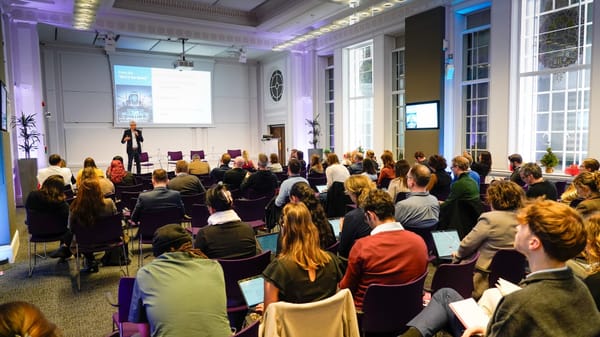
A petition to reform libel law in England and Wales was launched in Parliament today amid strong urges from politicians and reformers to push for change before the next general election.
"The problem isn't just that writers are being gagged – it's that the public are being blindfolded," said the Liberal Democrat MP, Dr Evan Harris, who called for an house debate on parliamentary privilege following the Trafigura/Guardian injunction furore in October .
"The kinds of cases we're hearing about, and the call for reform indicated in the libel petition, show that it is time for Parliament to act. We need a commitment to reform in all the parties' manifestoes."
Numerous well-known scientists, politicians, writers, publishers and comedians have pledged their support for the reform instigated by the PEN/Index on Censorship review published in November. Key issues include the increasing number of 'libel tourism' cases, the high cost of defending a libel claim, and the law's 'chilling' effect on scientific debate.
John Micklethwait, editor-in-chief of the Economist said that although they published in 100 countries, British law proved nearly always the worst: "In my experience it's seldom about poor people (...) It gives the rich, or anyone who can afford it, a chance to suppress the truth."
"We have to use words very carefully," said Dr Fiona Godlee, editor of the British Medical Journal, during a series of pleas made at the parliamentary launch this morning. "Get some good lawyers and be brave," she added.
"[W]e need a libel law, but we need to make it so it does not inhibit the advancement of scientific thought," said Professor Malcolm Grant, provost at University College London.
While Lisa Appignanesi, president of English PEN was critical of current libel law, she said everyone has a right to defend their reputation.
Referring to the Salman Rushdie case in which the author successfully sued over allegations about his time living under police protection and won apologies from a former police bodyguard, she said: "No damages were needed to be paid. This seems a much fairer way."
Medical theory should be open to criticism, said medical doctor and Bad Science blogger Ben Goldacre. At academic conferences 'you'll find people tearing strips off each other's ideas', he said.
"Laws that stifle debate harm patients, because in medicine we have seen repeatedly that people can do great harm, even when they intend to do good," he said ahead of the event.
"So we can't just tolerate criticism of our ideas and practices: we must welcome it, because criticism is the only way that our ideas and practices improve."
His concern was not legal action post-publication, or even pre-publication: "It's the censorship that happens in our own minds that's dangerous," he added this morning.
"Let's put some steel in people's spines," encouraged Index on Censorship chief executive John Kampfner. He cited the case of one unnamed Fleet Street editor who had, according to Kampfner, been told by his lawyers to 'lay off the oligarchs' because the publication could not afford the legal risk.
Labour MP Denis MacShane called for a 'short sharp bill' to get this out of 'Whitehall committeedom' and to get it in the house 'even if it's not voted on'.
Tracey Brown, leading the Sense About Science campaign, said this petition was not a 'competitor' against other campaigns to attract public support: "This is a prerequisite. We need this [reform] for all areas of public concern," she said.
"This will need government time," urged lawyer David Allen Green, who writes the Jack of Kent blog. Otherwise, he added, "all this will be for nothing and it will fail."
Not all figures attending the launch were in complete agreement with the proposed libel reforms as detailed in the PEN/Index on Censorship report, but they were united in the call for political reaction from all three main political parties - as soon as possible.
Initial government promises of reform were again treated cautiously by the reform campaigners. Campaigners have to be careful it's not just government rhetoric, John Kampfner first warned at the end of last month. The petition in full, which can be found at this link: