This article was migrated from an old version of our website in 2025. As a result, it might have some low-quality images or non-functioning links - if there's any issues you'd like to see fixed, get in touch with us at info@journalism.co.uk.

This article first appeared on Villamedia, it has been translated and republished with permission from the author

The battle for journalism's survival is being fought right now. And we're losing. While anyone with a smartphone can break news and AI can write articles in seconds, journalism clings to outdated practices and invisible standards.

The solution isn't new technology or flashier content; it's something we've had all along but rarely showcase: our ethical codes. Only by actively demonstrating these professional standards can we reclaim public trust and prove our irreplaceable value. If we fail to act, journalism will become just another voice in the digital noise, stripped of credibility and relevance.

The battle for the future of journalism is not new. We have been here before. In 1947, the press also faced an existential crisis. Henry Luce, publisher of *Time* magazine, established the Hutchins Commission fearing that press freedom in the US was at risk.

This was due to increasing ownership concentration, worsening financial conditions, and a focus on sensational news. The commission concluded journalists must embrace social responsibility and be transparent about their methodology. Otherwise, the public would lose trust.

Nearly eighty years later, journalism faces another existential challenge. This challenge is different in some ways, but shows striking similarities. There is still debate over media ownership and financial pressure. And, due to rising competition from online platforms and social media and the constant battle for attention, there is again a focus on sensationalist and fast news.

What is different is that journalism now faces a far broader competition. Anyone with a smartphone can make professional-looking videos and start their own news channel. Starting a podcast or blog is easy and AI can generate a full article in seconds. This makes the question of what makes journalism and journalists unique more urgent than ever. Like in 1947, the answer is at hand but often invisible to the public and journalism itself: our ethical codes.

In 1947, the Hutchins Commission made several recommendations to improve the situation. It advocated for journalism that reports truthfully and comprehensively. The commission also called for something revolutionary at the time: self-reflection. It emphasised that the press must develop its own mechanisms for quality control and critical evaluation.

Existing ethical codes (e.g. Society of Professional Journalists 1926) did not go far enough. They lacked sufficient emphasis on journalism's social responsibility and contained nothing about enforcement or accountability.

The commission said journalism should not wait for external regulation but be more transparent about its methodology and create space for self-reflection. Some media adopted parts of the recommendations, like appointing ombudsmen, but it took until 1954 for an internationally accepted ethical code to be established. This set the Bordeaux Declaration as the basis of many journalistic codes.

Most journalists are aware of these rules but likely do not know them by heart. And they don't have to. Most agreements are obvious and shape our journalistic actions, consciously or unconsciously. These include hearing both sides, separating facts from opinions, and carefully sourcing our stories. It is in our journalistic DNA. The (better) codes describe quite precisely how journalists do their daily work.

But what might be obvious to us is not always so to the public. To the public, the difference between a journalist and someone like the world's most famous podcaster Joe Rogan is not so clear. The public sees two people with a microphone asking questions and assumes they are doing the exact same thing.

Journalism must therefore clearly show what makes it different and unique. Ethical codes are not just rules to follow, they are our secret weapon in the fight for relevance and trust. By actively making our values visible, we can demonstrate what sets professional journalism apart from other content creators.

Currently, journalism mainly visibly uses ethical rules when something has gone wrong. For example, when someone from the public complains to an Ombudsman or a standards editor. Then we refer to the codes and explain whether the journalist followed the rules or not. While this transparency after the fact is useful, it would be much better if journalism integrated such transparency from the start.

The easiest way to do this is to share your sources as much as possible, so others (e.g. other journalists) can review the research. A kind of peer review, like in science. Also explain when and which dilemmas you face, like balancing privacy and news value, or speed and accuracy. We should not be afraid to show when our reporting is still a work-in-progress and we don’t know all yet.

Some newsrooms already practice this highly transparent way of working. Online investigative platforms like OCCRP and Follow the Money share many of their sources. And a lot of journalistic podcasts literally take the audience along on the journalist's investigation.

However, they stand out because many newsrooms have not yet reached this level of transparency or haven’t found the right format yet. It takes courage, because it means we are not only exposing our methodology but also our mistakes along the way. This makes us vulnerable, but I would argue that not doing it makes us even more vulnerable.

Not being transparent about what we do and why we do it is no longer an option. The time when newspapers or TV programs were trusted purely based on their reputation, is over. We will have to work harder and tell our stories differently. With ethical codes as tangible proof of our professionalism and reliability.

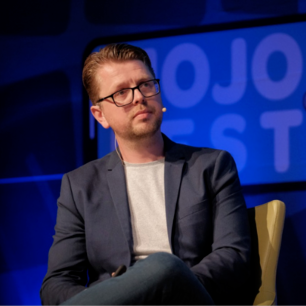
Wytse Vellinga works as coordinator of journalistic accountability at the Ombudsman for the Dutch Public Broadcasters. In addition, Vellinga is chairman of the House for Journalism Foundation and co-organiser of the Dutch Journalism Festival. In these roles, he is committed to innovation and collaboration in Dutch journalism. Previously, he worked as a reporter and researcher for various media and as a trainer for media organisations throughout Europe.

Share with a colleague

Written by

Wytse Vellinga
Wytse Vellinga works as coordinator of journalistic accountability at the Ombudsman for the Dutch Public Broadcasters, the chairman of the House for Journalism Foundation and co-organiser of the Dutch Journalism Festival.

Comments