This article was migrated from an old version of our website in 2025. As a result, it might have some low-quality images or non-functioning links - if there's any issues you'd like to see fixed, get in touch with us at info@journalism.co.uk.
Six years ago, while covering a riot in her home city of Derry, Leona O'Neill witnessed the murder of a young journalist, Lyra McKee, who was shot dead by dissident republicans.
"That event alone traumatised me," O'Neill says, in an exclusive interview for Journalism.co.uk. "But afterwards, I was harassed and hounded by conspiracy theorists while I was already traumatised. Everything was compounded, and I was diagnosed with PTSD."
Nothing in her 25 years in the industry could prepare her for this moment. When she reached out for help, she found nothing. "No one could help me and my newsrooms were not any help. The attitude was basically get on with things, this is part of the job."
Read more: A comprehensive hub of mental health resources for journalists
Fighting the toxic mindset
"I decided that I could either lie down under this or I could fight for myself and then, in the same way, fight for other people to get support," she explains.
O'Neill started reaching out to other journalists and made the troubling discovery that they were in the same boat. She knew she had to do something.
She began a new career in academia to inspire the next generation of journalists, becoming head of undergraduate journalism at Ulster University in Northern Ireland. She also founded Mediastrong, organising conferences to force conversations that newsrooms were actively avoiding.
She finally turned to writing, publishing "Breaking, Trauma in the Newsroom" to recount the experiences of 16 journalists, including herself and later a supernatural fiction story that reflects her own journey.
"There was a really toxic mindset in the newsroom. The journalists are not allowed to suffer. They are not allowed to be impacted by things. They're almost thought of as robots who have to keep going out to the worst situations imaginable and somehow not be impacted by them."
Read more: 'My colleagues helped me through the hardest story of my career'
Persistence paying off
The first Mediastrong conference in Belfast in 2023 faced strong resistance. "Doors were being closed in my face. We don't want to talk about mental health in newsrooms, we don't want to make snowflakes out of journalists, we don't want to face this.
"I invited every newsroom in Ireland to it and none of them came," she recalls.
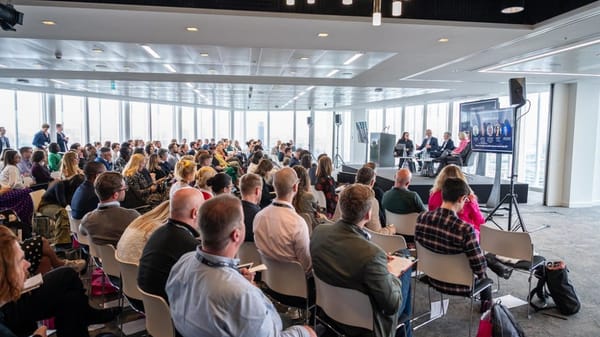
But persistence paid off as later conferences saw star names attend and speak. The 2024 London event saw BBC's Jeremy Bowen participate. In 2025, CNN's Clarissa Ward spoke about the issue.
Mental health is gathering momentum as a conversation, little by little. It's evolved from opening up to emerging solutions, like her Mediastrong charter, a newsroom commitment to mental health, which has gained prominence in the UK and Irish parliaments.
The 2026 Mediastrong conference - details yet to be announced - will focus on leadership, ensuring these conversations reach the top of newsrooms.
"Together we're stronger and we're only gonna move in bigger and louder and better circles from here on," O'Neill says. "And these tribes are forming all over the world now with us in mind."
Parting advice
For journalists working in unsupportive environments or struggling with trauma, O'Neill offers clear advice: it's easy to put up emotional barriers as a journalist, but try to maintain your empathy.
"Don't ever lose sight of the fact that you're human, you are worthy of help," she says.
"You're also carrying the responsibility of other people's stories, so don't ever lose sight of that."
Leona O'Neill was speaking to psychotherapist and Sky News producer James Scurry for his soon-to-be-launched newsletter Compassionate Journalism. Scurry shared the interview with Journalism.co.uk ahead of release.