Latest RISJ report: Six steps to future-proof your newsroom
We distilled the latest 'Journalism and Technology Trends and Predictions 2026' report into clear, actionable steps to help you adapt, stand out, and build trust in a rapidly changing world
2026 isn't looking easy for newsrooms. Generative AI is reshaping how people find information, audiences are flocking to individual creators over traditional outlets, and trust in mainstream media has taken quite a knock.
But here's the good news. The Reuters Institute for the Study of Journalism has just released its annual Trends and Predictions report, and it's packed with practical insights on how to navigate these choppy waters. Senior research associate Nic Newman surveyed 280 media leaders worldwide, and what emerged is a roadmap for survival and maybe even success.
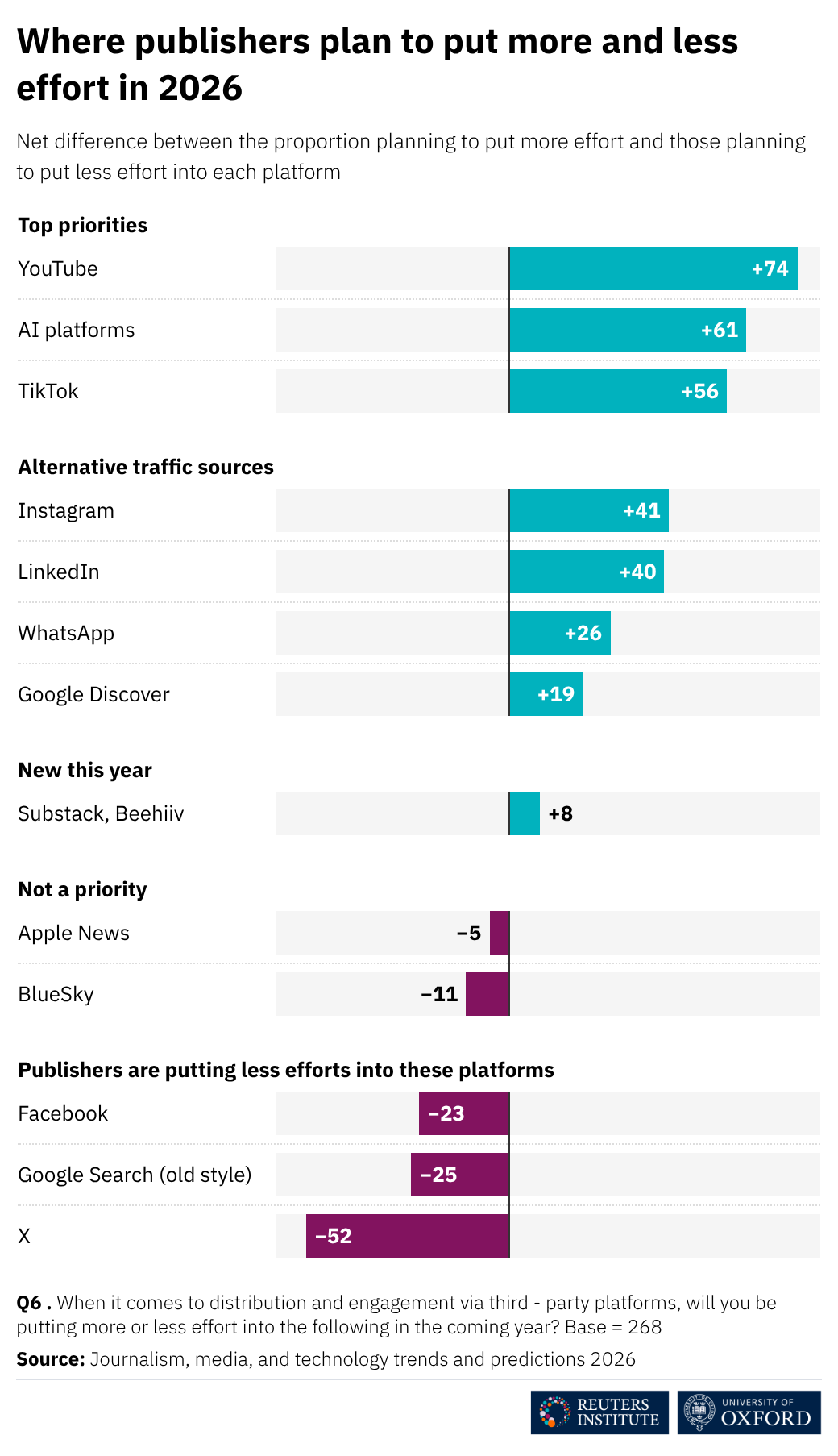
Standout stat: media leaders are expecting a 43% drop in search traffic over the next three years. Google Discover and Search are already showing significant declines, so if you've been relying heavily on search to bring readers to your door, it's time for a rethink.
So what should newsrooms actually do about all this? Here are six practical steps.
1. Think like a creator
Journalists can be creators with their own audiences - "just" reporting may not be enough. Encourage them to build personal brands and connect directly with people on social media and video platforms. Offer training in things like being comfortable on camera, launching podcasts, or developing their own storytelling style.
And don't stop there. Look for opportunities to team up with external creators and influencers who share your values. Co-branded content or guest takeovers can bring fresh energy and help you reach new audiences.
2. Be different
The internet is drowning in AI slop. This is actually your moment to shine. Focus on what machines can't replicate: original reporting, expert analysis, and unique perspectives that only your newsroom can offer.
Be open about your sources and how you work. Show off your journalists' expertise and your roots in the community. In a world of slop, authenticity is your superpower.
3. Get ready for the “answer engine” era
AI-powered answer engines are changing the game, and direct traffic to your website might take a hit. The solution? Make your content easy for these tools to find and surface. Structure articles clearly, use proper metadata, and provide concise summaries.
But here's the crucial bit: don't put all your eggs in someone else's basket. Build loyalty through newsletters, host events, and engage directly with your community. When people feel connected to you, they'll come to you directly rather than stumbling upon you through a search engine.
4. Rethink how you do social and video
Social platforms are heavy on video and personality. Invest in short-form video, try live formats, and train your team in video editing and presenting.
Experiment with new platforms, but—and this is important—keep a close eye on what's actually working. Track your return on investment so you're not throwing resources at things that don't deliver.
Sign up for our hands-on training course that walks you through the entire process of creating short-form vertical news content using just a mobile phone — from ideation and scripting to filming, editing, and publishing
Deepfakes and AI-generated misinformation are getting scarily sophisticated. Invest in proper fact-checking and verification tools. Help your audience understand how to spot trustworthy sources, and be upfront about when and how you're using AI in your own work.
Trust is your currency. Guard it carefully.
6. Meet people in real life
People are craving real-world connections and digital detoxes. Tap into that by hosting in-person events, workshops, or casual meetups. Create spaces—both online and offline—where your community can gather, discuss, and connect.
This strengthens relationships and reminds people that you're not just a website—you're a vital part of their community.
The bottom line: The newsrooms that will thrive in 2026 aren't necessarily the biggest or the best-funded. They're the ones that are bold, distinctive, and genuinely connected to their communities. By empowering your team to think like creators, doubling down on what makes you unique, and adapting thoughtfully to new technologies and audience behaviours, you can survive this transformation - and own it.