Lord Neuberger: Law 'maintains reputation of newspapers'
Traditional media carry more weight than Twitter and blogs, Lord Neuberger tells parliamentary committee on privacy and injunctions
– 2 min read


Traditional media carry more weight than Twitter and blogs, Lord Neuberger tells parliamentary committee on privacy and injunctions
This article was migrated from an old version of our website in 2025. As a result, it might have some low-quality images or non-functioning links - if there's any issues you'd like to see fixed, get in touch with us at info@journalism.co.uk.
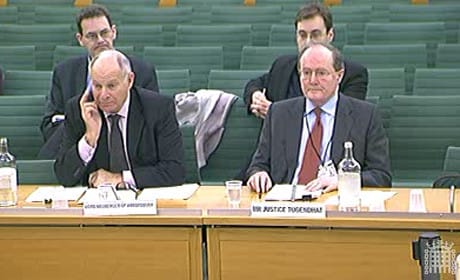
Legislators and the judiciary help to ensure newspapers “maintain their reputation for reliability” amid wider online reporting on Twitter and in the blogosphere, Master of the rolls Lord Neuberger told parliament today.
Appearing before the joint committee on privacy and injunctions Lord Neuberger and Mr Justice Tugendhat jointly faced questions on which areas of the law may need to be addressed as part of the committee's investigation. When asked specifically about the issue of the internet and content produced by bloggers, or on platforms such as Twitter,
Lord Neuberger said there is a "relative unreliability" in the blogosphere. "I think that in a way, although they don't like us in many ways, the newspapers to some extent have the legislators and the judiciary to thank for their reputation for reliability. Much as they don't like it in individual cases, the law tends to keep them relatively accurate and by keeping them relatively accurate we do help ensure that they maintain their reputation. "The less policing there is, as we see on the blog, the less reliable the information, and consequently the less influential the blogosphere actually is." But he conceded that "this may change over the next 10 or 20 years".
Tugendhat added that one “certainly can't ignore" these challenges presented by online communications. “One of the reasons why I am hesitant about the way the law has developed out of confidentiality is that it gives people the impression that privacy is about secrecy. Sometimes it is … but most personal privacy cases, while they have elements of secrecy in them, the main element has got nothing to do with secrecy at all, the main element is harassment or taunting. “... The bloggers and tweeters who tweet what idiots we judges are, think obviously that what we're concerned to do is to stop disclosure of a secret and they're saying 'ha ha, you can't keep it secret'. But if what we're attempting to do is something quite different, which is to stop harassment, intrusion, taunting, then all that the bloggers and tweeters are doing is demonstrating to us how necessary it is we should keep the order in force. “There is a difference between the blogosphere and other media. The two main differences are that people take more seriously something that has passed through the editorial department of an established newspaper, it carries more weight … whereas you may dismiss anything on the blogosphere as being impossible verification. "Also there's the question as to whether something is
ephemeral
or not. In newspaper nowadays, most news organisations have archives. Once you get your name in the BBC or the Guardian, it's unlikely it will ever be removed. Whereas something on a tweet or on a blog is much less likely to be everlasting. “So there are claimants who are well aware that if an injunction is granted it's not going to stop people disclosing or discussing information on the internet but who nevertheless wish to stop getting it into a publication which carries some degree of weight.”