Lucy Küng: How publishers can thrive in the creator economy
Where do news organisations fit in to a landscape dominated by creators and fuelled by generative AI? 'Stop being bystanders and gatecrash the party'

– 4 min read


Where do news organisations fit in to a landscape dominated by creators and fuelled by generative AI? 'Stop being bystanders and gatecrash the party'
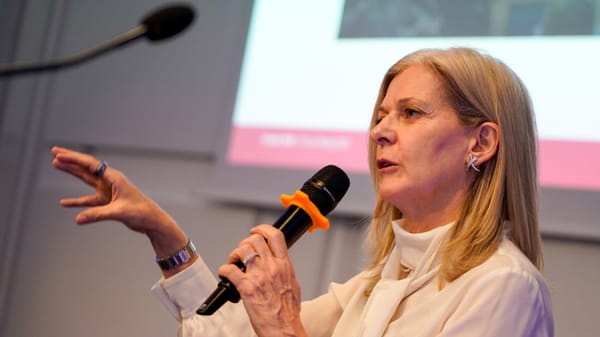
If news organisations want to survive the next wave of digital disruption, they must unlearn old habits, embrace niche expertise, and move at the speed of the creator economy.
That was the urgent message from expert media strategist Lucy Küng, who challenged publishers to stop being passive bystanders and start gatecrashing the party – before the best opportunities are gone.
"We have the capabilities in spades to outperform everyone. But at the moment I don’t see the strategic direction, I don’t see the speed," she says in a keynote speech at Newsrewired (26 November 2025).

Küng’s "magic triangle" offers a blueprint for how publishers can compete in a landscape dominated by creators and fuelled by generative AI.
She argues that the most successful media businesses will be those that combine three core content formats – newsletters, podcasts, and events – to build authority, deepen audience relationships, and unlock new revenue streams.
Act now: Audit your current content mix. Are you leveraging all three points of the magic triangle to move audiences up the engagement ladder and diversify your revenue streams?
Savvy content creators produce content, distribute it, build and retain audiences, while monetising across platforms, capturing data, and refining their output – then repeating the cycle.
The downside of this "creator flywheel" is that it is high-intensity and unsustainable for many: "The shelf life of a creator is three to four years before burnout."
Here lies a natural opportunity for news organisations, which have strength in numbers compared to content creators. But creators have the advantage of a more stripped-back, agile workflow. And AI has made it possible to do this at scale and with minimal overheads.
This has triggered a flood of new entrants and business models — most will fail, but the few that succeed can be highly profitable. Steven Bartlett's media empire is currently valued at $450m. Axios is also a rare example of a digital news startup that achieved a successful exit, selling to Cox Enterprises in 2022 for $525m.
How did Axios do it? It focused relentlessly on its niche value, building both B2C and B2B revenue streams, and maintaining a lean, high-performing team. Founders also resisted the temptation to cling to its classic media thinking and be disciplined in lesson in modern news product thinking.
Challenge your structure: Where can you simplify workflows, cut unnecessary complexity, and empower small, expert teams to experiment and innovate?
Küng introduced a four-part creator grid that captures the dynamics of today’s content landscape, helping news organisations understand both the competition and their own natural strengths:
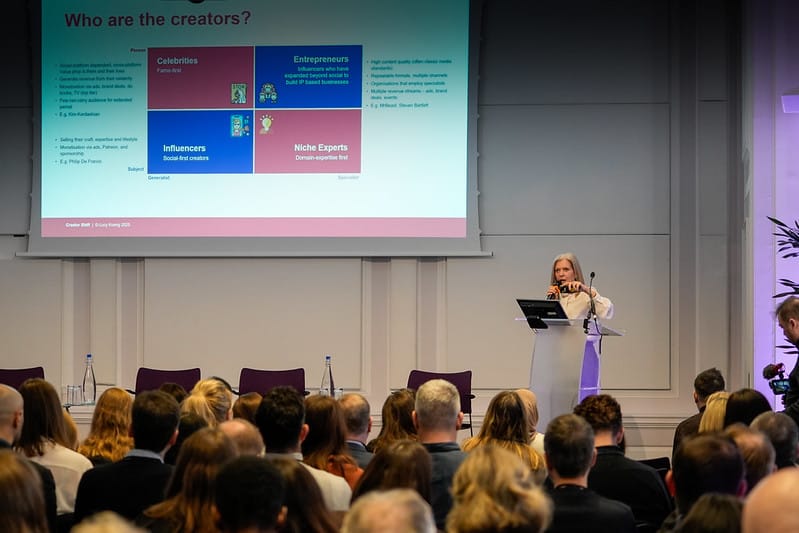
Here, they can use their editorial authority and brand trust to build deep engagement and community. The challenge is to avoid the grind and burnout typical of this space—and to find ways to move up the value chain, developing new products and services that push them closer to the entrepreneurial model.
Watch out: Burnout is endemic in the creator economy. News organisations can offer creators a sustainable path, but only if they embrace experimentation, pick entry points, and evolve rapidly.
This article was drafted by an AI assistant before it was edited by a human