New AI tool shows diversity of audio and video contributors
DiversityCatch offers a breakdown of male and female voices and topics in a podcast and news video, to help identify who is dominating the conversation

– 1 min read


DiversityCatch offers a breakdown of male and female voices and topics in a podcast and news video, to help identify who is dominating the conversation
This article was migrated from an old version of our website in 2025. As a result, it might have some low-quality images or non-functioning links - if there's any issues you'd like to see fixed, get in touch with us at info@journalism.co.uk.
A new AI-powered tool displays a breakdown of male and female voices and topics in your audio and video content.
MediaCatch, an audio and video media intelligence and research company, has launched DiversityCatch. Simply upload your podcast or video, and the tool will show you which voices or topics dominated the conversation.
Here is what one of our podcasts looked like. NB: The results are skewed towards male voices because the show has a male presenter (voice 00) and the tool does not currently offer a way to filter out certain results.
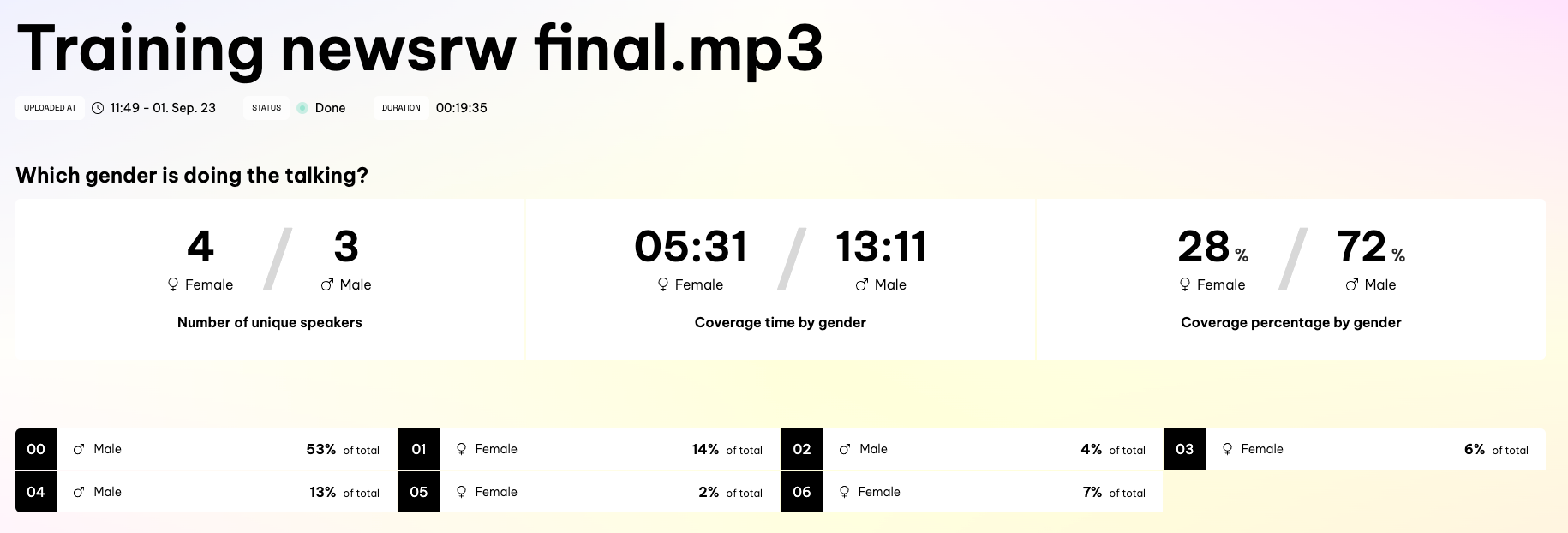
It shows the individual guests in the clip, how many minutes they spoke for and what percentage of the conversation that equates to. It also shows the total breakdown of female and male voices.
DiversityCatch is currently offering a trial with five free uploads, but this only shows gender breakdown. The paid version displays topics with an option to mass upload files via a link rather than single uploads.
MediaCatch claims that for audio, results are 99 per cent accurate for gender and 95 per cent accurate for topics. A proprietary AI is trained on "countless hours" of material using machine learning to distinguish between male and female voices. It currently has no way of distinguishing trans voices, so there are only the binary options.
It works similarly for video, except the added visual element allows it to analyse an approximate age and ethnic origin, too. The accuracy of those results are as follows; gender (98 per cent), ethnic origin (90 per cent), age (+/- 4 years).