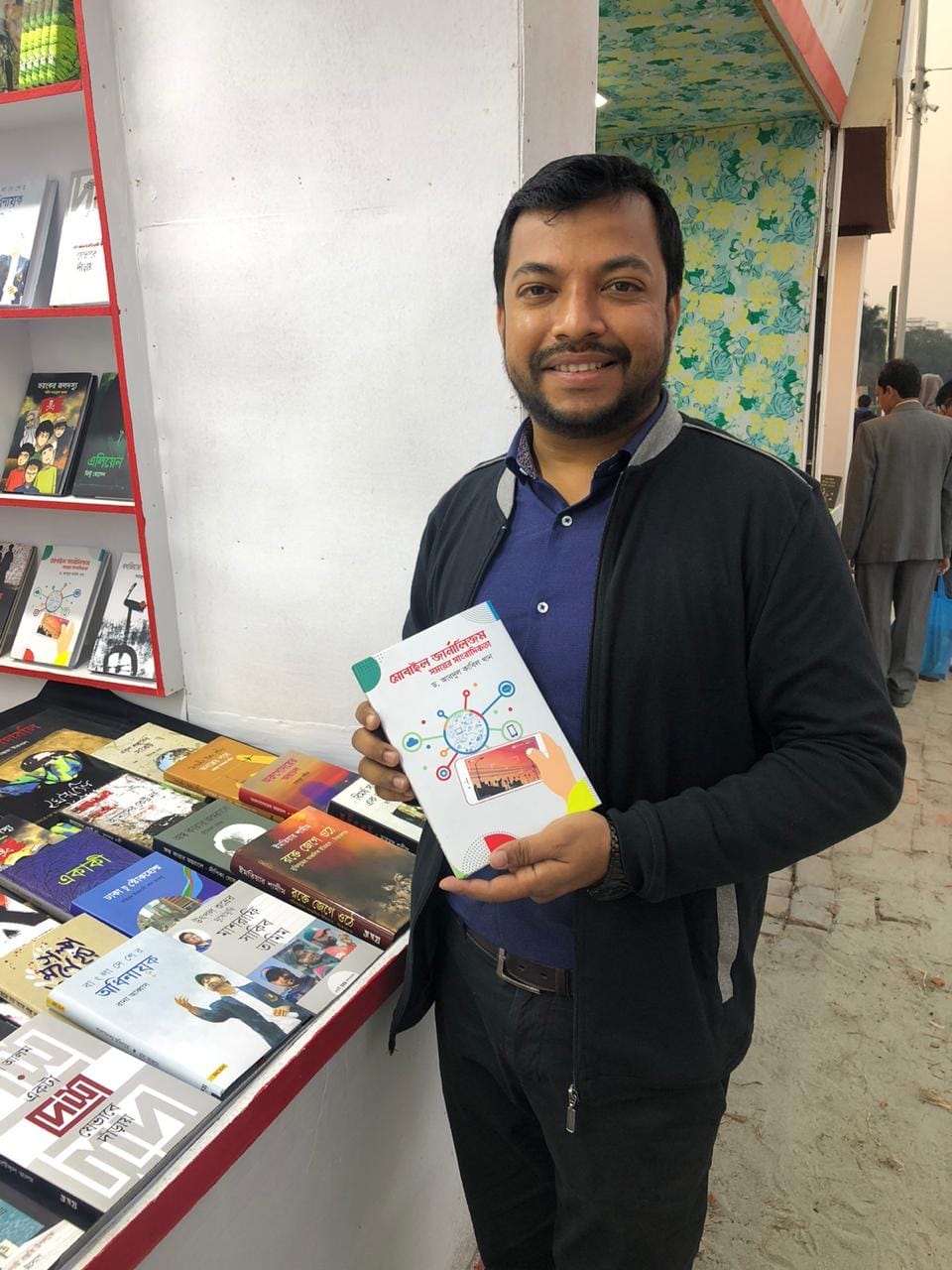
Bangladeshi reporters now have a mobile journalism guide written in their mother tongue
To end the era of poorly-translated foreign manuals, this new book by the mobile specialist Jamil Khan teaches local students and citizen journalists to use a smartphone for field reporting
This article was migrated from an old version of our website in 2025. As a result, it might have some low-quality images or non-functioning links - if there's any issues you'd like to see fixed, get in touch with us at info@journalism.co.uk.
A new book covering the ins and outs of mobile journalism is now available in Bangladesh - and it is the first of its kind written in the nation's mother tongue, Bengali.
The book, "Mobile journalism: the journalism of our time", is written by Abdul Kabil Khan, known in the media as Jamil Khan. He worked as a mobile journalism specialist for daily newspaper Prothom Alo, and is now an assistant professor at the department of media studies and journalism at the University of Liberal Arts Bangladesh (ULAB).
Resources are out there for Bangladeshi journalists to get to grips with 'mojo', as mobile journalism has come to be known. But Khan said these hard-to-understand translations from foreign works are often found only on online marketplaces which are difficult to access.
Abdul Kamil Khan
"It's easier in the mother tongue to [talk about] examples from out in the field. It is designed to be very understandable and clearly explained," said Khan.
The book is available for ULAB students in the campus library, but other public and private universities may soon be able to offer it to their students, too. Three universities are also considering to incorporate the book into their curriculum.
Also distributed in local stores and online, local journalists will find it easier to get their hands on the book.
"I'm trying to prove that [a smartphone] can be a handy device to cover even major events," he continued.
Khan's book pulls together five years of first-hand mojo work, from reporting with his smartphone from the 2018 World Cup in Russia to teaching 1,000 journalism students, journalists and media professionals. It covers all the basics, including planning and developing mobile reporting, shooting videos and capturing images with your smartphone, basic mojo apps and filming techniques, doing interviews and producing multimedia content.
Khan has learned many of these skills at mojo conferences abroad and from other high-profile experts.
However, not many journalists in Bangladesh have the good fortune of making these trips. Through the book, Khan aims to bring some of those lessons back home for journalism students, journalists working in developing media and citizen journalists.
He kept the same mindset, insisting that good mobile journalism storytelling is not achieved through fancy gimmicks, but with the right attitude.
"You do not need to bother with gear or have very expensive smartphones to create good content. You need to concentrate on your storytelling to execute a good story," he concluded.
Want to learn how to create an engaging social video? Jointhis courseand discover how to shoot a video specifically for social media and grab viewer's attention in the all-important first three seconds.