This article was migrated from an old version of our website in 2025. As a result, it might have some low-quality images or non-functioning links - if there's any issues you'd like to see fixed, get in touch with us at info@journalism.co.uk.

Sue Macmillan spent her twenties in the corridors of power, watching politicians slowly wake up to the internet's existence. As head of digital for the Labour Party, she monitored website stats that showed a modest trickle of daily visitors. Then she discovered Mumsnet – a site buzzing with thousands of users posting and commenting every minute.

What makes Mumsnet different from other online communities is the deliberate way trust has been built over two and a half decades. When founder Justine Roberts first launched the site, investors weren't queuing up. The dot-com bubble had burst, and community-building looked like a risky bet.

"Thank God there wasn't a VC or some other rapacious investor involved in those early days," says Macmillan, speaking at the Emerging Tech Network event last week. "Community is a really slow burn, hard thing to build. It takes time, and investors aren't big fans of that level of patience."

That patience has paid dividends. Today, Mumsnet sees 1.5 million words of user-generated content daily. And here's where it gets particularly interesting in the AI age: 95-98 per cent of those words are written by women.

"In the absence of someone challenging me otherwise, I'm going to say we possibly have the largest corpus of text written by women in the world," says Macmillan. "In an AI world where we're worried about bias, it feels like Mumsnet's got an important part to play."

MumsGPT: Community meets AI

This vast trove of authentic women voices has become the foundation for one of Mumsnet's most innovative projects. Within six months of ChatGPT's launch in November 2022, the team had built "MumsGPT" – a tool that uses retrieval-augmented generation (RAG) to summarise threads and answer questions about what Mumsnet users think about various topics.

The development reflects Macmillan's broader approach to AI adoption: move fast, experiment constantly, and always keep users at the centre.

"We've challenged ourselves to release one experiment every single week," she explains. "What's our hypothesis? What's the success metric? What could go wrong? [We do this] rather than spending loads of development time on stuff that might not work," she said, adding that each test is designed to increase weekly habitual users.

Human moderation that preserves authenticity

Part of Mumsnet's enduring appeal lies in what users are willing to share when freed from social media's performative pressures. Macmillan contrasts this with what she calls "sharenting" – the curated version of parenting life that dominates platforms like Instagram and TikTok.

"We're not posting the moment when they have the tantrum and refuse to get in the car seat and you swear at them on TikTok, but we are definitely writing about it on Mumsnet. And it's real."

This authenticity creates something increasingly rare online: a space that isn't an echo chamber. A past survey revealed that 40 per cent of users had their minds changed about topics they previously felt strongly about, something Macmillan attributes to careful, contextual moderation done entirely by humans.

Moving fast isn’t optional

For a 25-year-old platform, Mumsnet has remained remarkably agile. A strategic replatforming three years ago eliminated technical debt just as AI was about to transform everything. The timing couldn't have been better.

"We've always had an agile mindset as an organisation," says Macmillan, describing Mumsnet as a "25-year-old startup." That mindset has proved crucial as AI tools evolve weekly, requiring constant adaptation and learning.

The productivity gains are tangible. Macmillan estimates her eight-person tech team has become 30 per cent more productive in just the last quarter, thanks to AI-powered coding tools. Where projects once took months, they're now completed in days.

Ready for the zero-click search future

While many publishers worry about AI overviews stealing traffic, Mumsnet feels relatively protected. Half its traffic is direct, with much of the rest coming from branded searches. More importantly, the platform serves three distinct user needs: quick answers, community connection, and entertainment through glimpses into other people's lives.

"People are instinctively fascinated by other people's lives, and that's what Mumsnet is full of," Macmillan explains. "There are hundreds of thousands of people addicted to Mumsnet who come every single day, regardless of whether they're sent notifications. It's in their list of things they do when they wake up in the morning."

AI is also unlocking new revenue streams. The platform has developed AI-powered ad automation that creates multiple ad variants, learns which perform best, and optimises accordingly. Their new native ad format is achieving ten times the click-through rate of standard display advertising.

Perhaps more intriguingly, AI is helping monetise the wealth of consumer insights hidden in daily discussions. With users debating everything from product recommendations to lifestyle choices, there's enormous value for brands wanting to understand this influential demographic.

Lessons for leaders

Macmillan's approach offers several key insights for businesses navigating AI transformation:

Start with culture, not technology. Skills like learning agility, curiosity, and critical thinking matter more than specific technical knowledge. "Those are the things we've always tried to hire for and foster, and they're what we'll need even more in the future."

Embrace productive failure. When new tools don't work perfectly the first time, the instinct is often to dismiss them entirely. "Just because it was rubbish a month ago doesn't mean it's still rubbish today.”

Think electric bike, not autopilot. The most effective approach treats AI as augmentation rather than replacement; you're still steering and pedalling, but with significant acceleration.

Prioritise relentlessly. With AI enabling rapid development, the challenge shifts from capability to choice. "We're generating ideas as quickly as they're developing them."

Looking forward

As Mumsnet enters its next quarter-century, Macmillan sees AI not just as a tool for efficiency, but as a way to solve problems that were previously intractable.

"Parenting really is just solving a series of problems," she reflects. "There are still lots of problems, and AI means we can now offer solutions in ways we couldn't have done five or ten years ago."

For a platform built on authentic human connection, the future seems to involve AI that enhances rather than replaces that fundamental value. It's a lesson other businesses would do well to learn: technology works best when it serves genuine human needs, patiently built over time.

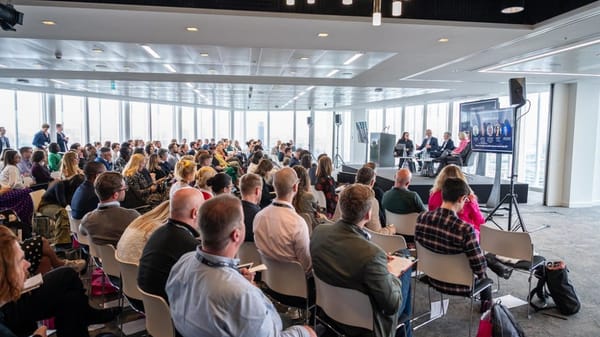
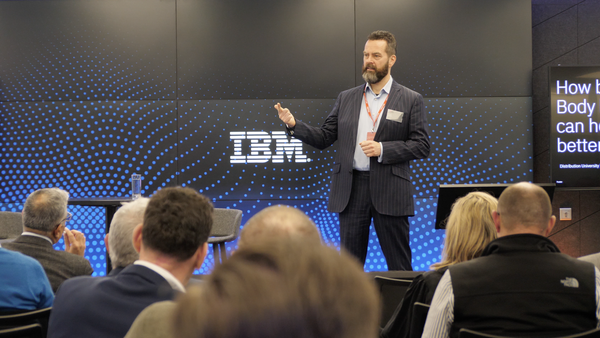
Sue Macmillan was speaking at the Emerging Tech Network event hosted by Andrew Webb.

Share with a colleague

Written by

Comments