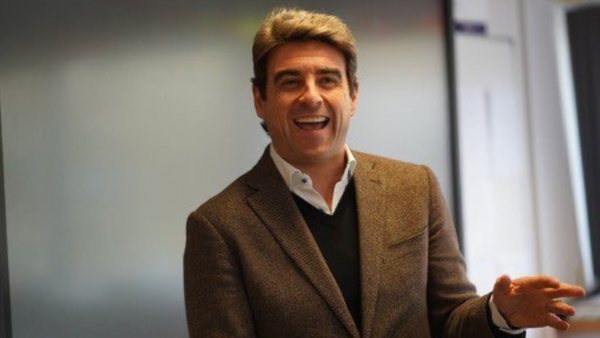
Investigative journalist and media trainer Paul Connolly shares tips on how to approach interviewees who are feeling frustrated, upset, bored or are downright unpredictable
This article was migrated from an old version of our website in 2025. As a result, it might have some low-quality images or non-functioning links - if there's any issues you'd like to see fixed, get in touch with us at info@journalism.co.uk.
Journalists will find themselves interviewing people in a range of different mindsets and emotional states. Someone at the scene of a breaking news event is in a very different mood to the football manager whose team has just conceded a 90th minute match-winning goal.
Knowing how to recognise, and adapt to, different emotions is the mark of a truly skilled interviewer. Paul Connolly, lead trainer for the The Broadcast Institute, has learned these lessons the hard way in a career spanning match day reporting, undercover investigations in hostile environments, radio phone in shows and human-interest stories.
There are some best practices that all journalists should consider:
Prepare thoroughly: research your interviewee, learn their full name and title, and what they have previously spoken about in interviews.
Build confidence: start with a list of questions or refer to notes if needed.
Stay in control: mistakes happen, take a pause or a sip of water to regain your cool.
Watch for media tricks: don't allow your interviewee to change topic to avoid a question, and don't bite if they go on the attack.
Listen more than you talk: stay in the shadows and simply guide your interview through their thought process.
But if you really want to take your interviewing to the next level, these are Connolly's top tips for emotionally intelligent reporting.
Hesitancy and suspicion
Almost every interviewee enters with some level of hesitancy and suspicion. They may be wary of how their words will be relayed and how their story will be constructed, especially in the digital age.
Expert tip: Name the elephant in the room. Ask directly if there is anything they are feeling hesitant about and address it head-on to build trust and rapport.
Try saying (ahead of time): "Is there anything about this interview you're feeling hesitant about? I want to make sure we're on the same page."
Excitement and elation
The launch of a new project or release can come with a sense of excitement and optimism. It can be tempting to match their energy as to not kill the mood. It's okay to share a laugh, but journalists shouldn't shy away from harder questions - just don't spring it on them.
Expert tip: Distance yourself from personal opinion and mitigate for tougher lines of questioning ahead of time. Explain that you need to ask certain questions to represent all sides.
Try saying (ahead of time): "I need to cover this area to represent the questions the audience will have. There is no personal opinion from me on this."
Boredom and disengagement
If an interviewee seems bored or disengaged, continuing the interview as planned will lead nowhere productive. This can happen on promotional interviews when a celebrity is answering many of the same interviews. They might even get combative, evasive, obstructive or confrontational.
Expert tip: As a last resort, use the "X-ray technique" to call out their conduct. Ask them to explain to the audience why they are disengaged. This will force them to address their mindset.
Try saying: "For those watching or reading who may be wondering why you're not engaging in this interview, what would you say is the main reason?"
Sadness and trauma
We routinely revisit difficult events and anniversaries in the news industry. But for those who have experienced loss, depression or trauma, this requires immense sensitivity. Take plenty of time to build rapport with your source, manage expectations and be sure to end the interview with them in a good space.
Expert tip: Prepare thoroughly and give them opportunities to opt out of certain questions. In the moment, avoid leading them with your phrasing.
Try saying: "Of all the emotions you felt that day, which was strongest?" Let their authentic experience emerge and avoid closed-ended questions (those which can be met simply with "yes" or "no")
Frustration and anger
If an interviewee is frustrated or angry, matching their energy will only escalate the situation. Your job is to defuse and redirect. They will be dysregulated, so your best bet is to help channel their frustration into something coherent.
Expert tip: Use the technique "narrowing the opportunity of reply" to give them a smaller question to focus on.
Try saying: "Of all the things frustrating you most, what stands out?"
The unpredictable maverick
Some interviewees are simply unpredictable, leaping from one unrelated topic to the next. Sticking to your script will get you nowhere.
Expert tip: If they want to talk, humour them. Follow their train of thought with curiosity, using brief prompts to steer them. Having a back-up script gives you confidence to do this if all else fails.
Try saying: "Tell me more about that" or "What does that mean?"
This article was first written on 5 March 2021 and has been updated on 2 September 2025 with new advice and examples