The Economist turns up the heat on climate change reporting
For the first time in its 176-year history, the publisher is dedicating an entire issue to topics such as carbon dioxide levels and how we got to this point. Here is why
This article was migrated from an old version of our website in 2025. As a result, it might have some low-quality images or non-functioning links - if there's any issues you'd like to see fixed, get in touch with us at info@journalism.co.uk.
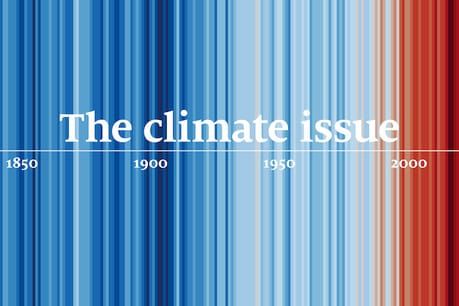
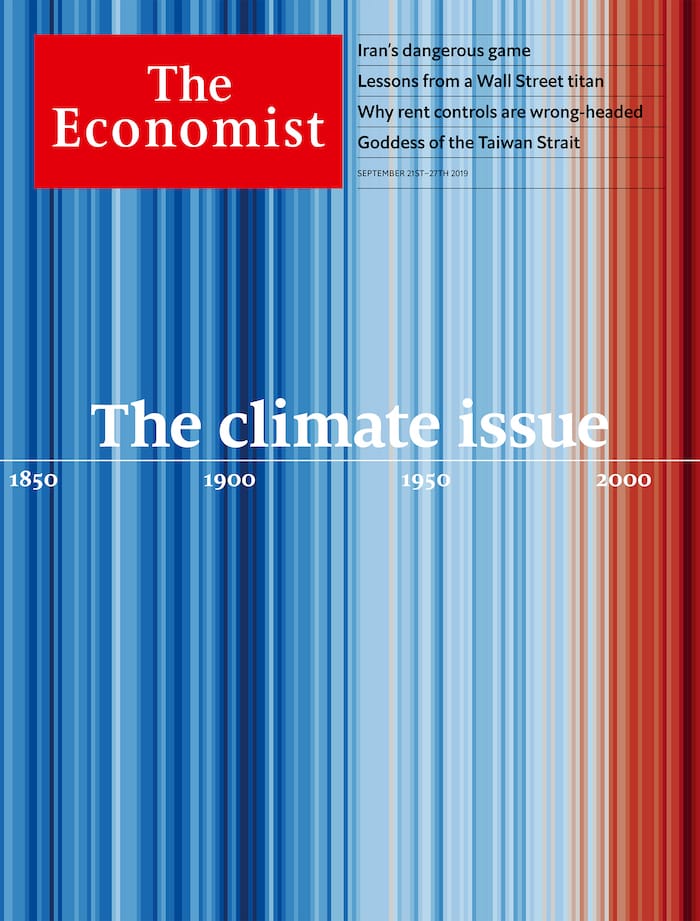
This week’s issue of The Economist is entirely dedicated to one subject: the climate emergency.
For the first time in its history, every section of the 21 September 2019 edition of the magazine will include an article on climate change, in addition to the cover, lead article and briefing.
The Economist Group is also running marketing and commercial activities that range from delivering the magazine to UK subscribers in a 100 per cent home compostable starch-based bioplast film, to offering New Yorkers a free coffee in an edible cup in exchange for plastic trash.
Oliver Morton, The Economist’s briefings editor who is overseeing this week’s climate coverage, said that the newspaper regularly runs climate-change related stories in almost all its sections.
"But earlier this year we came up with the idea of running an apposite climate change story in every section of the paper, all in the same week."
"It felt like a great way to make the cross-cutting, all-encompassing aspects of the issue immediately apparent,” said Morton, adding that the week of the United Nations General Assembly seemed the natural peg for the package.
Picture: Courtesy The Economist
The two-page cover leader and briefing explain how we arrived to such a dramatic point, how current levels of carbon dioxide impact our health and environment, and the challenges of lowering emissions.
Other features include thoughts on what the US’s Green New Deal is and what it should be; how Britain advanced offshore wind energy and what industrial policy lessons can be learned from it; how the threat of extinction makes small-island states a power in climate diplomacy; what rainfall changes mean for the Panama Canal, and for farmers in Malawi; and how business seeks to respond to the crisis, the publisher stated in a press release.
But how do you cover policies and regulations that are often perceived as anti-business?
Private sector has a huge role to play in the global response to climate change, said Morton, and The Economist’s readers understand that.
"We’re also not uncritical of businesses that are doing harm, or governments that cozy up to them."
The special issue is not only an editorial but also a commercial project. The Economist's CMO Mark Cripps explained that the publisher is going to measure success of the operation by tracking audience reach (volumes and profiles) and engagement.
"We are not simply telling people that climate change has an impact on every part of life; we will show them that it is," said Cripps, adding that this can motivate and equip readers to take necessary action themselves.
The climate emergency has been a regular beat at The Economist for decades, first appearing on the cover in 1990. It was a large chunk of Morton’s job when he was energy and environment editor in the early 2010s, and it has since been covered by many reporters.
"Because the issue is so all-pervasive, coverage tends to be shared between environment and energy correspondents, as well as our excellent foreign correspondents and the people who write about transport," said Morton.
"It feels good to be speaking authoritatively about such a crucial issue. And it has been a great opportunity to remind ourselves - and I hope our readers - of something we are really good at: taking lots of terrific individual stories and bringing them together into something which is even more than the sum of its parts."