Newsweek Europe redesigns mag but 'future must be online'
The publication is also expanding its editorial team and plans to focus on "explanatory journalism", says editor-in-chief Richard Addis
– 2 min read


The publication is also expanding its editorial team and plans to focus on "explanatory journalism", says editor-in-chief Richard Addis
This article was migrated from an old version of our website in 2025. As a result, it might have some low-quality images or non-functioning links - if there's any issues you'd like to see fixed, get in touch with us at info@journalism.co.uk.
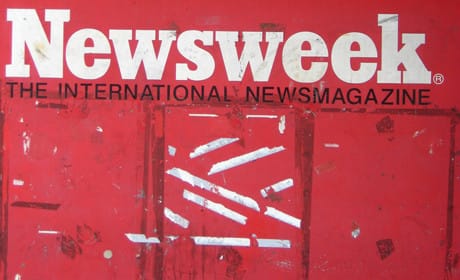
One year after launch, Newsweek Europe is redesigning its print magazine, adding new sections and expanding the editorial team, editor-in-chief Richard Addis announced today.
iPhone and Android apps are also in the pipeline. "It has to be said that our future must definitely be online", he said.
The print version is "a bit of a luxury add-on", he explained, as he expects Newsweek readers to access the publication online and see the hard copy as a "treat" within five years.
The Newsweek on the stands today is the third reincarnation of the title. Its original print edition ceased publication at the end of 2012 , going digital-only after a failed merger with the Daily Beast.
It was later bought by IBT Media, publishers of the International Business Times, splitting from the Beast and appearing in print again from March 2014 .
Today's print refresh includes the addition of a Weekend section, with a focus on travel, art, books and fashion among others, as well as a Business section looking at new developments in Europe.
The changes are designed to create "a more European magazine," with more "variety and pace".
"This is what we're pinning our hopes on for the next phase of our existence. It really represents a whole lot more investment going into Newsweek."
New hires at the outlet include FT columnist Harry Eyres, who will be reporting on European culture; foreign correspondent Adam LeBor, reporting on European politics; and BBC Pundit Miranda Green, who takes on the role of political editor.
Addis explained the Newsweek Europe editorial team is integrated. "We don't have web writers and print writers, we just have a team of reporters out there."
He also emphasised the importance of "explanatory journalism" in the media landscape and its place in Newsweek's future.
"I think that Newsweek and in-depth reporting fits into that somewhere, in a very accessible way," he said, as explanatory articles can guide readers through an over-abundance of data and information.
And as Newsweek looks ahead, addressing the change in the ways audiences now find stories is also on the agenda.
"Homepages are crumbling," said Addis. "I can see Facebook moving towards becoming a publisher. And we all just become content providers for the great big publisher Facebook, and that is quite a scary thought."
Not only are audiences finding more stories through social media – with Facebook an important driver of social traffic to news sites – but the social network is in talks with publishers to host content directly on the platform .
Addis refered to single article sales, or micropayments, as a model that could work to get readers paying for stories they discover through social media.
The Washington Post, The New York Times and Wall Street Journal, for example, partnered with Dutch micropayment venture Blendle last month , described as the iTunes of journalism.
And while the idea of single article payments is neither new – featured in expert comments on the future of newspapers online since at least 2009 – nor without its critics , Addis is confident.
"So social media filtering, sorting things out, [then] going directly to a piece that you want to read tailored to you interests, and then getting through a paywall with [micropayments]... I see that as the way digital is going," he said.