Other media programmes 'dismissive' of stories that Woman's Hour covers, says Jenni Murray
'Informed' content gives the programme its edge despite cutbacks, says presenter
– 2 min read


'Informed' content gives the programme its edge despite cutbacks, says presenter
This article was migrated from an old version of our website in 2025. As a result, it might have some low-quality images or non-functioning links - if there's any issues you'd like to see fixed, get in touch with us at info@journalism.co.uk.
There used to be something here that couldn't be migrated - please contact us at info@journalism.co.uk if you'd like to see this updated!
Other current affairs programmes are still 'dismissive' of stories and interviews featuring women, broadcaster Jenni Murray told an audience in Brighton last night.
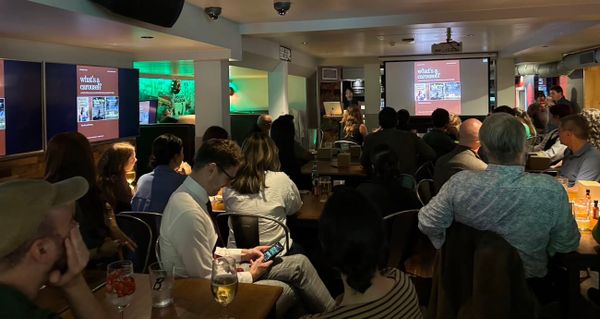
Speaking at a sold-out event at the Brighton Festival , Murray said her programme, BBC Radio 4's Woman's Hour consistently covers stories that other media programmes fail to look at.
"That's the point for me: it reflects what's going on (...) and I love it," she explained to interviewer Simon Fanshawe.
Woman's Hour consistently covers stories ignored by other media, for example the programme's long-running coverage of women's lives in Afghanistan and testicular cancer, she said.
Murray presented Newsnight on BBC2 and the Today programme on Radio 4 before joining Woman's Hour, which has been on air since 1954. Arriving at Woman's Hour in 1987 made Murray feel she could 'come home', she said.
"We are being quite severely cut back," Murray said, referring to financial budgets at the BBC.
Despite constraints, the research is still thorough, Murray maintained, complimenting her able producers for providing her with the support she needs.
For a recent programme on US politics, for example, despite her own knowledge on the subject being somewhat limited, 'for that day I knew everything there was about the American constitution', she said.
Nonetheless she writes all her own programmes after arriving at work for 7 o'clock each morning, she said.
Its 'informed' nature is 'what gives Woman's Hour its edge', she said.
'Years and years' of working in current affairs has highlighted the fact that women's stories or stories about women fall outside the mainstream news agenda, said Murray.
Very few women politicians or experts, for example, are asked to comment on financial stories, she said, claiming that more junior male figures are chosen for interviews instead.
"I honestly don't think they [editors] see it," Murray said, when asked by a member of the audience if there was 'inherent sexism' in broadcasting.
Even in 2009, most television editors are male, she claimed, adding that friends working in newsrooms have said editors can be 'dismissive' of what they perceive as women's content.
Asked what would happen if Woman's Hour did not exist: "I'm not going to say other programmes would do them [the stories], because I'm not sure they would," she said.
It is imperative to remain politically neutral in public service broadcasting, she said.
"We are not campaigners. You should not know what any politics are. We can cover the issues - we are absolutely duty bound to present [alternative] arguments and let you make up your own mind," said Murray.
When Murray writes for newspapers, she is careful to 'not do anything political with a capital P', she added.
"I defy anyone in this room to know who I vote for," she said.