PA and Newspaper Society show support for local news consortia plans
Proposals could offer real opportunity for plurality, says agency chief

– 3 min read


Proposals could offer real opportunity for plurality, says agency chief
This article was migrated from an old version of our website in 2025. As a result, it might have some low-quality images or non-functioning links - if there's any issues you'd like to see fixed, get in touch with us at info@journalism.co.uk.
The Press Association (PA) and local media body the Newspaper Society both expressed their support for local news consortia, as proposed in the government's recent Digital Britain report .
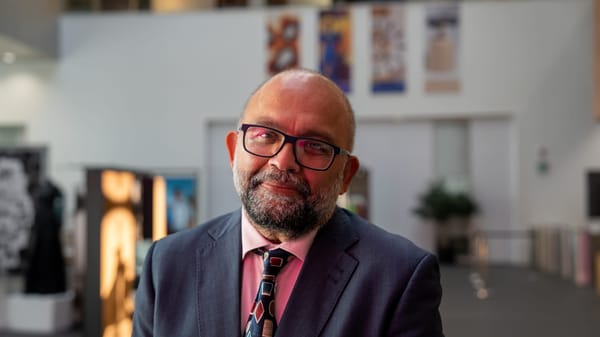
Speaking to the House of Commons select committee inquiry into the future of local and regional media, PA editor-in-chief Tony Watson said the consortia should not seek to replicate the existing regional news programming model, which 'has failed to deliver to audiences'.
"It gives an opportunity for the first time for a wider range of media players to contribute content around regional news," said Watson. "One of the things we'd hope to see in the warding of those bids is some commitment to a more granular approach, at least a sub-regional level."
The idea of a group of local news consortia was put forward in the Digital Britain report in May, which suggested that from 2013 about £130m a year from the BBC's licence fee could fund the network and replace ITV's current regional news service.
One of the biggest challenges to the proposals is geography, said Watson, who added that the size of the current ITV regions offered 'no geographic compatability'.
Addressing the committee in the second part of the hearing, David Newell, director of the Newspaper Society, said the local consortia proposals were 'an area of experimentation' that the regional press would welcome sooner rather than later.
"I think that there's a willingness from the industry to go into this initiative and make it work," he said.
"It's not a magic wand, but it does psychologically allow the industry to accelerate the dynamic of becoming a multimedia business. It's one ray of light in terms of the Digital Britain report that the local media can experiment with.
"This is a new idea and a new concept and it may be one of the ways that local media and local news provision can be safeguarded and developed within a construct that still allows this industry to be funded independently from the state and local authorities and be a commercial sector rather than a public sector."
Representatives from both organisations also agreed that top-slicing the BBC's licence fee should be investigated and consulted on further as a way of funding the consortia plans.
Any technology platform for the consortia should be made possible at a lower cost than 'the legacy broadcast provision we've seen in the past', added Watson.
The PA could help facilitate the initiative, because of its technical links with regional newspaper partners, training schemes and work with organisations such as the BBC to establish industry standards for metadata and video content format, he said.
As reported in March, the PA is involved in ongoing discussions with the BBC about how to work with the regional press sector.
"We think that can provide a bedrock of pooled material which would allow other players to concentrate on distinctive material which is at the heart of plurality," said Watson, referring to the role of the agency's video wire service in the proposals.
"What we've established here is a video agency for the UK for the benefit of not only online but also broadcasters as well - to help them reduce the costs of doing those diary non-exclusive jobs, to help them realise what is at the heart of plurality - distinctive journalism."
Stressing the point that proposals in the Digital Britain report, in particular suggestions of a network of local news consortia, should not simply reproduce existing structures, Watson said the same efforts should be put into safeguarding public service reporting as public service broadcasting.
If the state is proposing to back 'local linear news' in terms of broadcast news with funding, there is a question of 'equivalence' and of whether local newspapers warrant the same protection, he said.
"[L]arge sums of money are being talked about to preserve 30-minutes of news on Channel 3. If that's the priority that we attach to public service broadcasting, what about public service reporting?" said Watson.
"Is there not a case to recognise the role that local newspapers play in holding public institutions to account for that contestable fund, to extend to newspapers? The industry has always set its face against public funding for all sorts of reasonable reasons.
"But I think things are getting so different in parts of the regional press right now that there's a serious danger that courts and councils and other public bodies are not getting covered to the extent that you'd want in a functioning democracy."
Watson announced plans for a pilot scheme, in partnership with Trinity Mirror, to offer free coverage of local authorities and public bodies to regional newspapers .