Portable and intimate: When can podcasts really shine?
Serial 'brought the focus back onto audio', but what are the medium's strengths and where can podcasts best fit in your reporting?
– 2 min read


Serial 'brought the focus back onto audio', but what are the medium's strengths and where can podcasts best fit in your reporting?
This article was migrated from an old version of our website in 2025. As a result, it might have some low-quality images or non-functioning links - if there's any issues you'd like to see fixed, get in touch with us at info@journalism.co.uk.
This American Life's Serial is the podcast of reference nowadays, and with close to 90 million downloads under its name it's easy to see why. It has shone a light on a medium that has remained below the radar, somewhat eclipsed by the meteoric rise of online video.
"Audio is so overlooked by so many people in the media, they seem to see it as an inferior form of film and sometimes a low-cost alternative," said Siobhán McHugh, founding editor of RadioDoc Review.
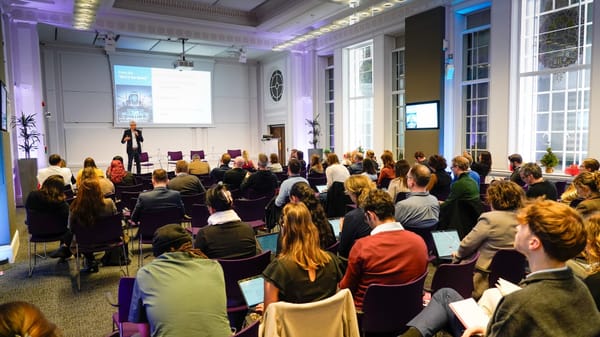
"Some of the old guard were a little bit peeved by the amazing media attention that Serial was getting... because we had been a bit below the radar," she said at the GEN Summit last week.
You're not invasive, you're not intrusive [with audio] and you tend to get more 'revelation' [type] stories - Siobhán McHugh, RadioDoc Review
"But actually most of us were absolutely thrilled because it brought the focus back onto audio."
McHugh was joined on stage by Serial producer Dana Chivvis among others, and outlined some of the strengths of podcasting as a storytelling medium.
Podcasts are portable, following the listener around from headphones or car speakers as an "enveloping" medium that "travels with you" intimately, said McHugh, captivating the listener when produced well.
They are also real time, she said, pulling listeners through the unravelling plot-line or character development in a way which text and video fail to.
The process of recording and mixing the podcast is another stage where the strengths of the medium can shine.
Some might feel more comfortable telling their stories in an audio-only interview, especially difficult, traumatic accounts when "they don't want to be objectified through a camera".
"You're not invasive, you're not intrusive," she said, "and you tend to get more 'revelation' [type] stories."
Podcasts and radio documentaries also have an anonymity factor which can be important when addressing serious subjects – an award-winning programme from ABC dealing with anorexia, ' Will Kate survive Kate ', stands as proof.
McHugh said Kate would not have done that documentary had it not been for the audio medium, and the programme had "such public impact" that additional beds were assigned in hospitals for those struggling with eating disorders in the region.
The production aspect of a podcast or radio documentary can be just as complex as in film, she added. Chivvis, who outlined some of the factors that made Serial the household name it is today, echoed this belief.
She explained Serial borrowed some tricks from TV shows , and the producers wanted the show to feel like Mad Men or House of Cards, for example.
To that end, the 'previously on' section at the beginning of each episode was designed to give the sense of an opening sequence in a TV show. But it was also its "unglamorous" kind of reporting that contributed to its success, said Chivvis.
"It's this combination of really intense, sloggy, traditional reporting... with a more creative aesthetic in the design of the show [that's] very much a reason why the show was as successful as it was."