Press failings left public unprepared for global crash, say financial journalists
Evan Davis and Alex Brummer were among speakers at POLIS event
– 2 min read


Evan Davis and Alex Brummer were among speakers at POLIS event
This article was migrated from an old version of our website in 2025. As a result, it might have some low-quality images or non-functioning links - if there's any issues you'd like to see fixed, get in touch with us at info@journalism.co.uk.
There used to be something here that couldn't be migrated - please contact us at info@journalism.co.uk if you'd like to see this updated!
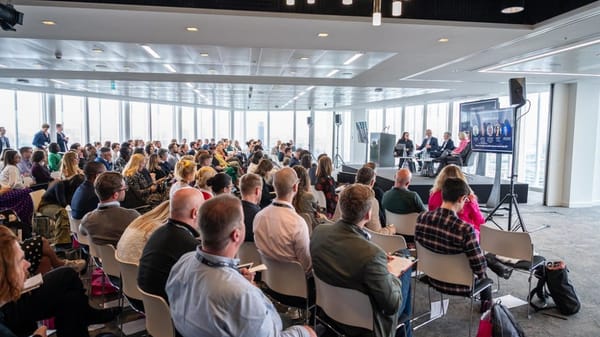
Personal failings and the power of PR meant financial journalists left the public ill-prepared for the credit crunch, leading industry figures said at a POLIS debate last night.
'The press did not in any meaningful way warn the public of what was coming' said the BBC Radio 4's Today programme's Evan Davis at the 'Why Did Nobody See It Coming? Reporting The Global Crash of 08' event.
This 'was entirely forgivable,' because natural mistakes were made by the journalists involved, Davis said.
"Human beings are a very flawed species when it comes to making judgements about things; we have vested interests, we don't see evidence in objective or impartial ways.
"We are not immune to the natural biases of hope and optimism - all the sorts of baggage that human beings have," Davis argued.
Alex Brummer, City editor at the Daily Mail, said that the inexperience of young reporters meant they couldn't grasp the importance of the financial problems.
"Many of the reporters who have been part of this have lived through a banking crisis before. A lot of financial journalists grew up in the boom and never experienced a collapse," Brummer argued.
"We need to improve the training of financial journalists, their experience levels and the quality of all the people in the business."
It is the way the media chooses to report financial matters that led to lack of warning, Davis added.
"The media tends to operate in a singular dimension, good news or bad news. For reasons that are quite understandable we don't tend to give you anything in between because our readers, our viewers, our listeners, are quite busy and want to cut to the chase. That means giving the one point that is interesting and missing out other possibilities around it," Davis said.
"I am astounded by the assumption of knowledge that some papers are still using; we are overcomplicated in the way we do things - we need to make things much more accessible than we do," Brummer said.
'Unfair competition' with powerful PR operations also explained why journalists failed to uncover problems sooner than they did, he said.
"The press have found themselves up against an incredibly powerful public relations machine, extraordinary well-paid professionals whose job it is to lie to the press to try and keep them at bay when they are on the track of something."
It was also 'the economists, the accountants, the regulators, the politicians, the government,' Davis added. "If everyone else is taking a particular view it's not the job of the media to bang a drum completely at odds. I think it would be very strange if that was the narrative of where the media was," he said.
Vince Cable MP and Gillian Tett from the Financial Times also took part in the debate chaired by Howard Davies, director of the LSE. The director of POLIS, Charlie Beckett, summarised his thoughts from the event on his blog .