How to Build a Customer Acquisition Program That Actually Scales: A Credico UK Guide
– 9 min read



Finding customers once is not usually the problem. The harder part is working out how to keep finding the right customers without starting from scratch every few months.
That is when customer acquisition stops being a collection of campaigns and becomes a proper program. Instead of putting money behind an idea, waiting for the results and then moving on to something else, your business has a system it can test, measure, and improve.
Thrive Agency’s 2026 customer acquisition guide makes a similar point. Businesses that treat acquisition as a long-term system, rather than a short-term campaign, can build stronger revenue growth, lower acquisition costs, and improve customer lifetime value.
But building that system takes more than choosing a few marketing channels and setting a budget. The business needs to know who it is trying to reach, what it can afford to spend, and what will happen if the initial test works better than expected.
Here is how to build a customer acquisition program that can grow from a small regional trial into a much wider UK rollout.
Before getting into the steps, it is worth clarifying Credico’s role. Credico does not employ one central UK sales force. It acts as a broker, connecting brands with independently owned outsourced sales and marketing partners from its UK network and helping to manage those relationships.
Step 1: Decide What a Good Customer Actually Looks Like
It sounds obvious, but plenty of acquisition programs begin without a clear agreement on what counts as a successful result.
One team may be focused on generating as many leads as possible. Another may care more about completed sales. The finance team, meanwhile, may be looking at how long those customers stay and whether the cost of attracting them makes commercial sense.
Those are not always the same thing.
Before choosing a channel or committing any meaningful budget, answer three basic questions:
Who is the program supposed to attract?
How much can the business afford to spend to acquire each customer?
Is the initial aim to test one region or prepare for a national rollout?
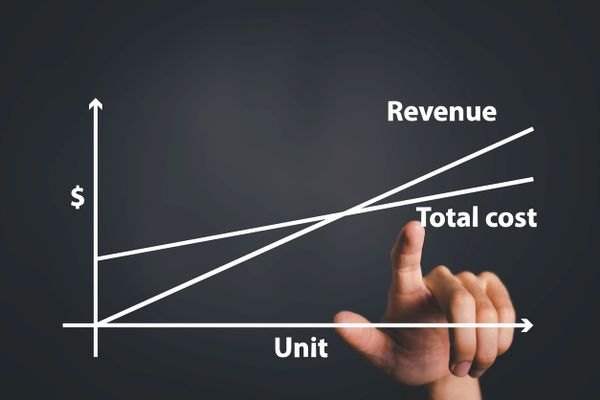
The second question is particularly important. A channel can appear successful because it produces a large number of customers, but that does not mean those customers are profitable. If the customer acquisition cost, usually shortened to CAC, is too high compared with the customer’s lifetime value, more volume may simply create a bigger loss.
The definition of success will also change from one business to another. A retailer opening in a new UK region may need hundreds of new customers relatively quickly. A B2B software company selling to large organisations may only need a small number of valuable accounts.
Both businesses are acquiring customers, but they should not be measuring the program in the same way.
Getting this clear at the beginning is not unnecessary planning. It prevents the business from spending months improving a metric that was never closely connected to commercial value.
Step 2: Choose Channels Around the Customer, Not Convenience
Digital marketing is attractive because it is quick to launch and easy to track. A business can set up an advertising campaign, choose an audience, and start collecting data almost immediately.
That convenience can also become a trap.
When a digital channel performs well at the beginning, the natural response is to spend more. Eventually, however, the same audience starts seeing the same messages repeatedly, costs rise, and the return begins to weaken.
At that point, the problem may not be the advert. The business may simply be relying too heavily on one way of reaching people.
Research collected by Porch Group Media found that campaigns using three or more channels achieved a 287% higher purchase rate than campaigns relying on a single channel.
Retention figures point in a similar direction. Capital One Shopping Research reported retention of roughly 89% for customers engaged through multiple channels, compared with around 33% for those engaged through only one.
That does not mean every company needs to be everywhere. It means the channel mix should reflect how its customers make decisions.
For a straightforward, low-cost purchase, a digital advert may do most of the work. For something more expensive, regulated, or difficult to understand, the customer may want to ask questions before deciding.
In those situations, a face-to-face or field sales channel can support the digital activity rather than compete with it. The advert creates awareness. The conversation provides reassurance, explains the offer, and gives the customer the chance to raise concerns.
The right mix depends on the audience. The important thing is to choose channels because they suit the buying process, not simply because they are familiar or easy to activate.
Step 3: Start With a Question You Need Answered
A pilot should do more than produce an encouraging set of numbers. It should tell the business something useful.
For example:
This changes the purpose of the first phase. Instead of trying to prove that the idea is brilliant, the pilot is there to find out where it works, where it struggles, and what needs to change.
One or two regions are often enough to begin gathering useful evidence. The same applies when testing a new channel. There is rarely a good reason to commit a national budget before the business understands the likely conversion rate, customer quality, and acquisition cost.
A phased launch also makes mistakes less expensive. Messaging can be adjusted, territories can be reviewed, and training gaps can be addressed before those issues are repeated across the country.
Leadership then has something more useful than a forecast. It has real results from a smaller version of the program.
That is a much stronger basis for deciding whether to invest further.
Step 4: Look Beyond the Cheapest Customer
Customer acquisition figures can become misleading when they are viewed on their own.
Suppose one channel brings in customers at £40 each and another costs £70. The £40 channel appears to be the obvious winner. But what happens if most of those customers leave within the first few weeks, while the customers from the £70 channel stay for a year?
The cheaper customer was not necessarily better value.
CAC needs to be reviewed alongside lifetime value and retention. It should also be broken down by channel rather than reported as one blended figure across the entire program.
A monthly review is usually more useful than waiting until the end of a quarter. Three months is a long time to continue funding a channel that is producing poor-quality customers.
A practical review might include:
Businesses do not need an expensive business intelligence system to start doing this properly.
A shared spreadsheet can be enough. Record the channel, spend, number of customers, and retention for each group. Over time, patterns begin to appear. One region may convert well but retain poorly. Another channel may cost more initially but deliver customers who remain valuable for much longer.
The purpose is not to collect data for the sake of it. It is to make better decisions about where the next part of the budget should go.
Step 5: Work Out How You Would Handle Success
Most businesses plan for the possibility that a pilot might fail. Fewer plan properly for what happens if it works.
Imagine that a regional trial performs well and leadership wants to expand it quickly. Who recruits the additional people? Who trains them? Which areas launch next? Is there enough management capacity to maintain standards while the program grows?
Without answers to those questions, the business can end up with a proven idea that it cannot execute at the pace required.
There are several ways to increase capacity. The company might recruit and train an internal team, put more money behind the digital channels, or work with an outsourced sales and marketing partner.
Each option comes with a different level of cost, control, and speed.
Internal recruitment can provide more direct oversight, but it takes time. Roles need to be advertised, candidates interviewed, and new starters trained. If the opportunity is time-sensitive, the delay can become a problem.
This is one reason businesses sometimes choose to work through a broker such as Credico once a channel has been tested.
Rather than asking the brand to build an outsourced team from the beginning, Credico can match it with an independently owned partner that already has trained people and relevant regional coverage. The partner handles the day-to-day execution, while Credico helps manage the wider relationship between the brand and that partner.
The aim is not to outsource before the business understands its model. It is to make sure there is a realistic way to expand once the model has been shown to work.
Common Reasons Acquisition Programs Lose Their Way
Even a well-funded program can stall. In most cases, the warning signs appear long before the budget is exhausted.
Treating Acquisition as a Temporary Campaign
A launch campaign may create a sudden increase in customers, but the effect often fades when the campaign ends. A scalable program needs an ongoing pattern of testing, reviewing, and reinvesting.
There may still be seasonal campaigns within it, but they should feed into a wider system rather than operate as isolated bursts of activity.
Judging Success by Lead Volume
A large lead number looks impressive in a report. It means very little if those leads do not convert.
The same applies to low-cost customers who leave quickly. Once retention and lifetime value are included, the apparently successful channel may turn out to be the least profitable one.
Expanding After One Strong Week
A promising start is useful, but it is not enough evidence for a national rollout.
Early results may be influenced by novelty, unusually good weather, a strong territory, or pent-up demand. The program needs enough time to reveal whether performance holds up under more ordinary conditions.
Assuming Every Channel Must Be Digital
Digital channels are often easier to measure, so they tend to dominate acquisition plans. But easy measurement is not the same as strong performance.
For products or services that require trust, explanation, or reassurance, direct conversations may produce better customers even if the channel takes more coordination to operate.
Splitting Responsibility Across Too Many Teams
Acquisition often touches marketing, sales, finance, and external partners. That is normal. The problem arises when nobody is accountable for the complete picture.
Someone needs to own the relationship between acquisition cost, customer quality, and lifetime value. Otherwise, each department ends up reporting its own results without anyone deciding what they mean for the wider program.
What Does a Mature Customer Acquisition Program Look Like?
A mature program is not necessarily the one with the biggest budget or the most channels.
It is the one where the business can answer some fairly direct questions.
Which channels are attracting the right customers? How much does each customer cost? How long do they stay? Which regions are performing well? Where is money being wasted? What needs to happen before the program can expand?
More importantly, the business can act on the answers.
For a closer look at the difference between an established acquisition partnership and a short-term supplier arrangement, see What a Mature Customer Acquisition Partner Looks Like.
No customer acquisition program is perfect from its first day. The useful ones are built to learn. They start with a clear definition of success, test channels on a manageable scale, and measure the value of the customers they attract.
Once the evidence is there, the business can decide whether to grow internally or use an outsourced route. Where an outsourced partner is the right choice, a broker such as Credico can help identify an independently owned partner with the people, experience, and regional reach needed to put the proven strategy into practice.
FAQs
What Is a Customer Acquisition Program?
A customer acquisition program is an organised, repeatable approach to finding and converting new customers. It includes the channels being used, the target acquisition cost, and the measurements that will determine whether the activity is commercially worthwhile.
Unlike a one-off campaign, it is designed to be reviewed, improved, and expanded over time.
How Can I Tell Whether My Customer Acquisition Program Is Working?
Start by comparing customer acquisition cost with customer lifetime value for each channel.
Lead volume alone will not tell you enough. Look at conversion, retention, and the value customers generate after the initial sale. A healthy program attracts customers at a sustainable cost and continues to produce value after they have converted.
Should a Customer Acquisition Program Use Several Channels?
Usually, but only when those channels have a clear role.
One channel might create awareness, another might answer questions, and a third might help close the sale. A multichannel approach is most useful when the different channels support the customer’s decision rather than repeatedly delivering the same message.
When Should a Business Outsource Part of Its Acquisition Program?
Outsourcing often makes the most sense after a channel has been tested and the business has evidence that it works.
At that stage, the challenge changes from proving the model to delivering it at greater scale. An outsourced partner can provide additional capacity without waiting for a complete internal recruitment and training process.
Working through a broker such as Credico can also reduce the time spent searching for a suitable supplier, because Credico matches the brand with an established, independently owned partner from its network.
Does Credico Run Customer Acquisition Campaigns Directly?
No. Credico is a broker rather than a direct sales agency.
It connects brands with independently owned outsourced sales and marketing partners from its UK network. The selected partner is responsible for the day-to-day delivery of the program, while Credico helps manage the partnership and ensures the brand is matched with a team suited to its objectives, chosen channels, and target markets.
About Credico: www.credico.com
Credico is a sales outsourcing company that has been in operation since 1991. It specialises in providing sales solutions for Fortune 150, mid-market, and non-profit organisations. Its approach combines face-to-face interactions with innovative technology applications to build strong customer relationships and maximise impact.
More information about Credico and its services, FAQs, and contact information is available on its website.
JournalismUK publishes this press release as it was submitted without warranty of any kind. We do not accept any responsibility or liability for the accuracy, content, images, videos, licenses, completeness, legality, or reliability of the information contained in this article. If you have any complaints or copyright issues related to this article, kindly contact the author above.