Six tips for covering the UN Climate Change Conference with a cross-border newsroom
Learn how seven international reporters teamed up to cover the talks at COP29 in Baku
– 3 min read


Learn how seven international reporters teamed up to cover the talks at COP29 in Baku
This article was migrated from an old version of our website in 2025. As a result, it might have some low-quality images or non-functioning links - if there's any issues you'd like to see fixed, get in touch with us at info@journalism.co.uk.
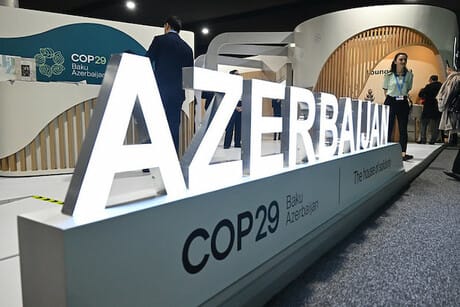
Over 3,500 journalists got accredited to join this year’s UN climate conference in Baku, Azerbaijan, in what was likely the biggest media presence to date. Those who have been to a so-called COP (Conference of Parties) know that the typical mix of government negotiations, expert panels and climate fair can be confusing and overwhelming – especially if you are by yourself. It can be tough to decide on a story, find the right sources, and not get side-tracked by all the other opportunities along the way. So how do you make best use of these two weeks?
At Clean Energy Wire (CLEW), a collaborative journalism non-profit organisation, we assembled a temporary team of seven reporters to tackle the conference through our COP29 Cross-Border Energy Transition Reporting Fellowship, set up with the Stanley Center for Peace and Security. Articles coming from the group continue to be published on the CLEW website and by different outlets as the journalists finish their research at home.
Here are some of the key insights we learned from setting up a global cross-border newsroom:
A final lesson is that the UN climate conference proved to be a good convening place, with many resources and international colleagues to meet. It also meant being able to support each other through ten days in a venue with no daylight, infamous "soggy baguettes" and late nights.
It felt important to meet in person and have the chance to discuss the challenges we face in today's journalistic landscape, where environmental and climate journalists are increasingly under pressure. Let's make sure we show resilience and cooperation - and hopefully have some fun along the way.
Milou Dirkx is the journalism network manager of Clean Energy Wire, a news organisation that covers German and European climate and energy policy and also collaborates with journalists worldwide to elevate climate and energy journalism
CLEW's full cohort that reported on COP26 Baku is as follows: Tais Gadea Lara (Argentina, InfoAmazonía and Climática), Ayoola Kassim (Nigeria, Channels Television), Yuhan Niu (China/UK, Dialogue Earth), Michael Phillis (U.S., Associated Press), Roli Srivastava (India, Climate Home News and The Migration Story), Julian Wettengel and Milou Dirkx (Germany/Europe, Clean Energy Wire).